



Understanding Rubber Cork Sheet tax details is essential for manufacturers, suppliers, exporters, and industrial buyers…
- 15 minute read
- Mehul Tolia
- Latest Trends
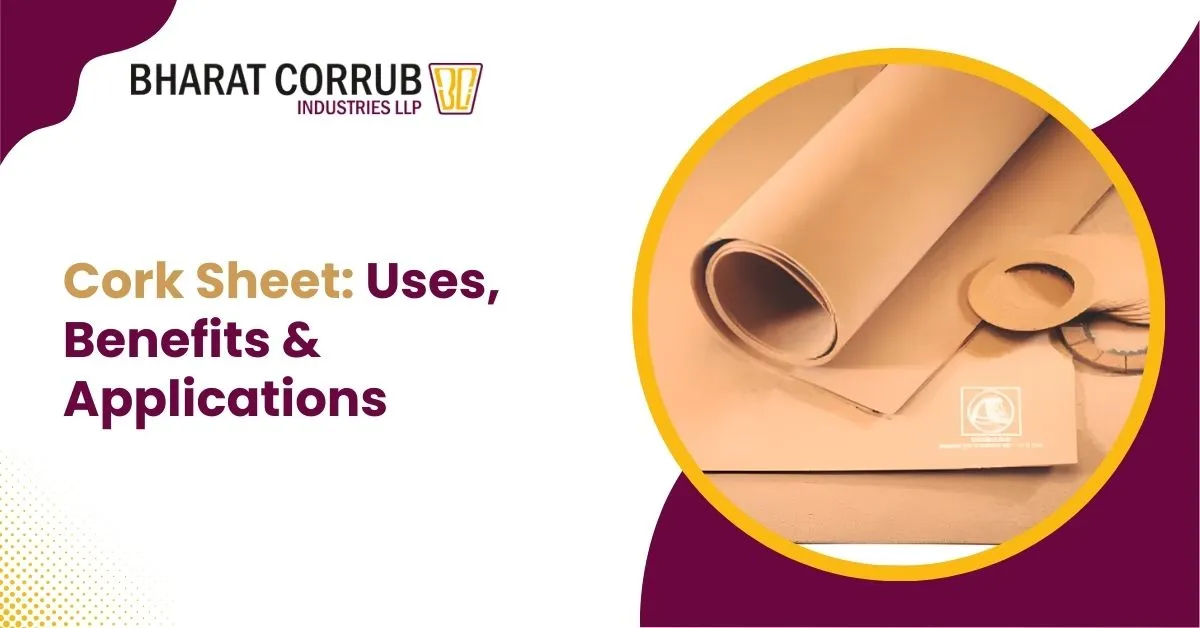
Cork sheet is a versatile, eco-friendly, and high-performance material widely used in industrial sealing, insulation, and vibration control applications. Made from natural cork granules or combined with rubber polymers, cork sheets offer excellent compressibility, durability, and resistance to oil, heat, and chemicals. Due to these unique properties, cork sheet and Rubber Cork sheet materials are commonly used in industries such as electrical, automotive, power generation, construction, and manufacturing.
In modern industrial environments, choosing the right sealing and insulation material is critical for performance, safety, and longevity. Cork sheets provide reliable sealing, thermal insulation, and vibration absorption, making them an ideal solution for gaskets, transformers, machinery, and industrial equipment. This guide explains cork sheet uses, benefits, properties, and applications in detail to help you understand why cork sheets are widely preferred across industries.
What is a Cork Sheet?
Cork sheet is a natural or composite material made from cork granules, offering excellent sealing, insulation, and vibration control properties. Cork sheets are manufactured by compressing cork granules into flat sheet form, sometimes combined with rubber to enhance durability and flexibility.
Types of Cork Sheet
There are two main types of cork sheets:
Plain Cork Sheet
Plain cork sheet is made entirely from natural cork granules without the addition of rubber polymers. It is commonly used in applications where flexibility and insulation are required but exposure to oils or harsh chemicals is limited. Plain Cork sheets are widely used for insulation, cushioning, vibration dampening, notice boards, packaging, and light sealing applications. They are lightweight, environmentally friendly, and provide reliable performance in moderate conditions.
Rubber Cork Sheet
Rubber cork sheet is manufactured by combining cork granules with synthetic rubber polymers such as Nitrile (NBR), Neoprene (CR), or other elastomers. This combination enhances the mechanical strength, flexibility, and resistance to oils, fuels, and chemicals. Rubber Cork sheets offer superior sealing performance and are widely used in industrial gasket applications, transformers, automotive components, machinery, and electrical equipment. The addition of rubber improves durability and allows the material to perform effectively in demanding environments involving pressure, temperature variations, and fluid exposure.
Cork sheets are widely used because they combine natural compressibility with industrial strength, making them suitable for demanding environments.
How are Cork Sheets Manufactured?
The manufacturing process of Cork sheets involves several carefully controlled steps to ensure high quality, durability, and consistent performance. Each stage is designed to preserve the natural properties of cork while enhancing its strength, flexibility, and sealing capability. This process is especially important for producing industrial cork sheet and Rubber Cork sheet materials used in gasket, insulation, and vibration control applications.
1. Harvesting Cork Bark
The manufacturing process begins with harvesting cork from the cork oak tree (Quercus suber), the primary raw material used to produce Cork sheets material. The cork bark is carefully removed without damaging the tree, allowing it to regenerate naturally. This makes cork a renewable and eco-friendly material widely used in cork sheet manufacturing. Harvesting is typically done once every nine years, ensuring sustainability and long-term supply of high-quality cork for industrial use.
2. Cleaning and Grinding into Cork Granules
After harvesting, the cork bark is cleaned to remove impurities such as dust and unwanted particles. The cleaned cork is then dried to improve its processing quality and durability. Once dried, the cork bark is ground into small granules using specialized machines. These cork granules serve as the base material for both plain cork sheet and rubber cork sheet production. The granule size can be adjusted depending on the required cork sheet properties, such as compressibility, flexibility, and surface finish.
3. Mixing with Rubber Binder (for Rubber Cork Sheet)
For producing rubber Cork sheets, cork granules are mixed with synthetic rubber polymers such as Nitrile Rubber (NBR), Neoprene (CR), or other elastomers. This step enhances the strength, flexibility, and oil resistance of the material. The addition of rubber improves the performance of the rubber cork gasket sheet, making it suitable for demanding industrial applications such as transformers, automotive gaskets, and machinery sealing. The mixture is blended carefully to ensure uniform distribution, which is essential for producing high-quality industrial cork sheet.
4. Compression and Molding
The prepared cork granule mixture is placed into molds and compressed under high pressure and controlled temperature. This compression process bonds the cork granules together and forms strong, dense, and durable Cork sheets. Heat and pressure ensure uniform thickness, smooth surface finish, and consistent density throughout the sheet. This step is critical for achieving the required cork sheet sealing properties, compressibility, and mechanical strength needed for industrial gasket and insulation applications.
5. Cooling, Cutting, and Finishing
After compression, the newly formed cork sheet material is allowed to cool and stabilize. Cooling ensures that the sheet maintains its shape, strength, and durability. The sheets are then cut into standard sizes, thicknesses, and dimensions depending on industrial requirements. Precision cutting machines ensure accuracy and uniformity in the final cork gasket sheet or insulation sheet.
The finished Cork sheets undergo quality inspection to ensure they meet industrial standards for compressibility, flexibility, and durability. Once approved, the sheets are packaged and prepared for use in various cork sheet applications, including industrial gaskets, electrical insulation, vibration isolation, automotive sealing, and thermal insulation.
Properties of Cork Sheets
The Cork sheets materials offer unique physical and mechanical properties that make them ideal for industrial sealing, insulation, and vibration control.
| Property | Description | Benefit |
| Compressibility | Compresses under pressure and recovers shape | Reliable sealing |
| Lightweight | Low density material | Easy handling and installation |
| Thermal insulation | Low heat conductivity | Heat protection |
| Electrical insulation | Non-conductive material | Electrical safety |
| Chemical resistance | Resistant to oils and chemicals | Long service life |
| Vibration absorption | Absorbs vibration and noise | Equipment protection |
| Flexibility | Adapts to uneven surfaces | Effective sealing |
| Durability | Maintains performance over time | Long-term reliability |
These properties make cork sheets one of the most reliable industrial gasket and insulation materials.
Benefits of Cork Sheets
Rubber cork sheet and Cork sheets materials offer exceptional advantages that make them one of the most reliable solutions for industrial sealing, insulation, and vibration control applications. Due to their natural compressibility, flexibility, and durability, industrial cork sheets are widely used in electrical equipment, transformers, automotive components, and machinery. Compared to traditional sealing materials such as rubber, foam, or fiber, Rubber Cork sheets provide superior performance, longer lifespan, and better resistance to environmental and mechanical stress.
Below are the key benefits of cork sheets explained in detail:
1. Excellent Sealing Performance
One of the most important benefits of Cork sheets is its excellent sealing capability. Cork sheets have a unique cellular structure filled with microscopic air pockets, allowing them to compress easily under pressure. This enables the cork gasket sheet to conform to uneven and irregular surfaces, creating a tight and reliable seal. This prevents leakage of fluids, gases, oil, and air, making cork sheets ideal for use in transformers, engines, pipelines, and industrial machinery. Even after repeated compression, cork sheets can recover their shape and maintain sealing efficiency for long periods.
2. Long Service Life and Durability
Rubber cork sheet and plain cork sheet materials are highly durable and maintain their performance over extended periods. Unlike many traditional sealing materials that lose their elasticity or degrade over time, cork sheets retain their compressibility and structural integrity even under constant pressure, temperature changes, and mechanical stress. This makes industrial Cork sheets an ideal choice for applications that require long-term reliability, such as electrical transformers, heavy equipment, and industrial gasket systems. The long lifespan of cork sheets also reduces maintenance costs and replacement frequency.
3. Lightweight and Easy Installation
Another major advantage of cork sheet material is its lightweight nature. Cork has low density, making cork sheets easy to handle, transport, cut, and install. This reduces labor effort and installation time, especially in large industrial applications. The flexibility of cork sheets allows them to be easily shaped or cut into custom gasket sizes, making them suitable for various sealing requirements. This ease of handling makes cork sheet a convenient and efficient solution for manufacturers and maintenance professionals.
4. Excellent Oil and Chemical Resistance
Rubber Cork sheets offers superior resistance to oils, fuels, lubricants, and industrial chemicals. This makes it highly suitable for demanding industrial environments such as automotive engines, transformers, and oil processing equipment. The rubber component in Rubber Cork gasket sheet enhances chemical resistance and prevents material degradation when exposed to harsh fluids. This ensures reliable sealing performance and extends the lifespan of the gasket or insulation system.
5. Superior Vibration and Noise Reduction
Cork sheet is an excellent vibration damping and noise reduction material. Its natural cellular structure absorbs mechanical vibrations and reduces noise transmission between equipment and surfaces. This makes cork sheets ideal for use in heavy machinery, generators, compressors, and industrial equipment. By reducing vibration, cork sheets help protect machinery components, improve operational efficiency, and extend equipment lifespan. This vibration isolation property is one of the key reasons why cork sheets are widely used in industrial and mechanical applications.
6. Excellent Thermal and Electrical Insulation
Cork sheet provides outstanding thermal and electrical insulation properties. Due to its low thermal conductivity, cork sheet acts as an effective barrier against heat transfer, making it suitable for thermal insulation applications. Additionally, cork is a non-conductive material, which makes it safe for use in electrical equipment and transformer insulation. These insulation properties make Cork sheets an ideal material for electrical panels, transformers, and industrial insulation systems.
7. Eco-Friendly and Sustainable Material
Cork sheet is a natural, renewable, and environmentally friendly material. Cork is harvested from cork oak trees without cutting or damaging the tree, allowing it to regenerate naturally. This makes cork one of the most sustainable raw materials used in industrial manufacturing. Using Cork sheets helps reduce environmental impact while providing high-performance sealing and insulation solutions. Additionally, cork sheet material is recyclable and has a long lifespan, further contributing to sustainability.
8. High Flexibility and Surface Conformability
Rubber cork sheet and cork sheet materials offer excellent flexibility and surface adaptability. This allows them to adjust to uneven or rough surfaces, ensuring effective sealing even in challenging conditions. This flexibility makes Cork sheets ideal for gasket applications where tight sealing is essential to prevent leakage.
9. High Resistance to Compression and Mechanical Stress
Industrial cork sheets maintain their performance even under continuous compressive loads. Unlike many materials that deform permanently under pressure, Cork sheets recover their original shape and maintain their sealing properties. This makes cork sheet material suitable for long-term industrial applications.
10. Cost-Effective and Reliable Industrial Solution
Due to their durability, low maintenance requirements, and long service life, Cork sheets provide a cost-effective solution for industrial sealing and insulation. Businesses benefit from reduced replacement costs, improved equipment reliability, and long-term performance.
Uses of Cork Sheets in Different Industries
Cork sheet and rubber Cork sheets materials are widely used across industries due to their sealing, insulation, and vibration control properties.
| Industry | Cork Sheet Applications |
| Electrical Industry | Transformer gaskets, insulation |
| Automotive Industry | Engine gaskets, sealing components |
| Power Generation | Transformer sealing, equipment insulation |
| Industrial Machinery | Equipment gaskets and seals |
| Construction | Thermal and acoustic insulation |
| HVAC Industry | Sealing and vibration isolation |
| Oil and Gas | Fluid sealing applications |
| Manufacturing | Machinery sealing and cushioning |
These applications highlight the versatility and importance of cork sheets in industrial operations.
Plain Cork Sheet vs Rubber Cork Sheet
Rubber cork and plain Cork sheets materials differ in flexibility, durability, and industrial performance.
| Feature | Plain Cork Sheet | Rubber Cork Sheet |
| Flexibility | Moderate | High |
| Durability | Medium | Excellent |
| Oil Resistance | Limited | Excellent |
| Sealing Performance | Good | Excellent |
| Industrial Use | Light applications | Heavy industrial applications |
| Lifespan | Moderate | Long |
Rubber cork sheets are preferred for demanding industrial applications requiring durability and chemical resistance.
Why Cork Sheets are Ideal for Industrial Gaskets?
Cork sheet materials are widely used for gasket manufacturing due to their compressibility, flexibility, and sealing efficiency.
Excellent Compressibility and Recovery
One of the most important properties of Cork sheets material is its ability to compress under pressure and recover its original shape after the load is removed. This ensures long-term sealing efficiency and prevents permanent deformation, making cork sheets ideal for continuous sealing applications.
Reliable Sealing Performance
Cork sheets conform easily to irregular and uneven surfaces, filling gaps and preventing leakage of liquids, gases, oils, and air. This makes cork gasket sheets highly effective in critical sealing applications such as transformers, engines, and industrial systems.
Resistance to Oils, Fuels, and Chemicals
Rubber Cork sheets offers excellent resistance to oils, fuels, lubricants, and industrial chemicals. This makes it suitable for use in automotive engines, oil systems, electrical transformers, and heavy machinery where exposure to harsh fluids is common.
Long-Term Durability and Performance
Industrial Cork sheets are designed to withstand mechanical stress, temperature variations, and long-term compressive loads. Their durability ensures reliable sealing performance over many years, reducing maintenance and replacement costs.
Ability to Seal Uneven and Rough Surfaces
Due to their flexible structure, Cork sheets can easily adapt to uneven surfaces, ensuring effective sealing even when surfaces are not perfectly smooth. This property makes cork sheet ideal for industrial gasket manufacturing.
Resistance to Pressure and Temperature Variations
Cork gasket sheets can perform effectively under varying pressure and temperature conditions without losing their sealing efficiency. This makes them suitable for demanding industrial environments, including power generation, automotive, and heavy equipment applications.
Vibration Absorption and Equipment Protection
In addition to sealing, Cork sheets also absorbs vibration and reduces mechanical stress on equipment. This helps protect machinery components and improves overall equipment lifespan.
These features make cork gasket sheets ideal for transformers, engines, and industrial equipment.
Looking for high-quality cork sheet for industrial or gasket applications?
Contact us today to get expert guidance and the right solution for your needs.
Environmental Benefits of Cork Sheets
Cork sheet materials are environmentally friendly and sustainable, making them an ideal choice for eco-conscious industries.
Renewable Natural Resource
Cork is a completely natural and renewable material harvested from cork oak trees. The trees continue to grow and regenerate bark after harvesting, allowing continuous production of Cork sheets without harming the environment. This makes cork sheet a sustainable alternative to synthetic sealing materials.
Sustainable Harvesting Process
The cork harvesting process does not involve cutting down trees. Instead, only the outer bark is carefully removed, allowing the tree to regenerate naturally. This environmentally responsible harvesting method ensures long-term availability of cork while preserving forests and biodiversity.
Low Environmental Impact
The manufacturing process of Cork sheets has a lower environmental impact compared to plastic or synthetic rubber materials. Cork processing generates minimal waste, and most cork by-products can be reused in producing other cork-based products such as Rubber Cork sheet, insulation materials, and industrial gasket sheets.
Long Lifespan Reduces Waste
One of the major environmental advantages of Cork sheets is its durability and long service life. Since cork sheets maintain their sealing and insulation performance for many years, they require less frequent replacement. This reduces industrial waste and minimizes the need for additional raw material consumption.
Recyclable and Reusable Material
Cork sheet material is recyclable and can be reused in various applications. Used cork products can be processed again into granules and used for manufacturing new Cork sheets products, reducing landfill waste and supporting circular economy practices.
Supports Environmental Sustainability
Cork oak forests play an important role in maintaining ecological balance by absorbing carbon dioxide and supporting biodiversity. By using Cork sheets and rubber cork sheet materials, industries contribute to sustainable forestry practices and environmental conservation.
Reduced Carbon Footprint
Compared to many synthetic sealing materials, Cork sheets production generates lower carbon emissions. The natural growth and regeneration of cork oak trees also help absorb carbon dioxide, making cork sheet a climate-friendly industrial material.
Frequently Asked Questions
Cork sheets are used for gaskets, insulation, sealing, vibration control, electrical insulation, and industrial machinery applications.
Industries such as electrical, automotive, oil and gas, power generation, construction, and manufacturing use cork sheets.
Rubber cork sheets offer better flexibility, durability, oil resistance, and sealing performance compared to plain cork sheets.
Yes, cork sheets provide excellent thermal and electrical insulation due to their natural cellular structure.
Cork sheets provide excellent compressibility, sealing performance, and resistance to oil and chemicals, making them ideal for gasket applications.
Yes, cork is a renewable, sustainable, and eco-friendly material.
Cork sheets can last for many years depending on application, pressure, and environmental conditions.
Conclusion
Cork sheet and Rubber Cork sheet materials are essential industrial materials known for their excellent sealing, insulation, and vibration control properties. Their unique compressibility, durability, and resistance to oil, heat, and chemicals make them ideal for gasket manufacturing, electrical insulation, machinery sealing, and industrial applications.
With their eco-friendly nature, long service life, and versatile performance, Cork sheets remain one of the most reliable and widely used materials in modern industry. Choosing high-quality cork sheet materials ensures better performance, reduced maintenance, and improved equipment reliability.

Mehul Tolia
Mehul Tolia is a Partner at Bharat Corrub Industries LLP (BCI), a leading manufacturer and exporter of cork and rubber cork products in India. With nearly a decade of experience, he has been a driving force behind BCI’s business development, product innovation, and process optimization initiatives. His leadership emphasizes quality, sustainability, and customer satisfaction, helping BCI strengthen its global presence. As a member of CII Young Indians (Yi) Vadodara), Mehul is passionate about fostering industrial growth and promoting innovation within the manufacturing sector.
Related Posts
The Rubber Cork Roll is emerging as a go-to material across industries because it combines…
