Skip to content
Latest Trends in Rubber Cork Roll Applications

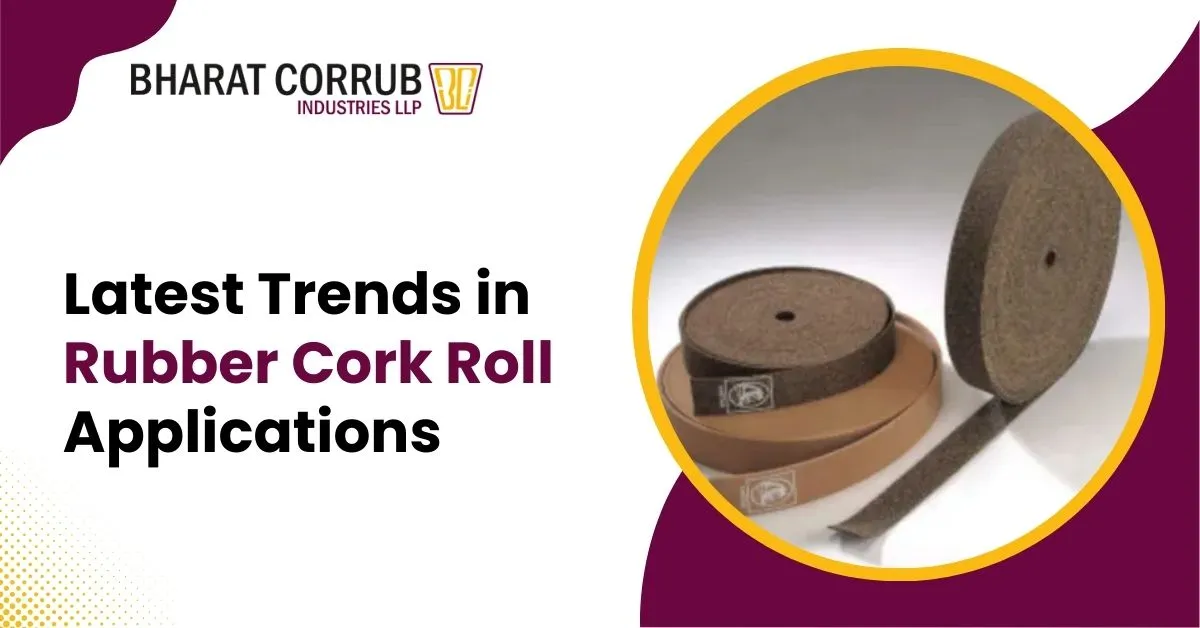
The Rubber Cork Roll is emerging as a go-to material across industries because it combines natural cork’s acoustic and thermal properties with rubber’s resilience. Today’s manufacturers and facility managers are prioritizing solutions that deliver noise control, vibration damping, and sustainability — all areas where Rubber Cork Roll performs exceptionally. This blog covers the latest application trends, material innovations, design tips, and selection criteria so you can evaluate whether Rubber Cork Roll fits your next project.

1. Sustainable & Eco-Conscious Building Projects

Green building certifications and acoustic performance

Sustainable construction is pushing architects to adopt materials that contribute to LEED, BREEAM, and other green ratings. Rubber Cork Roll offers an advantage: cork is renewable and harvested without harming trees, while modern binders and recycled rubber content reduce environmental impact. Builders are using Rubber Cork Roll as an underlay for floors, acoustic wall linings, and vibration isolation layers in mixed-use buildings to meet both acoustic standards and sustainability goals.

Recycled-content formulations

A growing trend is the use of Rubber Cork Roll formulations with post-industrial or reclaimed rubber. These mixes reduce raw-material demand and lower embodied carbon, making Rubber Cork Roll attractive for projects that require lifecycle assessments.

2. Industrial Vibration & Noise Control — heavier duty use

Machinery bases and pump stations

Plant engineers increasingly specify Rubber Cork Roll for heavy machinery bases, pump mounts, and compressor pads. The composite’s ability to absorb shock and dissipate vibration extends bearing and coupling life, reduces transmitted noise, and lowers maintenance frequency.

Large-format continuous rolls for seamless coverage

Long continuous rolls (wide formats up to 1 m or more) let maintenance teams install joint-free layers under heavy equipment. This eliminates seam-related vibration bridges that can reduce isolation performance — a key reason Rubber Cork Roll is preferred for large installations.

3. HVAC & Mechanical Room Soundproofing

Duct support and vibration isolation

HVAC units and chiller compressors are major noise sources in commercial buildings. Installing Rubber Cork Roll pads at equipment supports, duct hangers, and base mounts reduces structure-borne noise and helps meet tenant comfort standards without complex retrofit work.

Combination systems: cork underlay + acoustic panels

A hybrid approach is trending: Rubber Cork Roll as a resilient underlay plus surface acoustic panels for airborne noise control. This layered solution addresses both impact/structure-borne noise and airborne sound, giving comprehensive control.

4. Transportation & Rail Infrastructure

Trackbed and railway pad applications

Rail authorities and infrastructure designers are experimenting with cork-rubber composites in rail pads, under-sleeper pads, and noise-mitigation layers. Rubber Cork Roll materials can be tailored to support dynamic loads while providing rail-noise damping and reducing vibration transmission to adjacent structures.

Automotive NVH components

In automotive and off-highway vehicles, Rubber Cork Roll is finding niche use in NVH (noise, vibration, harshness) treatments, underbody pads, and gasket overlays where lightweight, compressible damping matters.

5. Electrical & Transformer Gasketing — large covers & flange seals

Large transformers and switchgear benefit from seamless gaskets. Manufacturers are using wide Rubber Cork Roll sheets to cut continuous gaskets for transformer covers and flanges, minimizing jointed seams and improving dielectric and mechanical performance while also damping mechanical vibration that can cause structural fatigue.

Looking for the best Rubber Cork Roll for noise and vibration control? Contact us now for expert guidance and a quick quote.

6. Flooring & Sports Facilities — impact and acoustic control

Rubber Cork Roll is trending as underlayment for gym floors, sports venues, and performance spaces. Its combination of impact resilience and sound attenuation reduces impact noise and improves user comfort — while providing better durability than many foams under repeated load.

7. Product & Material Innovations

Nano- and micro-structured cork particles

Researchers and manufacturers are exploring optimized cork particle sizes and surface treatments to enhance bonding with rubber matrices — improving durability and damping without compromising compressibility.

Custom binder chemistry for extreme environments

New binder systems (NBR, EPDM variations, and bio-based elastomers) extend Rubber Cork Roll’s usable temperature range and chemical resistance, allowing applications in oil-rich or high-temperature industrial settings.

8. Design & Specification Best Practices

Match density to load & frequency

Select Rubber Cork Roll density based on the static load and dominant vibration frequency. Higher density and thicker sections yield better low-frequency isolation and load support; softer grades improve high-frequency damping.

Avoiding seams and ensuring full contact

Where possible use wide continuous Rubber Cork Roll to eliminate seams. Ensure substrate is flat, clean, and stable so the roll can fully contact surfaces — partial contact reduces damping effectiveness.

Combine materials for targeted outcomes

Use Rubber Cork Roll with viscoelastic dampers, resilient mounts, or floating floors for hybrid systems that target both airborne and structure-borne noise.

9. Installation, Maintenance & Lifecycle Considerations

Proper installation extends service life

Correct cut, bonding (if applicable), and compression control help avoid premature compression set. Installation guidelines should specify allowable pre-compression and anchoring methods.

Inspection and recycling strategies

Periodic inspections detect compression set or delamination. At end-of-life, cork content can often be reclaimed or repurposed; recycled rubber content helps circular-economy goals.

10. Market Outlook & Adoption Drivers

Adoption of Rubber Cork Roll is accelerating due to stricter noise regs, sustainability mandates, and the need for maintenance-saving vibration solutions. Expect increased use in retrofit projects where performance improvement must be balanced with cost and installation speed.

Frequently Asked Questions

A Rubber Cork Roll is used for vibration damping, noise control, sealing, and gasket applications in industrial machinery, HVAC units, flooring underlays, electrical transformers, and automotive systems. A Rubber Cork Roll helps absorb shock and prevent vibration transmission between equipment and structures.

A Rubber Cork Roll combines cork’s natural cellular structure with rubber’s flexibility, enabling effective absorption and dissipation of mechanical energy. This makes the Rubber Cork Roll ideal for minimizing structure-borne noise, improving acoustic performance, and extending machinery life.

A Rubber Cork Roll is commonly available in thicknesses from 3mm to 12mm, with custom options depending on load, frequency range, and application. Selecting the right Rubber Cork Roll thickness is essential for optimal vibration isolation.

Yes, a Rubber Cork Roll is designed for harsh industrial use and offers resistance to oils, fuels, temperature changes, and moisture. This makes the Rubber Cork Roll suitable for pumps, compressors, transformers, and heavy-duty machinery foundations.

Absolutely. A Rubber Cork Roll is widely used in mechanical rooms, HVAC bases, flooring systems, and wall isolators due to its reliable acoustic insulation and vibration damping capabilities. A Rubber Cork Roll helps prevent noise transfer through walls and floors.

Conclusion

If your objectives include noise reduction, vibrational isolation, sustainability, and long-term durability, Rubber Cork Roll is a compelling option. Recent trends show it moving from niche gasket applications into broader roles: building acoustics, heavy equipment isolation, transportation, and sustainable construction. Evaluate load profiles, frequency content, environmental exposures, and installation logistics — then select the Rubber Cork Roll grade and format that matches those needs.

Mehul Tolia is a Partner at Bharat Corrub Industries LLP (BCI), a leading manufacturer and exporter of cork and rubber cork products in India. With nearly a decade of experience, he has been a driving force behind BCI’s business development, product innovation, and process optimization initiatives. His leadership emphasizes quality, sustainability, and customer satisfaction, helping BCI strengthen its global presence. As a member of CII Young Indians (Yi) Vadodara), Mehul is passionate about fostering industrial growth and promoting innovation within the manufacturing sector.

Back To Top