Vibration is a silent culprit in industrial machinery — it wears down components, increases noise, and causes long-term fatigue. That’s why rubber cork rolls, a special composite material, are gaining traction as a smart, effective way to isolate and dampen vibration. In this post, we’ll explore how rubber cork rolls work, why they’re so effective, and where they can make a real impact in reducing vibration in industrial applications.
What Causes Vibration in Machinery?
Vibration in mechanical systems typically arises from unbalanced rotating parts, misalignment, or structural looseness. When a rotor, shaft, or flywheel spins unevenly, it generates oscillatory forces that transmit through the machine’s housing. Even slight misalignment between coupled components — like motor and pump — can cause cyclical stress. Over time, this repeated motion leads to mechanical fatigue and wear in parts like bearings and fasteners.
Furthermore, vibration isn’t just a mechanical issue — it also affects safety and performance. Continuous vibration amplifies noise, reducing operator comfort and potentially violating noise regulations. In sensitive installations, uncontrolled vibration can cause parts to loosen, fatigue to set in, and even lead to unexpected downtime or failure.
Why Controlling Vibration Matters?
- Wear & Tear: Persistent vibration accelerates component degradation, reducing their lifespan and increasing maintenance costs.
- Noise Reduction: Vibrating machines generate noise that can disrupt work environments and affect worker health.
- Fatigue & Reliability: Vibration leads to fatigue in structural parts, which can cause cracks, loosening, or misalignment — ultimately reducing operational reliability.
Effectively isolating vibration helps protect not just the machine but also the surrounding infrastructure and the people who work around it.
What Are Rubber Cork Rolls?
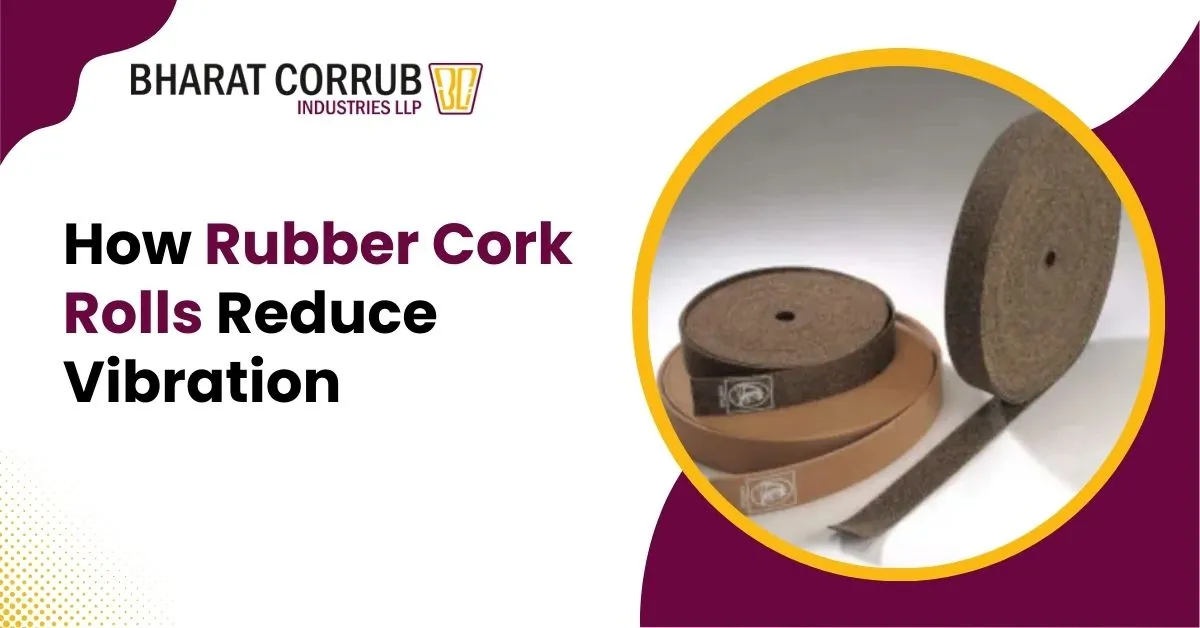
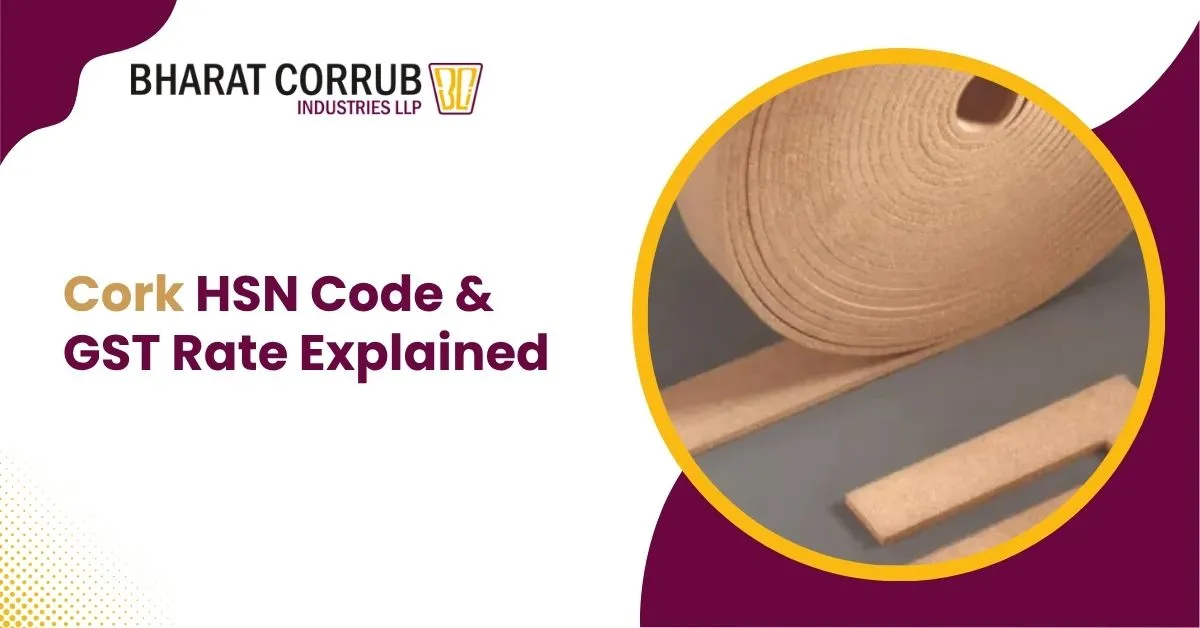
Rubber cork rolls are engineered composites that merge the best of both worlds: the compressibility of cork and the elasticity of rubber. They are produced in continuous roll form, allowing for flexible use as pads, linings, or custom-cut isolators.
Composition & Structure
These rolls consist of granulated cork particles embedded within a rubber matrix (often nitrile, neoprene, or another elastomer). Cork acts as a cellular filler that compresses under load, while the rubber binder provides resilience, elasticity, and chemical resistance. Research shows that cork-rubber composites retain strong dynamic behavior under compressive stress, making them highly effective for vibration isolation.
Manufacturing Process
To manufacture rubber cork rolls, cork granules are first mixed thoroughly with a liquid rubber compound. The mixture is then cast or extruded in roll form and vulcanized under heat and pressure. By varying the size of cork granules, the density of the mixture, and the vulcanization conditions, manufacturers can precisely tune stiffness, rebound, and damping characteristics.
How Rubber Cork Rolls Really Reduce Vibration?
Compressibility & Energy Absorption
When a machine vibrates, the cork granules in the roll compress and deform slightly. This compression converts kinetic energy into internal strain, absorbing significant amounts of vibrational energy and reducing transmission to the surrounding structure.
Elastic “Rebound” from Cork-Rubber
Once the vibrational force subsides, the rubber binder helps the material rebound toward its original form. This elastic behavior ensures that the rubber cork rolls recover after compression, making them ideal for repeated, cyclic loads.
Damping of Resonance Frequencies
Every machine has natural frequencies where resonance amplifies vibration. Cork-rubber composites have a viscoelastic nature; they dissipate energy as heat, dampening these peaks, and reducing resonance-induced amplification.