The rubber cork HSN code is essential for businesses involved in manufacturing, trading, and exporting cork-rubber composite products, as it ensures accurate GST classification, billing, and compliance. Rubber cork, commonly used for gaskets, vibration pads, sealing components, sheets, rolls, and insulation materials, falls under specific Harmonized System of Nomenclature codes that differentiate rubber composites, cork products, and industrial sealing materials. Understanding the correct HSN code helps avoid tax disputes, incorrect invoicing, and compliance issues during audits or cross-border shipments. Typically, rubberized cork sheets and rolls used for industrial gaskets fall under the HSN category for vulcanized rubber combined with other materials. Businesses that export rubber cork must also ensure that the declared HSN aligns with international customs standards to facilitate smooth clearance and duty assessment. Since cork is a natural material bonded with rubber, different formulations may fall under slightly different sub-classifications. Bharat Corrub Industries LLP, as a leading manufacturer and exporter of rubber cork solutions, adheres strictly to accurate HSN mapping for all domestic and international shipments. The correct HSN code supports transparent documentation, seamless logistics, and regulatory compliance across markets such as Saudi Arabia, UAE, Europe, Southeast Asia, and Africa. For buyers and distributors seeking clarity in procurement, the rubber cork HSN code serves as an essential reference for taxes, import duties, and product categorization.
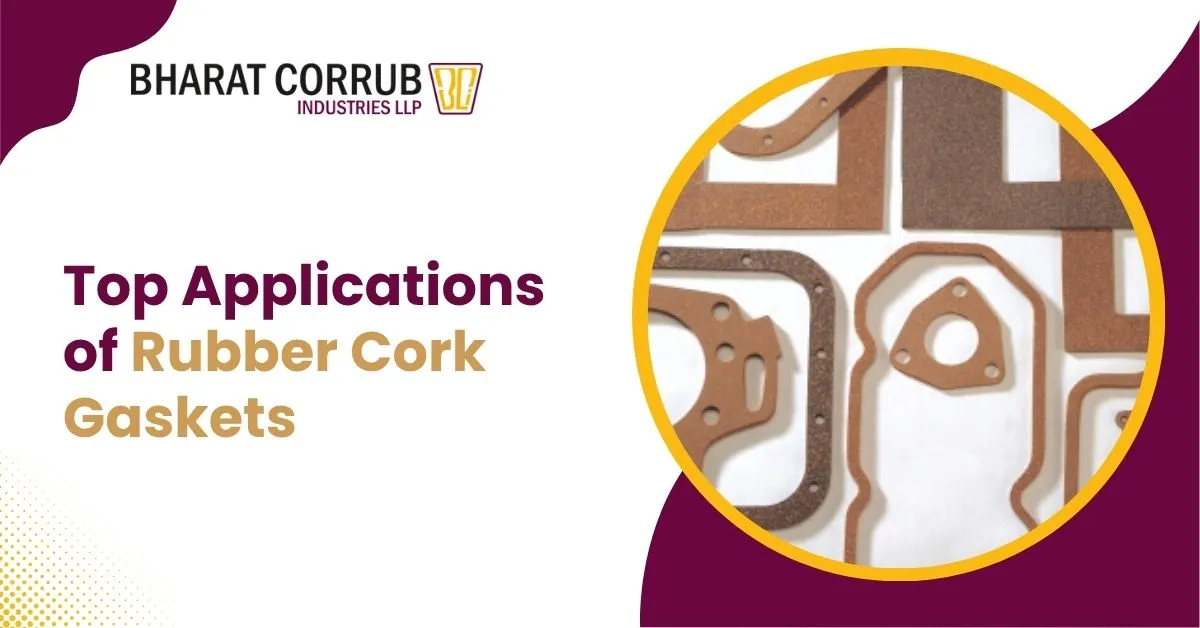
Rubber cork gaskets have become a trusted sealing solution across multiple industries thanks to their unique blend of flexibility, compressibility, and chemical resistance. Engineered by combining natural cork granules with durable synthetic rubber, these gaskets deliver reliable performance in environments…