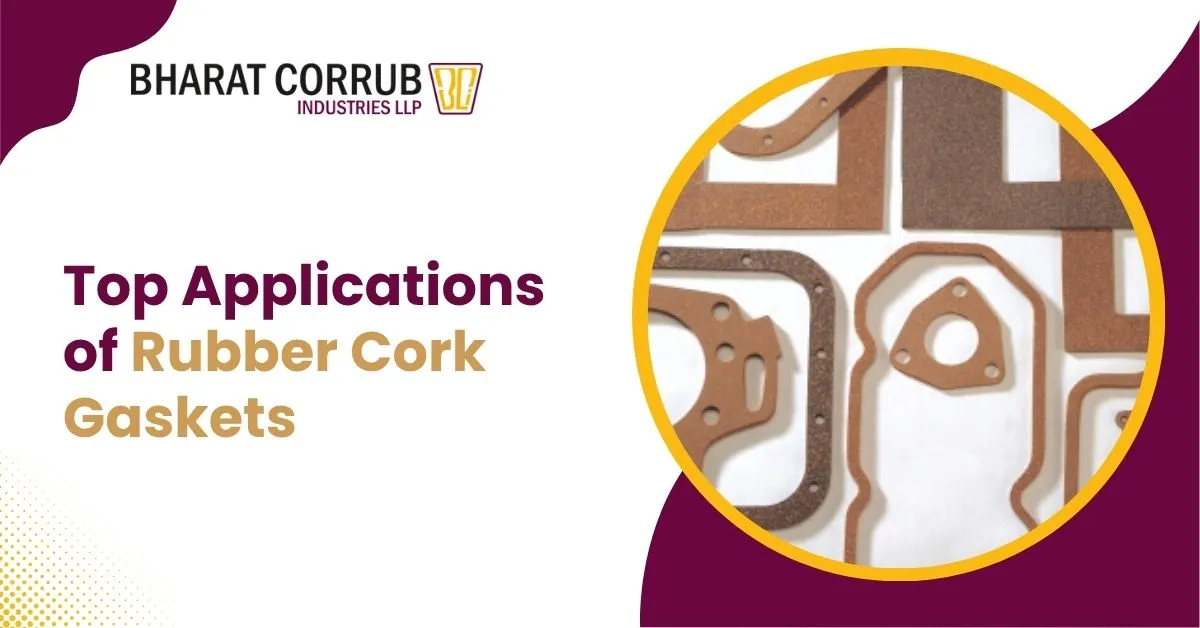
Rubber cork is a unique composite material made by blending granulated natural cork with a synthetic rubber binder, creating a versatile sealant ideal for demanding applications. The cork component provides exceptional compressibility, making the material highly conformable to uneven surfaces, while the rubber adds elasticity, chemical resistance, and long-term durability. This combination results in a material that can absorb vibration and shock, making it an excellent choice for sealing systems subjected to mechanical stress. In industrial settings, rubber cork is often used in gaskets, plugs, and stoppers where sealing, insulation, and resilience are critical. Its resistance to oils, fuels, and solvents stems from the rubber component, while cork contributes to low-density cushioning and a spring-like recovery after compression. Unlike standard cork, rubber cork does not degrade or dry out easily, offering superior longevity and adaptability. Additionally, since cork is a naturally renewable resource, the composite material is more eco-friendly than many synthetic alternatives. Common formulations of rubber cork include nitrile (NBR), neoprene, and EPDM rubber binders, each suited to specific applications based on temperature range and fluid exposure. Because of its balance of performance and environmental sustainability, rubber cork is widely used across industries such as automotive, electrical, transformers, and laboratory equipment. Whether you need a gasket that seals under stress or a flexible plugging solution, rubber cork offers a dependable, long-lasting material.
Rubber cork gaskets have become a trusted sealing solution across multiple industries thanks to their unique blend of flexibility, compressibility, and chemical resistance. Engineered by combining natural cork granules with durable synthetic rubber, these gaskets deliver reliable performance in environments…