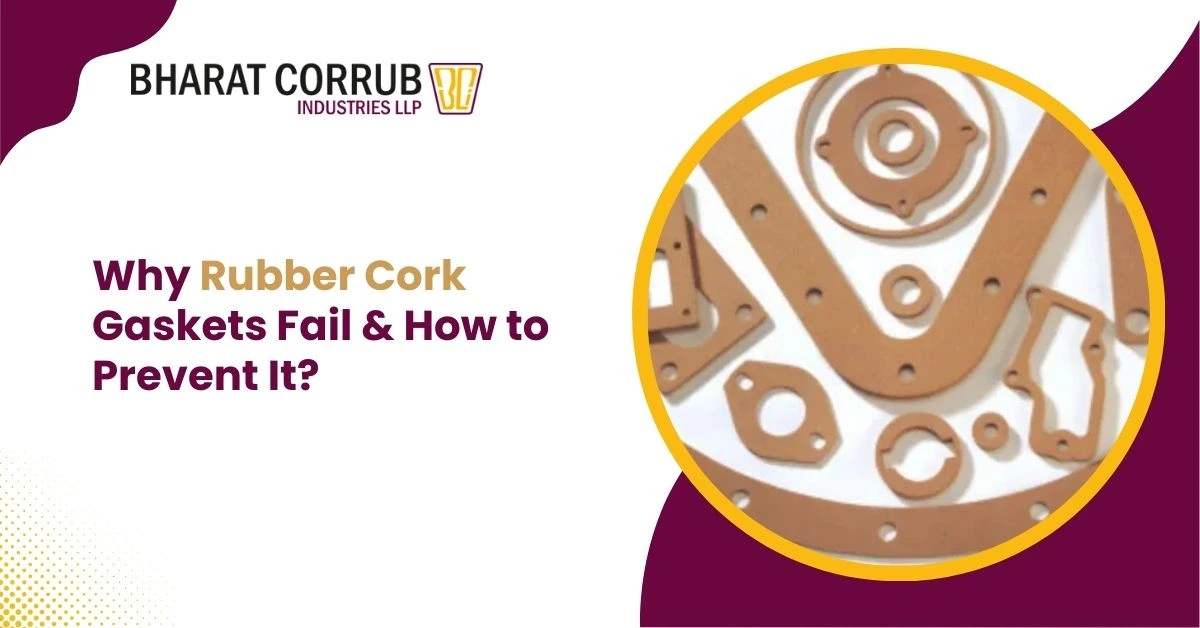
Rubber cork gaskets are widely used in flanges, pumps, compressors, HVAC systems, and industrial enclosures because they provide excellent sealing, vibration damping, and low squeeze-out. However, when rubber cork gaskets fail, they can cause leaks, pressure loss, equipment damage, and costly downtime. Understanding why rubber cork gaskets fail and how to prevent those failures helps ensure long-term sealing performance and reliable equipment operation.
Common Reasons Why Rubber Cork Gaskets Fail
Rubber cork gaskets usually fail due to:
- Incorrect thickness or density
- Wrong rubber binder for fluid exposure
- Excessive bolt load or uneven tightening
- High temperature beyond material rating
- Surface imperfections on flanges
When any of these factors are overlooked, the gasket cannot maintain proper compression and sealing pressure.
Failure Due to Compression Set
Compression set happens when rubber cork does not recover after being compressed for a long time. This causes:
- Loss of bolt pressure
- Gaps between flange surfaces
- Fluid leakage
Using low-quality or improperly cured rubber cork increases this risk.
Failure Due to Chemical or Oil Attack
Rubber cork with the wrong rubber binder will swell, soften, or degrade when exposed to:
- Oils
- Fuels
- Coolants
- Chemicals
For example, non-nitrile rubber cork used in oil environments will fail quickly.
Facing rubber cork gasket leaks or unsure which grade to choose? Contact us today for expert guidance and the right sealing solution!
Failure Due to Excessive Squeeze-Out
If rubber cork is too soft or low density, it can flow sideways under bolt load, leading to:
- Gasket extrusion
- Reduced sealing thickness
- Bolt loosening
Failure Due to Surface Mismatch
Rough, uneven, or corroded flange surfaces prevent rubber cork from forming a tight seal, allowing leaks even with proper tightening.
How to Prevent Rubber Cork Gasket Failure?
Preventing rubber cork gasket failure starts with proper material selection and correct installation. Choosing the right rubber cork grade based on fluid exposure, temperature, pressure, and vibration level ensures the gasket can perform reliably over time. Always match nitrile-bonded rubber cork for oil and fuel applications, and use EPDM or neoprene grades where water, weather, or mild chemicals are present.
Equally important is using the correct thickness and density. High-density rubber cork works best for flange sealing because it resists squeeze-out and maintains compression, while thicker, more resilient grades are ideal for vibration isolation. During installation, make sure the flange surfaces are clean, flat, and free from rust or debris. Apply even bolt torque in a cross-pattern to avoid over-compression and uneven load distribution. When these steps are followed, rubber cork gaskets provide long-lasting, leak-free sealing with excellent vibration control.
- Select the correct thickness and density
- Use the right rubber binder (NBR for oil, EPDM for water, etc.)
- Apply even bolt torque
- Ensure clean, flat flange surfaces
- Follow recommended compression limits
Rubber Cork Gasket Failure vs Prevention
Understanding rubber cork gasket failure vs prevention helps identify why leaks and seal breakdowns occur—and how the right material selection, installation, and maintenance can stop them. By comparing common failure causes with proven prevention methods, you can improve sealing performance, reduce downtime, and extend the life of your rubber cork gaskets`
| Failure Cause | Result | Prevention |
| Wrong density | Leaks | Use proper grade |
| Wrong rubber type | Swelling | Choose correct binder |
| High compression set | Loss of seal | Use high-quality cured material |
| Excessive squeeze-out | Gasket damage | Use higher-density cork |
| Uneven flange | Leak paths | Machine or clean surfaces |