Skip to content
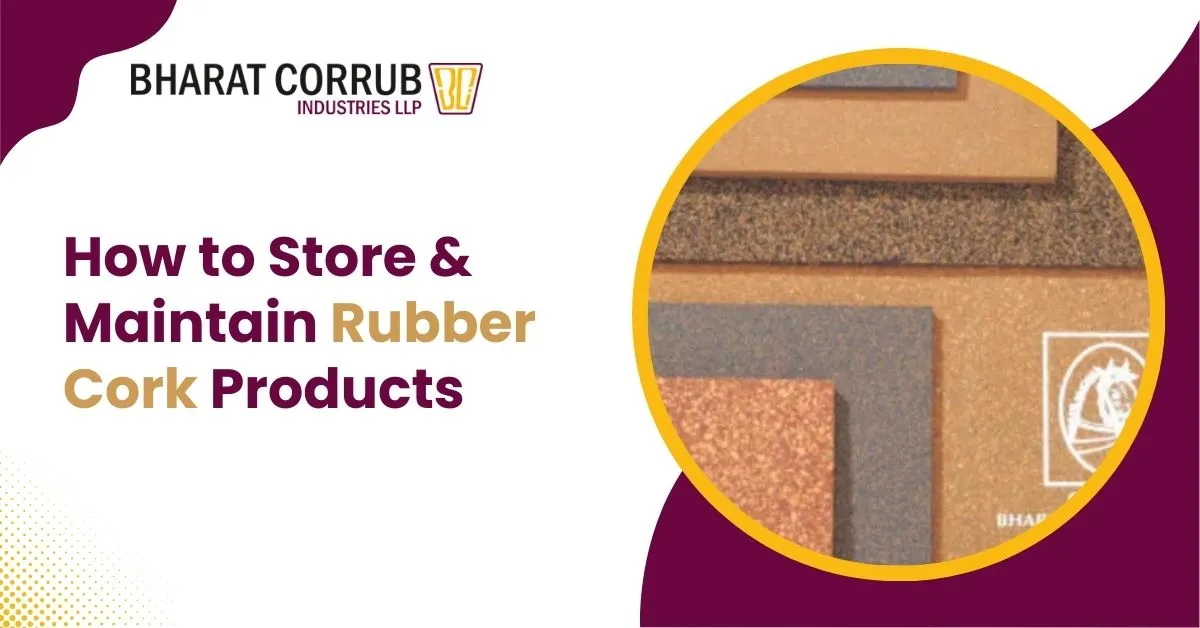
How to Store & Maintain Rubber Cork Products?

Rubber cork products are widely used across industries such as automotive, electrical, HVAC, construction, and manufacturing due to their excellent sealing, vibration damping, and insulation properties. However, improper storage or poor maintenance can significantly reduce their performance, lifespan, and reliability.

Understanding the correct storage and maintenance practices is essential for manufacturers, distributors, and end users who depend on rubber cork materials for critical applications.

What Are Rubber Cork Products?

Rubber cork is a composite material manufactured by bonding natural cork granules with elastomers such as NBR, Neoprene, or EPDM. This combination offers the flexibility of rubber with the compressibility and resilience of cork.

Common rubber cork products include:

  • Rubber cork sheets
  • Rubber cork gaskets
  • Rubber cork rolls
  • Rubber cork insulation pads

Because rubber cork contains both organic cork and synthetic rubber, it is sensitive to environmental conditions and must be handled carefully.

Why Proper Storage of Rubber Cork Products Is Important?

Incorrect storage conditions can result in:

  • Loss of elasticity and compressibility
  • Surface cracking or hardening
  • Permanent deformation
  • Reduced sealing and insulation performance

Proper storage of rubber cork helps ensure:

  • Extended shelf life
  • Consistent physical properties
  • Reliable sealing under compression
  • Lower replacement and maintenance costs

Ideal Storage Conditions for Rubber Cork Products

Proper storage plays a vital role in maintaining the performance, flexibility, and service life of rubber cork products across industrial applications.

1. Store in a Cool and Dry Environment

Rubber cork products should always be stored in cool, dry, and well-ventilated areas.

Recommended storage conditions:

  • Temperature range: 15°C to 25°C
  • Relative humidity: Below 65%

Excessive heat accelerates rubber aging, while moisture can weaken cork granules and affect bonding.

2. Avoid Direct Sunlight and UV Exposure

Prolonged exposure to sunlight or ultraviolet (UV) radiation can cause:

  • Surface cracks
  • Loss of flexibility
  • Premature aging

Rubber cork materials should be stored away from windows or shielded using opaque or UV-resistant packaging.

3. Keep Away from Chemicals, Oils, and Solvents

Rubber cork should never be stored near:

  • Industrial oils or fuels
  • Solvents and cleaning agents
  • Acids or alkaline chemicals

Chemical exposure of Rubber Cork may cause swelling, softening, or chemical breakdown, particularly in oil-sensitive rubber cork grades.

4. Store Sheets Flat to Prevent Deformation

Rubber cork sheets and gaskets must be stored flat on pallets or shelves.

Avoid:

  • Folding sheets
  • Tight rolling
  • Uneven stacking

Excessive pressure or bending of Rubber Cork can result in permanent compression set, reducing sealing effectiveness.

5. Protect from Ozone and Electrical Equipment

Ozone generated by electrical equipment such as motors, transformers, and welding machines can degrade rubber cork compounds over time.

For best results:

  • Store rubber cork away from ozone-producing equipment
  • Use protective packaging during long-term storage

Have questions about rubber cork storage or material selection? Contact us for reliable guidance and technical support.

Best Practices for Maintaining Rubber Cork Products

Correct storage should be complemented with proper maintenance to ensure long-term functionality.

1. Conduct Periodic Visual Inspections

Regular inspections of rubber cork help identify early signs of deterioration such as:

  • Cracks or surface damage
  • Brittleness or hardening
  • Uneven thickness or warping

Early detection prevents unexpected seal failure during operation.

2. Clean Gently Before Installation

Before installing rubber cork sheets or gaskets:

  • Wipe surfaces using a clean, dry cloth
  • Use mild soap and water if necessary

Avoid abrasive tools or harsh chemicals, as they can damage the rubber-cork bond and surface finish.

3. Avoid Excessive Compression During Installation

Over-compression is a common cause of premature rubber cork failure.

Best practices include:

  • Following manufacturer-recommended compression limits
  • Applying uniform torque during gasket installation
  • Avoiding uneven or localized pressure

Proper compression of rubber cork ensures optimal sealing and longer service life.

4. Replace When Performance Declines

Even with proper care, rubber cork materials will eventually degrade.

Replace rubber cork products if you notice:

  • Reduced sealing efficiency
  • Permanent deformation
  • Significant hardening or cracking

Timely replacement of Rubber Cork helps prevent equipment damage and unplanned downtime.

Common Storage Mistakes to Avoid

  • Storing rubber cork near heat sources
  • Leaving rubber products exposed without protective packaging
  • Folding or bending sheets to save space
  • Storing rubber cork near oils, fuels, or chemicals
  • Ignoring recommended shelf-life limits

Avoiding these mistakes significantly improves material reliability.

Shelf Life of Rubber Cork Products

When stored under ideal conditions, rubber cork products generally have a shelf life of:

  • 3 to 5 years, depending on rubber formulation and storage environment

Always label inventory with manufacturing dates and rotate stock using FIFO (First In, First Out) practices.

Frequently Asked Questions

Rubber cork sheets should be stored flat in a cool, dry, indoor environment, protected from sunlight, moisture, and chemicals.

No. Outdoor storage exposes rubber cork to UV radiation, moisture, and temperature fluctuations that degrade material properties.

Heat, UV exposure, ozone, and chemical contact are the primary causes of rubber cork hardening.

Rubber cork does not have a fixed expiration date, but its typical shelf life is 3–5 years when stored correctly.

Minimal maintenance is required, but periodic inspection ensures continued sealing performance and early detection of wear.

Conclusion

Proper storage and maintenance  play a critical role in preserving the rubber cork performance, durability, and reliability of rubber cork products. By maintaining controlled storage conditions, avoiding environmental exposure, and following correct handling practices, users can significantly extend product life and reduce operational risks.

For industries that rely on rubber cork for sealing and insulation, correct storage and maintenance are essential for consistent performance and cost efficiency.

Mehul Tolia is a Partner at Bharat Corrub Industries LLP (BCI), a leading manufacturer and exporter of cork and rubber cork products in India. With nearly a decade of experience, he has been a driving force behind BCI’s business development, product innovation, and process optimization initiatives. His leadership emphasizes quality, sustainability, and customer satisfaction, helping BCI strengthen its global presence. As a member of CII Young Indians (Yi) Vadodara), Mehul is passionate about fostering industrial growth and promoting innovation within the manufacturing sector.

Rubber Cork Insights and Trends
1. Rubber Cork Sheet Tax Details
2. Sustainable and Eco-Friendly Benefits of Rubber Cork
3. Latest Trends in Rubber Cork Applications
4. How to Store & Maintain Rubber Cork Products?
5. Why Rubber Cork Gaskets Fail & How to Prevent It?
6. Rubber Cork Quality Standards & Certifications
7. Rubber Cork HSN Code & GST Rate
8. Rubber Cork Price in India: Factors & Guide
9. Rubber Cork Manufacturing Process Explained
10. Rubber Cork Thickness, Density & Specifications Guide
11. How to Choose the Right Rubber Cork Material?
12. Rubber Cork vs Neoprene Gaskets
13. Rubber Cork vs Rubber Sheet: Which Is Better?
14. Rubber Cork vs Plain Cork: Key Differences Explained
15. Rubber Cork for Noise & Vibration Control
16. Rubber Cork for HVAC, Compressors & Pumps
17. Rubber Cork in Transformers & Electrical Equipment
18. Rubber Cork for Automotive Industry Applications
19. Rubber Cork Strip & Angles for Leak-Proof Gaskets
20. Rubber Cork Gasket: Why It’s Ideal for Industrial Sealing
21. Rubber Cork Roll: Applications in Sealing & Vibration Control
22. Rubber Cork Sheet: Properties, Uses & Benefits
Back To Top