Skip to content
Latest Trends in Rubber Cork Applications

Rubber cork is rapidly emerging as a high-performance composite material across multiple industries due to its unique combination of elasticity, compressibility, durability, and sustainability. As industries focus on noise reduction, vibration control, thermal insulation, and eco-friendly materials, the demand for advanced rubber cork applications is steadily increasing.

In this blog, we explore the latest trends in rubber cork applications, how industries are innovating with this versatile material, and why rubber cork is becoming a preferred choice for manufacturers worldwide.

What Is Rubber Cork Material?

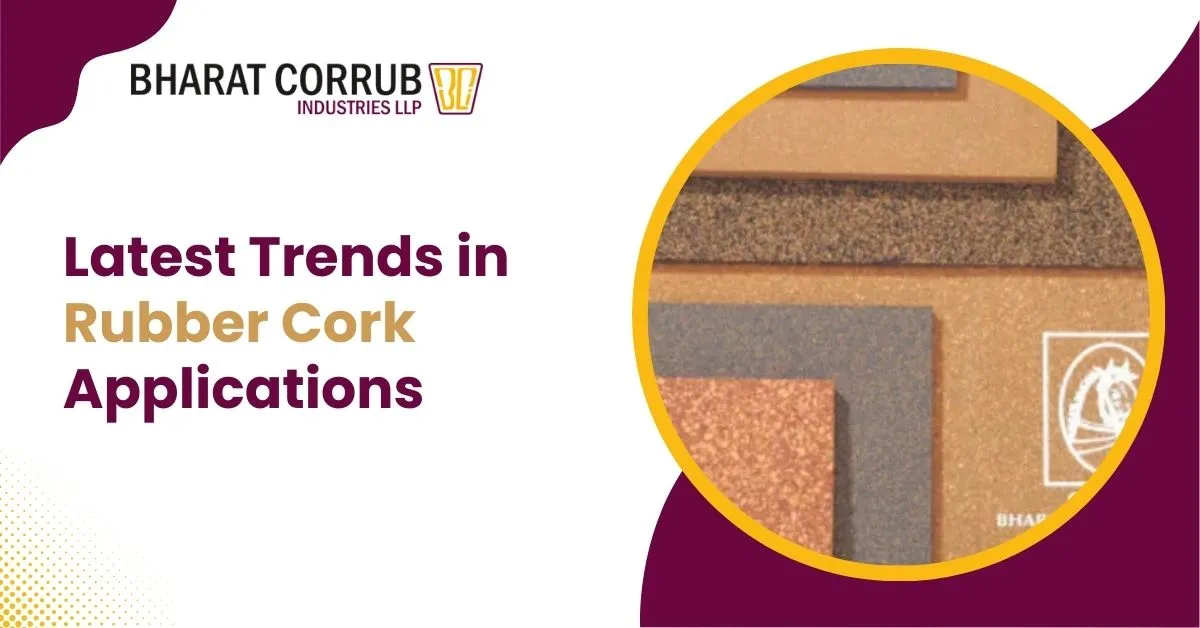
Rubber cork is a composite material made by blending natural or synthetic rubber with granulated cork. This combination results in a lightweight yet durable material that offers:

  • Excellent sealing performance
  • Superior vibration and noise damping
  • High resistance to oils, fuels, and chemicals
  • Long-term dimensional stability

These properties make rubber cork ideal for both industrial and commercial applications.

Industries Driving Rubber Cork Demand

Automotive & Transportation

The automotive sector is a major adopter of rubber cork due to its ability to absorb vibration, reduce noise, and withstand temperature variations. Rubber cork is commonly used in:

  • Engine gaskets and seals
  • Anti-vibration pads
  • HVAC sealing systems

As electric vehicles grow, manufacturers are seeking lightweight and noise-dampening materials, further boosting rubber cork usage.

Industrial Machinery & Equipment

Heavy machinery generates constant vibration that can damage components over time. Rubber cork sheets and pads are increasingly used for:

  • Vibration isolation mounts
  • Equipment base padding
  • Shock-absorbing gaskets

This trend aligns with the need for longer equipment life and reduced maintenance costs.

Electrical & Electronics Industry

In electrical systems, safety and insulation are critical. Rubber cork offers:

  • Electrical insulation properties
  • Heat resistance
  • Compression recovery

It is widely used in transformers, control panels, and switchgear sealing applications.

Looking to apply the latest rubber cork innovations in your operations? Contact us today for high-performance rubber cork solutions tailored to your industry.

Top 5 Latest Trends in Rubber Cork Applications

1. Growth in Sustainable & Eco-Friendly Materials

Sustainability is no longer optional. Rubber cork, made partly from renewable cork resources, aligns with green manufacturing goals. Industries are now choosing rubber cork as an alternative to fully synthetic materials to reduce environmental impact.

Trend Insight:
Manufacturers are actively promoting rubber cork as a low-carbon, recyclable material in industrial supply chains.

2. Custom-Engineered Rubber Cork Solutions

One-size-fits-all is outdated. Today’s rubber cork products are custom formulated to meet specific requirements such as:

  • Higher oil resistance
  • Enhanced thermal stability
  • Improved compression set performance

Custom rubber cork sheets and gaskets are becoming standard in OEM manufacturing.

3. Increased Use in Noise & Vibration Control

With stricter regulations around workplace noise and machinery vibration, rubber cork is widely used for:

  • Acoustic insulation
  • Vibration damping systems
  • Soundproofing applications

This is particularly relevant in manufacturing plants, power generation facilities, and commercial buildings.

4. Expansion into Construction & Infrastructure

The construction industry is adopting rubber cork for its durability and flexibility. Common applications include:

  • Expansion joints
  • Flooring underlays
  • Structural vibration isolation

Rubber cork’s ability to withstand compression and environmental stress makes it ideal for long-term infrastructure projects.

5. Improved Performance Through Advanced Rubber Blends

New rubber compounds such as NBR, neoprene, and EPDM are being combined with cork to enhance resistance to:

  • Oils and fuels
  • Extreme temperatures
  • Weathering and UV exposure

This trend has expanded rubber cork usage into marine, oil & gas, and chemical processing industries.

Benefits of Rubber Cork in Modern Applications

  • Excellent sealing under low and medium pressure
  • Superior vibration and shock absorption
  • Lightweight compared to solid rubber
  • Eco-friendly and renewable material content
  • Cost-effective long-term performance

These advantages make rubber cork a strategic material choice across industries.

Rubber Cork vs Traditional Materials

Feature Rubber Cork Solid Rubber Foam Materials
Vibration Damping Excellent Moderate Good
Compression Recovery High High Low
Environmental Impact Low Medium Medium
Durability High High Low

Frequently Asked Questions

Rubber cork is commonly used in gaskets, seals, vibration pads, insulation sheets, and expansion joints across automotive, industrial, and construction sectors.

Yes, rubber cork contains natural cork, making it a more sustainable option compared to fully synthetic materials.

Depending on the rubber blend used, rubber cork can offer excellent resistance to oils, fuels, and chemicals.

Specially formulated rubber cork grades can perform well under moderate to high temperatures.

Rubber cork offers long service life due to its resistance to compression set, vibration, and environmental stress.

Conclusion

The latest trends in rubber cork applications clearly indicate a shift toward sustainable, high-performance, and custom-engineered materials. From automotive and industrial machinery to construction and electrical systems, rubber cork continues to evolve as a reliable solution for modern engineering challenges.

As industries prioritize efficiency, durability, and environmental responsibility, rubber cork is positioned to play a crucial role in future material innovation. Investing in the right rubber cork solutions ensures better performance, reduced maintenance, and long-term value.

Mehul Tolia is a Partner at Bharat Corrub Industries LLP (BCI), a leading manufacturer and exporter of cork and rubber cork products in India. With nearly a decade of experience, he has been a driving force behind BCI’s business development, product innovation, and process optimization initiatives. His leadership emphasizes quality, sustainability, and customer satisfaction, helping BCI strengthen its global presence. As a member of CII Young Indians (Yi) Vadodara), Mehul is passionate about fostering industrial growth and promoting innovation within the manufacturing sector.

Rubber Cork Insights and Trends
1. Rubber Cork Sheet Tax Details
2. Sustainable and Eco-Friendly Benefits of Rubber Cork
3. Latest Trends in Rubber Cork Applications
4. How to Store & Maintain Rubber Cork Products?
5. Why Rubber Cork Gaskets Fail & How to Prevent It?
6. Rubber Cork Quality Standards & Certifications
7. Rubber Cork HSN Code & GST Rate
8. Rubber Cork Price in India: Factors & Guide
9. Rubber Cork Manufacturing Process Explained
10. Rubber Cork Thickness, Density & Specifications Guide
11. How to Choose the Right Rubber Cork Material?
12. Rubber Cork vs Neoprene Gaskets
13. Rubber Cork vs Rubber Sheet: Which Is Better?
14. Rubber Cork vs Plain Cork: Key Differences Explained
15. Rubber Cork for Noise & Vibration Control
16. Rubber Cork for HVAC, Compressors & Pumps
17. Rubber Cork in Transformers & Electrical Equipment
18. Rubber Cork for Automotive Industry Applications
19. Rubber Cork Strip & Angles for Leak-Proof Gaskets
20. Rubber Cork Gasket: Why It’s Ideal for Industrial Sealing
21. Rubber Cork Roll: Applications in Sealing & Vibration Control
22. Rubber Cork Sheet: Properties, Uses & Benefits
Back To Top