Skip to content
Sustainable and Eco-Friendly Benefits of Rubber Cork

Sustainability is no longer a trend—it has become a necessity for industries worldwide. Manufacturers, architects, and product designers are actively searching for materials that reduce environmental impact without compromising performance. One such innovative solution gaining popularity is rubber cork.

Known for its durability, insulation properties, and environmental benefits, rubber cork is emerging as a preferred eco-friendly material across multiple industries

What Is Rubber Cork?

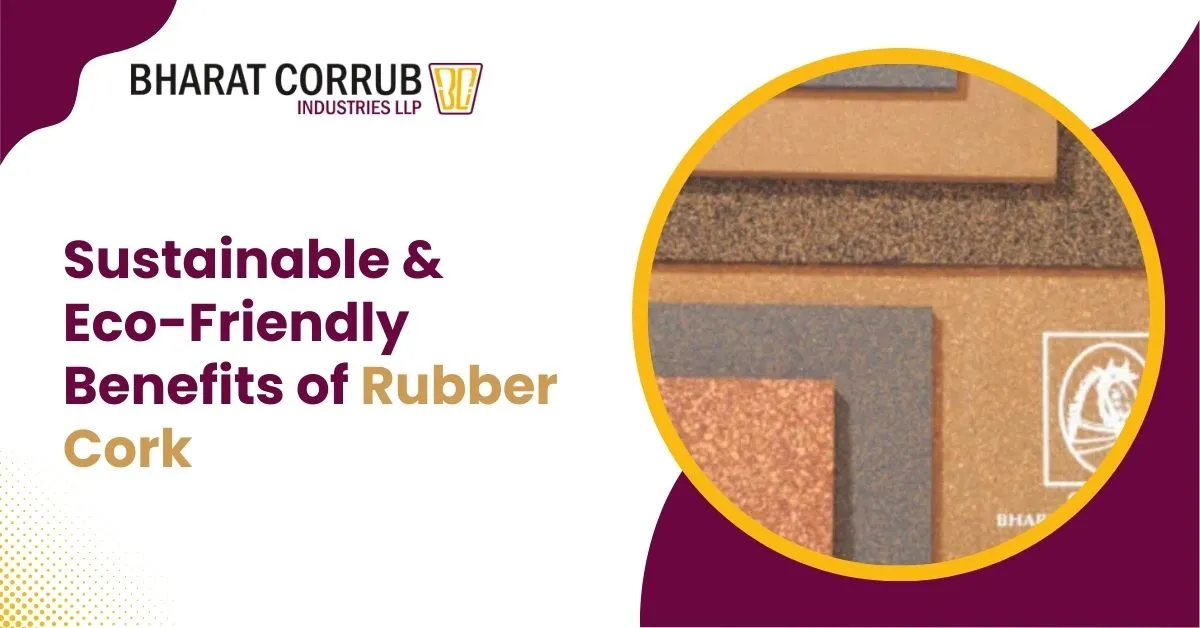
Rubber cork is a composite material made by combining natural cork granules with rubber binders. This unique blend results in a flexible, lightweight, and durable material for rubber cork that performs exceptionally well in sealing, insulation, vibration control, and flooring applications.

Unlike synthetic alternatives, rubber cork uses renewable and recyclable resources, making it an environmentally responsible choice for modern industrial needs.

Why Rubber Cork Is Considered an Eco-Friendly Material?

1. Made from Renewable and Natural Resources

One of the biggest sustainability advantages of rubber cork is its raw material composition.

Key eco-friendly aspects include:

  • Cork is harvested from cork oak trees without cutting them down
  • Trees regenerate bark every 9–12 years
  • Rubber used can be natural or recycled
  • Minimal environmental damage during harvesting

This makes rubber cork a renewable material, unlike plastic-based or petroleum-derived alternatives.

2. Supports Recycling and Circular Economy

Rubber cork aligns perfectly with circular economy principles. Many rubber cork products incorporate recycled rubber, reducing landfill waste and extending material life cycles.

Environmental benefits include:

  • Reduced industrial rubber waste
  • Lower demand for virgin raw materials
  • Reusability in multiple applications
  • Reduced carbon footprint during production

This makes rubber cork an excellent solution for industries focused on sustainable material sourcing.

3. Excellent Thermal and Acoustic Insulation

Rubber cork provides natural insulation due to its cellular structure.

Performance advantages:

  • Reduces heat transfer
  • Improves energy efficiency in buildings
  • Absorbs sound and vibration
  • Enhances indoor comfort

By improving insulation efficiency, rubber cork helps reduce energy consumption—contributing directly to lower greenhouse gas emissions.

Looking to upgrade your products with sustainable rubber cork solutions? contact us today for eco-friendly, high-performance materials.

4. Long-Lasting and Durable Material

Durability is a key sustainability factor. Materials that last longer reduce replacement frequency and waste generation.

Rubber cork offers:

  • High resistance to wear and tear
  • Excellent compression recovery
  • Resistance to oils, moisture, and aging
  • Long service life in industrial conditions

A longer lifespan means less material waste and lower environmental impact over time.

5. Low Energy Consumption During Production

Compared to fully synthetic materials, rubber cork manufacturing consumes less energy.

Why this matters:

  • Lower CO₂ emissions
  • Reduced reliance on fossil fuels
  • Cleaner production processes

This makes rubber cork suitable for companies aiming to meet ESG and sustainability compliance standards.

6. Non-Toxic and Safe Material

Rubber cork does not release harmful chemicals under normal conditions.

Safety and environmental benefits include:

  • No toxic off gassing
  • Safe for indoor and industrial use
  • Suitable for green building certifications
  • Environmentally safe disposal

These properties make rubber cork ideal for eco-conscious construction and manufacturing projects.

Applications That Benefit from Rubber Cork Sustainability

Rubber cork is widely used across industries that prioritize sustainability:

  • Construction – insulation, flooring, expansion joints
  • Automotive – vibration dampening, sealing solutions
  • Industrial manufacturing – gaskets, pads, shock absorbers
  • Renewable energy systems – noise and vibration control

Its versatility reduces the need for multiple materials, simplifying supply chains and reducing environmental impact.

Rubber Cork vs Synthetic Materials

Feature Rubber Cork Synthetic Materials
Renewable Source Yes No
Recyclability High Limited
Carbon Footprint Low High
Durability High Medium
Toxic Emissions None Possible

This comparison of Rubber Cork and Synthetic Materials highlights why rubber cork is increasingly preferred for sustainable product design.

Frequently Asked Questions

Rubber cork is partially biodegradable due to natural cork content. Its long lifespan also reduces waste generation.

Yes. Rubber cork offers improved insulation, sustainability, and material efficiency compared to pure rubber.

Yes, many rubber cork products can be reused or recycled depending on formulation and application.

Absolutely. Rubber cork supports energy efficiency, indoor air quality, and sustainable material sourcing.

Conclusion

Rubber cork is more than just a functional industrial material—it is a sustainable solution that supports environmental responsibility without compromising performance. From renewable sourcing and recyclability to durability and energy efficiency, rubber cork aligns perfectly with modern eco-friendly manufacturing goals.

As industries move toward greener practices, adopting materials like rubber cork can significantly reduce environmental impact while delivering long-term value.

Mehul Tolia is a Partner at Bharat Corrub Industries LLP (BCI), a leading manufacturer and exporter of cork and rubber cork products in India. With nearly a decade of experience, he has been a driving force behind BCI’s business development, product innovation, and process optimization initiatives. His leadership emphasizes quality, sustainability, and customer satisfaction, helping BCI strengthen its global presence. As a member of CII Young Indians (Yi) Vadodara), Mehul is passionate about fostering industrial growth and promoting innovation within the manufacturing sector.

Rubber Cork Insights and Trends
1. Rubber Cork Sheet Tax Details
2. Sustainable and Eco-Friendly Benefits of Rubber Cork
3. Latest Trends in Rubber Cork Applications
4. How to Store & Maintain Rubber Cork Products?
5. Why Rubber Cork Gaskets Fail & How to Prevent It?
6. Rubber Cork Quality Standards & Certifications
7. Rubber Cork HSN Code & GST Rate
8. Rubber Cork Price in India: Factors & Guide
9. Rubber Cork Manufacturing Process Explained
10. Rubber Cork Thickness, Density & Specifications Guide
11. How to Choose the Right Rubber Cork Material?
12. Rubber Cork vs Neoprene Gaskets
13. Rubber Cork vs Rubber Sheet: Which Is Better?
14. Rubber Cork vs Plain Cork: Key Differences Explained
15. Rubber Cork for Noise & Vibration Control
16. Rubber Cork for HVAC, Compressors & Pumps
17. Rubber Cork in Transformers & Electrical Equipment
18. Rubber Cork for Automotive Industry Applications
19. Rubber Cork Strip & Angles for Leak-Proof Gaskets
20. Rubber Cork Gasket: Why It’s Ideal for Industrial Sealing
21. Rubber Cork Roll: Applications in Sealing & Vibration Control
22. Rubber Cork Sheet: Properties, Uses & Benefits
Back To Top