



Cork is a natural, versatile material that has been used for centuries, yet it continues…
- 12 minute read
- Mehul Tolia
- Product Guide
Cork roll is a highly versatile and reliable material widely used in insulation and sealing applications across various industries. Made from natural cork granules or combined with rubber polymers, cork roll provides excellent thermal insulation, vibration control, and sealing performance. Due to its flexibility, durability, and eco-friendly nature, cork roll insulation material is commonly used in electrical equipment, HVAC systems, automotive components, and industrial machinery.
The unique cellular structure of cork roll contains millions of air-filled cells, which allow it to compress, absorb vibration, and prevent heat and fluid transfer. These properties make cork roll an ideal material for industrial sealing, gasket manufacturing, and insulation systems. This guide explains cork roll applications, benefits, properties, and industrial uses to help you understand why cork roll is one of the most preferred insulation and sealing materials.
What is a Cork Roll?
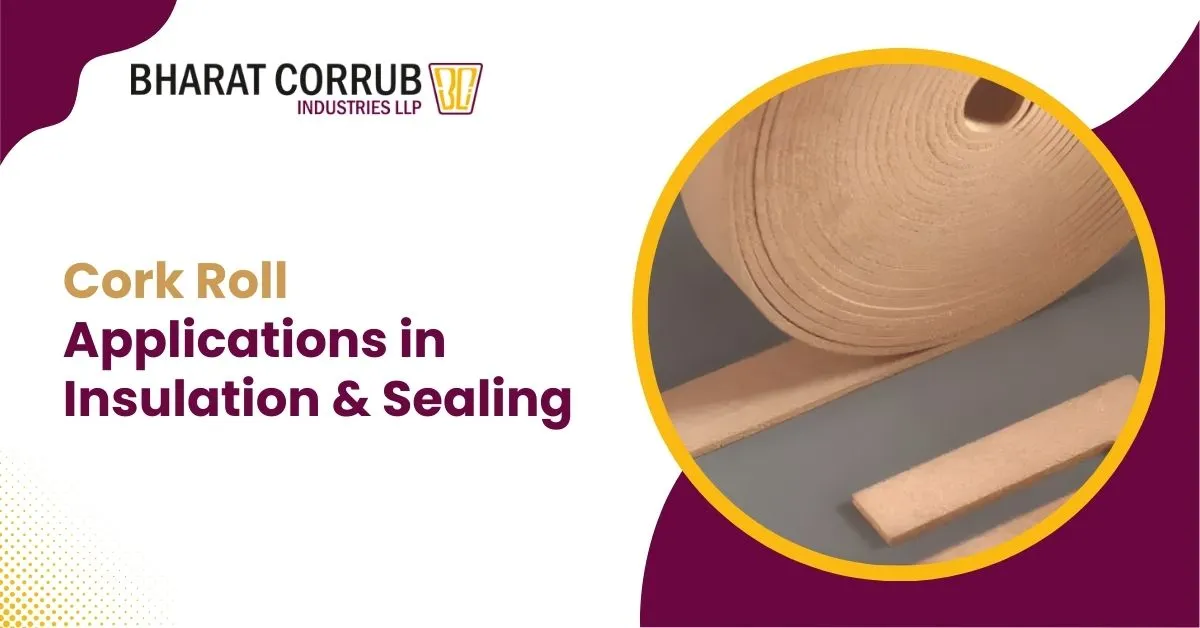
Cork roll is a flexible insulation and sealing material made from natural cork granules, offering excellent compressibility, insulation, and durability. cork roll is manufactured in continuous roll form, making it easy to cut, handle, and install for various industrial and commercial applications.
Plain Cork Roll
Plain cork roll is made entirely from natural cork granules without rubber additives. It is commonly used in thermal insulation, cushioning, expansion joints, and light sealing applications where exposure to oil or chemicals is limited.
Rubber Cork Roll
Rubber cork roll is made by combining cork granules with synthetic rubber such as Nitrile or Neoprene. This improves flexibility, oil resistance, and mechanical strength. Rubber cork roll is widely used for industrial gasket manufacturing, transformer sealing, and automotive sealing applications.
How are Cork Rolls Manufactured?
Cork roll manufacturing involves processing natural cork into flexible roll form to provide effective insulation and sealing performance. The manufacturing process ensures consistent thickness, flexibility, and durability.
1. Harvesting Cork Bark
The manufacturing process begins with harvesting cork bark from cork oak trees (Quercus suber), which are primarily grown in Mediterranean regions. The outer bark is carefully removed without harming the tree, allowing it to regenerate naturally over time. This makes cork roll an environmentally friendly and renewable insulation material. The harvested cork bark is then transported to processing facilities, where it is stored and prepared for further processing. This sustainable harvesting method ensures continuous production of cork roll material without causing deforestation or environmental damage.
2. Cleaning, Drying, and Grinding into Cork Granules
Once the cork bark arrives at the manufacturing facility, it undergoes thorough cleaning to remove dust, impurities, and unwanted particles. The cleaned cork is then dried under controlled temperature conditions to reduce moisture content and improve material quality. After drying, the cork bark is ground into small granules using specialized grinding equipment. These cork granules are carefully graded based on size and density, as different granule sizes are used to achieve specific cork roll insulation and sealing properties. Fine granules provide smoother surfaces, while larger granules enhance compressibility and cushioning performance.
3. Mixing with Rubber Binder
For manufacturing rubber cork roll, the cork granules are mixed with synthetic rubber polymers such as Nitrile Rubber (NBR), Neoprene (CR), or other elastomers. This step enhances the flexibility, oil resistance, chemical resistance, and mechanical strength of the cork roll. The rubber binder improves the durability of the material and makes it suitable for demanding industrial sealing applications such as transformer gaskets, automotive sealing, and industrial machinery insulation. The mixture is blended thoroughly to ensure uniform distribution of cork granules and rubber, which is essential for producing high-quality rubber cork roll with consistent performance.
4. Compression and Roll Formation
After mixing, the cork granule material is placed into large compression presses or rolling machines. The material is subjected to controlled pressure and temperature, which bonds the cork granules together and forms continuous cork rolls. Heat activates the rubber binder in rubber cork rolls, ensuring strong bonding and structural integrity. This compression process ensures uniform thickness, density, and flexibility throughout the cork roll. The resulting cork roll insulation material offers excellent compressibility, sealing capability, and long-term durability.
5. Cooling, Cutting, and Finishing
Once the cork roll is formed, it is allowed to cool gradually to stabilize its shape and maintain its mechanical properties. Cooling ensures that the cork roll retains its flexibility and structural strength. After cooling, the cork rolls are cut into standard widths, thicknesses, and lengths according to industrial requirements. Precision cutting equipment ensures accurate dimensions and smooth edges. The finished cork rolls are then inspected for quality, density, thickness consistency, and surface finish to ensure they meet industrial performance standards.
Properties of Cork Roll for Insulation and Sealing
Cork roll insulation material offers unique physical and mechanical properties that make it ideal for industrial sealing and insulation applications.
| Property | Description | Benefit |
| Compressibility | Easily compresses and recovers shape | Reliable sealing |
| Flexibility | Can bend without cracking | Easy installation |
| Thermal insulation | Low heat conductivity | Heat protection |
| Electrical insulation | Non-conductive material | Electrical safety |
| Chemical resistance | Resistant to oils and fluids | Long service life |
| Vibration absorption | Absorbs noise and vibration | Equipment protection |
| Lightweight | Easy to handle and install | Reduced labor effort |
| Durability | Long-lasting performance | Reduced maintenance |
These properties make cork roll insulation material suitable for industrial environments.
Benefits of Cork Roll in Insulation Applications
Cork roll insulation is widely used in industrial and commercial applications due to its excellent thermal insulation, electrical safety, flexibility, and long-term durability. The natural cellular structure of cork roll material contains millions of tiny air pockets, which act as barriers against heat, electricity, and vibration. This makes cork insulation roll one of the most effective and reliable solutions for insulating electrical equipment, HVAC systems, machinery, and industrial infrastructure.
Excellent Thermal Insulation
One of the most important advantages of cork roll insulation material is its low thermal conductivity. This means cork roll effectively prevents heat transfer between surfaces, helping maintain stable temperatures in industrial equipment and systems. This property makes cork roll ideal for thermal insulation in transformers, electrical panels, HVAC ducts, boilers, refrigeration systems, and heavy machinery. By reducing heat loss or heat gain, cork roll improves system efficiency and protects sensitive components from temperature damage.
Electrical Insulation Properties
Cork roll is a non-conductive material, making it highly suitable for electrical insulation applications. It prevents the flow of electrical current, reducing the risk of short circuits, electrical leakage, and equipment failure. This makes cork roll insulation ideal for use in transformers, switchgear, electrical panels, generators, and power distribution equipment. The electrical insulation properties of cork roll improve safety and ensure reliable performance in electrical systems.
Energy Efficiency and Cost Savings
Using cork roll insulation helps improve overall energy efficiency by minimizing heat loss and maintaining consistent temperatures. This reduces the need for additional energy to heat or cool equipment and buildings. Improved energy efficiency leads to lower operational costs, reduced energy consumption, and improved equipment performance. This makes cork roll an economical insulation material for long-term industrial use.
Lightweight and Flexible Material
Cork roll insulation material is lightweight and highly flexible, making it easy to handle, transport, cut, and install. Its flexible structure allows it to conform easily to different shapes and surfaces, ensuring complete insulation coverage. This makes cork roll ideal for insulating complex equipment, curved surfaces, pipes, and machinery. The ease of installation reduces labor time and improves efficiency in industrial applications.
Long Service Life and Durability
Cork roll insulation offers excellent durability and long service life, even in demanding industrial environments. It maintains its insulation properties and structural integrity under pressure, temperature variations, and mechanical stress. Unlike some insulation materials that degrade over time, cork roll retains its performance for many years. This reduces maintenance costs, minimizes replacement frequency, and ensures long-term reliability.
Moisture and Environmental Resistance
Cork roll insulation also provides good resistance to moisture, environmental exposure, and aging. This makes it suitable for use in both indoor and outdoor applications. Its resistance to environmental factors ensures consistent insulation performance and protects equipment from damage caused by temperature fluctuations and external conditions.
Vibration and Noise Insulation
In addition to thermal insulation, cork roll material also absorbs vibration and reduces noise transmission. This makes it ideal for insulating machinery, generators, compressors, and HVAC systems. By reducing vibration and noise, cork roll helps improve equipment performance and extends machinery lifespan.
Need high-quality cork roll for insulation or gasket sealing applications?
Contact us today for expert support and the right material solution.
Applications of Cork Roll in Sealing
Cork roll sealing material is widely used in industrial sealing applications due to its excellent compressibility, flexibility, and leak-proof performance. The unique cellular structure of cork roll gasket material allows it to compress under pressure and conform to uneven surfaces, creating a tight and reliable seal. This prevents leakage of fluids, gases, oil, and air, making cork roll an ideal choice for industrial equipment, electrical systems, and automotive components.
Transformer Gasket Sealing
Cork roll is extensively used for transformer gasket sealing due to its excellent oil resistance and electrical insulation properties. It helps prevent leakage of transformer oil, ensuring safe and efficient operation of electrical transformers. cork roll also withstands temperature changes and pressure, making it ideal for long-term transformer sealing applications.
Automotive Gasket Manufacturing
Cork roll gasket material is widely used in automotive engines and vehicle components for sealing applications. It is commonly used in engine gaskets, valve cover gaskets, oil seals, and transmission systems. cork roll provides reliable sealing performance, prevents oil leakage, and improves engine efficiency and reliability.
Industrial Machinery Sealing
Industrial cork roll is used for sealing heavy machinery and equipment to prevent fluid and air leakage. It is commonly used in compressors, pumps, generators, and hydraulic systems. cork roll’s flexibility and compressibility ensure proper sealing even under high pressure and mechanical stress, helping maintain machinery performance and reducing maintenance needs.
HVAC Sealing Applications
Cork roll sealing material is used in HVAC systems for sealing ducts, joints, and insulation components. It helps prevent air leakage, improves system efficiency, and ensures proper temperature control. cork roll also provides vibration isolation, improving overall HVAC system performance.
Electrical Equipment Sealing
Cork roll is widely used for sealing electrical equipment such as switchgear, control panels, and electrical enclosures. Its electrical insulation properties and sealing capability help protect sensitive electrical components from dust, moisture, and fluid leakage, ensuring safety and reliability.
Oil and Fuel Sealing Systems
Rubber cork roll is ideal for sealing applications involving oil, fuel, and lubricants. It offers excellent resistance to petroleum-based fluids, making it suitable for use in oil tanks, fuel systems, engines, and industrial fluid handling equipment. cork roll helps prevent leakage and ensures safe operation of fluid systems.
Industrial Applications of Cork Roll
Cork roll industrial applications span multiple industries due to its insulation and sealing performance.
| Industry | Cork Roll Application |
| Electrical Industry | Transformer insulation and sealing |
| Automotive Industry | Engine gasket sealing |
| Power Plants | Equipment insulation |
| HVAC Industry | Thermal insulation and sealing |
| Construction Industry | Sound and heat insulation |
| Machinery Industry | Vibration isolation and sealing |
These applications demonstrate cork roll versatility.
Plain Cork Roll vs Rubber Cork Roll
Plain cork roll and rubber cork roll differ in durability, flexibility, and sealing performance.
| Feature | Plain Cork Roll | Rubber Cork Roll |
| Flexibility | Moderate | High |
| Oil resistance | Limited | Excellent |
| Durability | Moderate | High |
| Sealing performance | Good | Excellent |
| Industrial use | Light duty | Heavy duty |
Rubber cork roll is preferred for demanding industrial applications.
Why Cork Roll is Ideal for Insulation?
Cork roll insulation material provides superior thermal, electrical, and acoustic insulation performance.
Key reasons include:
- Excellent thermal insulation
- Electrical insulation properties
- Noise and vibration reduction
- Lightweight and flexible structure
- Long service life
These features make cork roll ideal for industrial insulation systems.
Why Cork Roll is Ideal for Sealing Applications?
Cork roll sealing material provides excellent leak prevention and gasket performance.
Key reasons include:
- High compressibility and recovery
- Excellent sealing performance
- Oil and chemical resistance
- Surface adaptability
- Long-term durability
These properties make cork roll ideal for gasket manufacturing.
Frequently Asked Questions
Cork roll is used for insulation, sealing, gasket manufacturing, vibration control, and electrical insulation applications.
Yes, cork roll provides excellent thermal and electrical insulation due to its natural cellular structure.
Industries include electrical, automotive, construction, HVAC, power generation, and industrial machinery.
Rubber cork roll offers better flexibility, oil resistance, durability, and sealing performance compared to plain cork roll.
Cork roll compresses easily and provides reliable sealing, preventing leakage of fluids and gases.
Conclusion
Cork roll insulation and sealing material is one of the most reliable and versatile solutions for industrial applications. Its excellent compressibility, insulation properties, durability, and environmental sustainability make it ideal for gasket manufacturing, transformer insulation, machinery sealing, and vibration control. With its ability to provide long-term performance, energy efficiency, and reliable sealing, cork roll remains a preferred choice for industries requiring high-quality insulation and sealing solutions.

Mehul Tolia
Mehul Tolia is a Partner at Bharat Corrub Industries LLP (BCI), a leading manufacturer and exporter of cork and rubber cork products in India. With nearly a decade of experience, he has been a driving force behind BCI’s business development, product innovation, and process optimization initiatives. His leadership emphasizes quality, sustainability, and customer satisfaction, helping BCI strengthen its global presence. As a member of CII Young Indians (Yi) Vadodara), Mehul is passionate about fostering industrial growth and promoting innovation within the manufacturing sector.
Related Posts
In industrial and automotive applications, material quality plays a major role in ensuring smooth operations…
Sustainability is no longer a trend—it has become a necessity for industries worldwide. Manufacturers, architects,…
