Skip to content
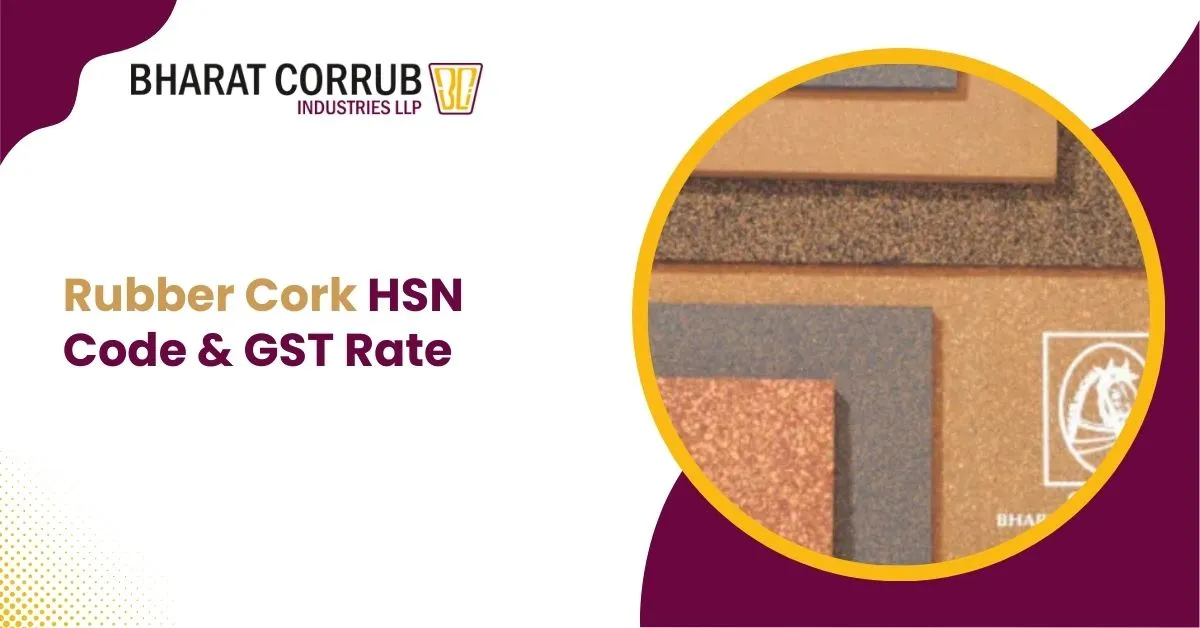
Rubber Cork HSN Code & GST Rate

If you deal in rubber cork sheets, rubberised cork gaskets, sealing strips, or vibration pads, using the correct HSN code and GST rate is extremely important for accurate invoicing, GST returns, and input tax credit (ITC). Rubber cork is a composite material made from natural cork and rubber, and in Indian taxation it is typically treated as a cork-based product with a binding substance rather than a pure rubber item.

Understanding how rubber cork is classified under GST helps avoid errors, mismatched returns, and compliance issues.

What Is an HSN Code?

HSN (Harmonized System of Nomenclature) is a standard product classification system used for GST invoicing in India.
It helps the government identify:

  • The correct GST rate
  • The nature of the product
  • Whether the product is eligible for input tax credit

Using the wrong HSN code can lead to:

  • Incorrect tax charged
  • Rejected ITC for customers
  • GST audit or penalty risk

That is why using the correct rubber cork HSN code is critical.

Rubber Cork HSN Code in India

Rubber cork is classified under Chapter 45, which covers cork and articles of cork.
Since rubber cork is made from agglomerated cork bonded with rubber, it normally falls under:

HSN 4504 – Agglomerated cork (with or without binding substance)

Common sub-categories used in trade are:

  • 45041010 – Cork sheets (often used for rubberised cork sheets)
  • 45041090 – Other forms of agglomerated cork, including rubber cork products

These HSN codes are commonly used for:

  • Rubber cork sheets
  • Rubberised cork gasket material
  • Cork-rubber sealing products
  • Cork-rubber vibration pads

If a product is pure rubber sheet (without cork), it falls under Chapter 40 instead. But if cork is part of the material, Chapter 45 is normally used.

Rubber Cork GST Rate in India

The GST rate for rubber cork depends on how it is classified under the GST schedule.
When rubber cork is classified under HSN 4504 (agglomerated cork), it falls under a lower GST slab compared to many rubber products.

However, GST rates can change over time due to government notifications.
That is why it is important to:

  • Check the latest GST rate schedule
  • Match the rate to HSN 4504
  • Apply the rate valid on your invoice date

Most rubber cork products are billed under the cork chapter, not the rubber chapter, which usually means a lower GST burden for buyers.

Need help with the correct Rubber Cork HSN Code & GST Rate for your products? Contact us for expert guidance and compliant rubber cork solutions.

Rubber Cork HSN & GST

Rubber Cork HSN & GST classification plays a crucial role in accurate invoicing, correct tax rates, and smooth GST compliance. Understanding the right HSN code and applicable GST rate for rubber cork products helps businesses avoid billing errors, ITC issues, and audit risks

Product Type HSN Code Description
Rubber cork sheets 45041010 Agglomerated cork sheets with rubber binder
Rubber cork gasket material 45041090 Rubber-bonded cork articles
Rubberised cork rolls & strips 4504 Agglomerated cork with binding substance
Pure rubber sheet (no cork) Chapter 40 Rubber products (different GST slab)

How to Use Rubber Cork HSN Code on Invoices?

When preparing an invoice:

  • Write the product clearly as rubber cork sheet, rubberised cork gasket, or cork-rubber sealing material
  • Use HSN 4504 / 45041010 / 45041090 based on form
  • Apply GST as per the latest rate for that HSN
  • Keep technical details showing it contains cork + rubber

This avoids confusion with rubber sheets, which fall under a different chapter.

Common GST Mistakes to Avoid

Understanding common GST mistakes to avoid when billing rubber cork products helps prevent tax errors, ITC rejections, and compliance issues.

  • Using rubber HSN (Chapter 40) for cork-based products
  • Not updating GST rate after schedule changes
  • Writing vague product descriptions
  • Mixing rubber cork and rubber sheet under one HSN

These errors can lead to wrong GST charged and ITC rejection.

Frequently Asked Questions

Rubber cork is usually classified under HSN 4504, which covers agglomerated cork with or without a binding substance, including cork-rubber composite materials used for gaskets and sealing sheets.

Most rubberised cork sheets are classified under HSN 45041010, which specifically applies to agglomerated cork sheets used for industrial sealing and insulation.

Rubber cork is generally taxed as a cork-based composite product under Chapter 45, not as a pure rubber product under Chapter 40, because cork is the main structural material.

Yes, rubber cork usually falls under a lower GST slab compared to pure rubber sheets, since cork-based products are taxed differently under GST.

Using the correct HSN code ensures the right GST rate, allows buyers to claim input tax credit (ITC) without issues, and helps avoid GST mismatches or audit penalties.

Conclusion

Understanding the correct HSN code and GST rate for rubber cork is essential for accurate invoicing, tax compliance, and smooth business operations. Since rubber cork is a cork-based composite material, it is generally classified under HSN 4504 and its related sub-codes, rather than under pure rubber categories. Using the right HSN ensures the correct GST rate is applied, helps buyers claim valid input tax credit, and prevents costly errors during audits or return filings. By classifying rubber cork correctly and following the latest GST schedules, businesses can trade confidently and compliantly.

Mehul Tolia is a Partner at Bharat Corrub Industries LLP (BCI), a leading manufacturer and exporter of cork and rubber cork products in India. With nearly a decade of experience, he has been a driving force behind BCI’s business development, product innovation, and process optimization initiatives. His leadership emphasizes quality, sustainability, and customer satisfaction, helping BCI strengthen its global presence. As a member of CII Young Indians (Yi) Vadodara), Mehul is passionate about fostering industrial growth and promoting innovation within the manufacturing sector.

Rubber Cork Insights and Trends
1. Rubber Cork Sheet Tax Details
2. Sustainable and Eco-Friendly Benefits of Rubber Cork
3. Latest Trends in Rubber Cork Applications
4. How to Store & Maintain Rubber Cork Products?
5. Why Rubber Cork Gaskets Fail & How to Prevent It?
6. Rubber Cork Quality Standards & Certifications
7. Rubber Cork HSN Code & GST Rate
8. Rubber Cork Price in India: Factors & Guide
9. Rubber Cork Manufacturing Process Explained
10. Rubber Cork Thickness, Density & Specifications Guide
11. How to Choose the Right Rubber Cork Material?
12. Rubber Cork vs Neoprene Gaskets
13. Rubber Cork vs Rubber Sheet: Which Is Better?
14. Rubber Cork vs Plain Cork: Key Differences Explained
15. Rubber Cork for Noise & Vibration Control
16. Rubber Cork for HVAC, Compressors & Pumps
17. Rubber Cork in Transformers & Electrical Equipment
18. Rubber Cork for Automotive Industry Applications
19. Rubber Cork Strip & Angles for Leak-Proof Gaskets
20. Rubber Cork Gasket: Why It’s Ideal for Industrial Sealing
21. Rubber Cork Roll: Applications in Sealing & Vibration Control
22. Rubber Cork Sheet: Properties, Uses & Benefits
Back To Top