Discover practical product tips and insights on Rubber Cork Sheets, Rolls, and Gaskets for diverse industries such as automotive, electrical, and construction. Our blogs guide you on choosing the right cork products, enhancing durability, achieving energy efficiency, and optimizing performance with Bharat Corrub Industries LLP’s high-quality solutions.
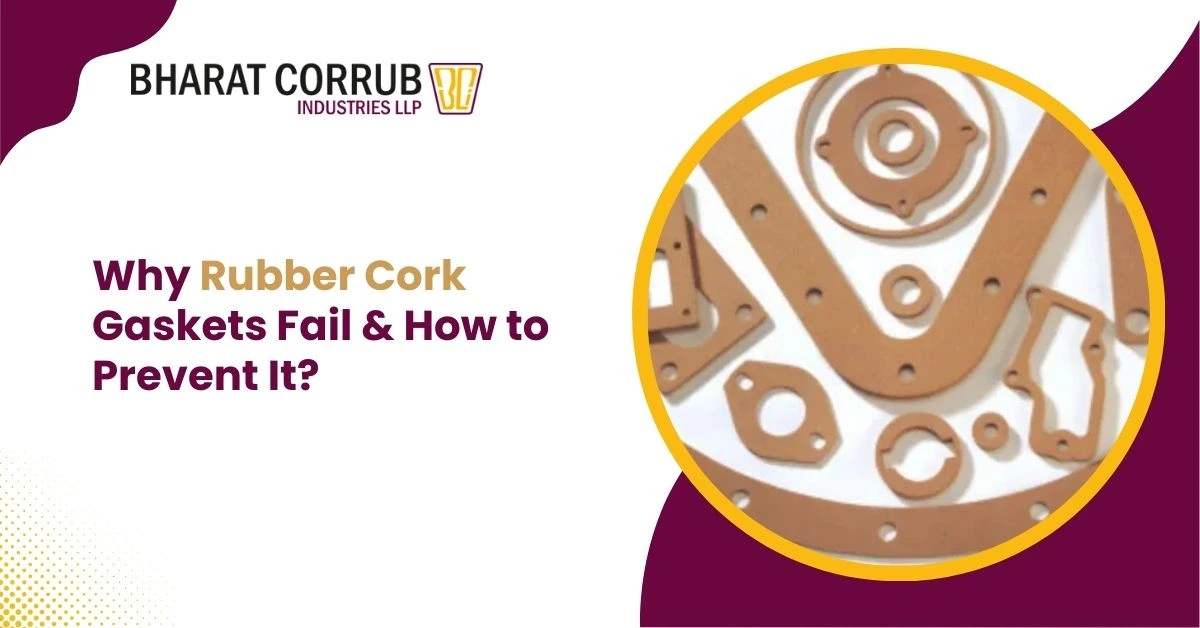
Rubber cork gaskets are widely used in flanges, pumps, compressors, HVAC systems, and industrial enclosures because they provide excellent sealing, vibration damping, and low squeeze-out. However, when rubber cork gaskets fail, they can cause leaks, pressure loss, equipment damage, and…
If you deal in rubber cork sheets, rubberised cork gaskets, sealing strips, or vibration pads, using the correct HSN code and GST rate is extremely important for accurate invoicing, GST returns, and input tax credit (ITC). Rubber cork is a…
Rubber cork is widely used for gaskets, sealing sheets, vibration isolation pads, HVAC flange seals, compressors, pumps, and electrical equipment. If you’re searching for rubber cork price in India, you’ll quickly notice that prices vary a lot—because rubber cork is…
Rubber cork is a high-performance composite used for industrial gaskets, vibration isolation pads, sealing strips, and noise-control materials. Its unique properties come from a carefully controlled manufacturing process that combines natural cork and rubber into a durable, flexible, and reliable…
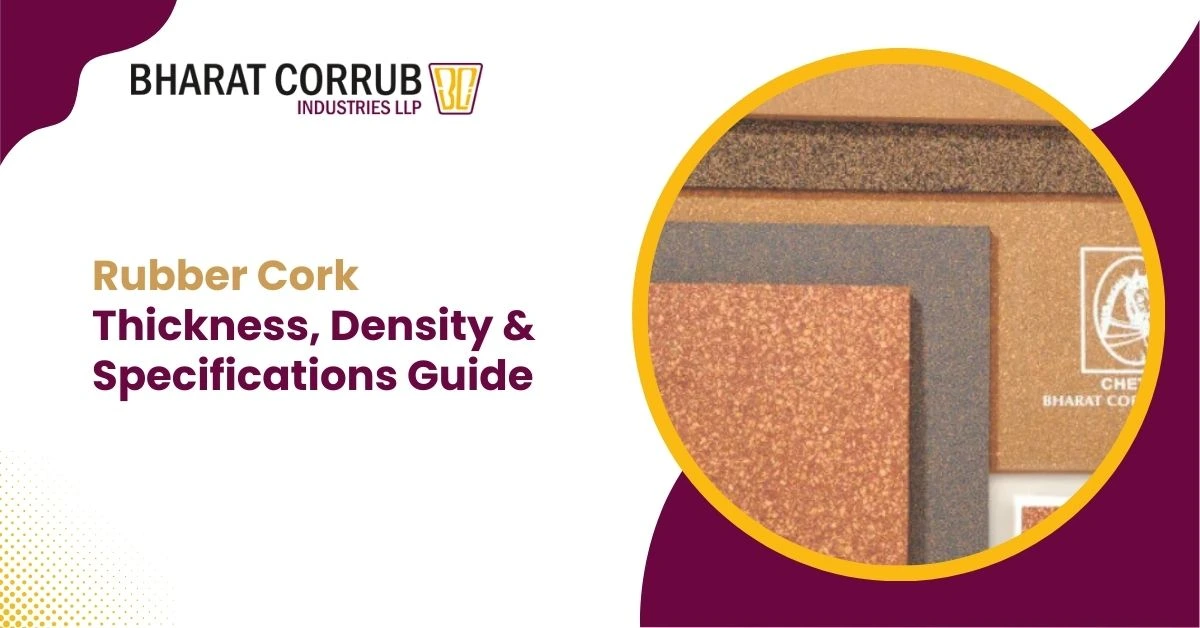
Rubber cork is one of the most trusted materials for industrial sealing, vibration isolation, and acoustic control. But to get the best performance, it is important to choose the correct rubber cork thickness, density, and technical specifications. Selecting the wrong…
Rubber cork is one of the most widely used industrial sealing and vibration-damping materials. It is used in gaskets, pads, strips, and sheets for pumps, compressors, HVAC systems, electrical panels, and machinery. However, not all rubber cork is the same…
Choosing the right gasket material plays a crucial role in leak prevention, vibration control, equipment safety, and long-term reliability. In industrial environments where pumps, compressors, HVAC systems, gearboxes, and electrical enclosures operate continuously, the gasket must handle pressure, vibration, temperature…
Choosing the right gasket or sealing material plays a critical role in preventing leaks, improving equipment reliability, controlling vibration, and reducing maintenance costs. That is why engineers, maintenance teams, and buyers often compare rubber cork vs rubber sheet when selecting…
Noise and vibration are two of the biggest causes of equipment failure, workplace discomfort, and structural damage in industrial and commercial environments. Machines such as compressors, generators, HVAC systems, motors, and pumps continuously produce mechanical vibration that travels through floors,…
Modern HVAC systems, industrial compressors, and fluid pumps operate continuously under high vibration, pressure changes, temperature variation, and mechanical stress. Even small leaks or uncontrolled vibration can cause serious performance losses, excessive noise, and premature equipment failure. This is why…