Cork roll is a highly versatile and reliable material widely used in insulation and sealing…

- 8 minute read
- Mehul Tolia
- Product Guide
Cork is a versatile natural material widely used across industries due to its lightweight structure, insulation properties, and environmental sustainability. Among the many forms of cork materials used in industrial manufacturing, cork granules and cork powder play an important role in insulation, sealing, construction, and composite production. These materials are produced by processing natural Cork bark into different particle sizes that serve specific industrial applications.
The unique cellular structure of cork contains millions of air-filled cells that provide excellent thermal insulation, vibration absorption, and compressibility. Because of these properties, cork granules and cork powder are widely used in industries such as construction, automotive, electrical, packaging, and manufacturing. In this guide, we will explore the properties, differences, and industrial uses of cork granules and cork powder, helping you understand why these materials are essential for modern industrial applications.
What are Cork Granules?
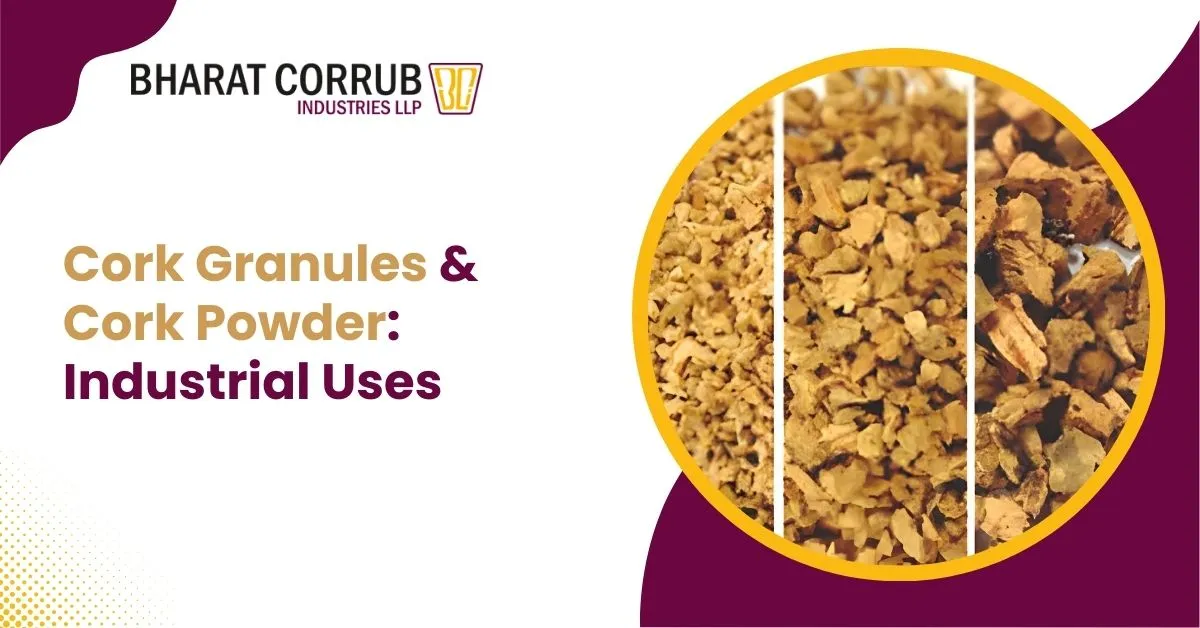
Cork granules are obtained from the bark of cork oak trees, which are primarily grown in Mediterranean regions. After harvesting the cork bark, it is cleaned, dried, and processed through grinding machines to produce Cork granules of different particle sizes. These granules retain the natural cellular structure of cork, which gives them excellent insulation and vibration-dampening properties.
The size of cork granules can vary depending on the intended application. Larger granules are often used for flooring and insulation, while smaller granules are used in composite materials and industrial manufacturing.
Common characteristics of cork granules material include:
- Lightweight structure
- Excellent thermal insulation
- High compressibility
- Acoustic insulation
- Resistance to moisture and chemicals
Because of these properties, cork granules are widely used in construction materials, insulation boards, packaging, and vibration control systems.
What is Cork Powder?
Cork powder is produced by further grinding cork granules until they reach a fine powder-like consistency. This fine particle size allows Cork powder to blend easily with other materials such as rubber, adhesives, coatings, and composite materials.
Due to its fine structure, cork powder is widely used in the production of rubber cork sheet, sealants, paints, and industrial composites. The powder maintains the natural properties of cork, including flexibility, insulation, and chemical resistance.
Important features of cork powder material include:
- Fine particle structure
- High compatibility with other materials
- Excellent insulation properties
- Good compressibility
- Lightweight composition
These characteristics make cork powder an important raw material for many industrial manufacturing processes.
Cork Granules vs Cork Powder
| Feature | Cork Granules | Cork Powder |
| Particle Size | Larger particles | Fine powder |
| Main Use | Insulation, flooring, construction | Fillers, coatings, composites |
| Flexibility | High | Moderate |
| Industrial Applications | Insulation, packaging | Sealants, rubber composites |
| Processing Stage | Initial grinding stage | Further refined material |
While cork granules are used for structural and insulation applications, Cork powder is typically used as a filler material in manufacturing processes.
Properties of Cork Granules & Cork Powder
Cork granules and Cork powder share several important physical and mechanical properties that make them suitable for industrial use.
Lightweight Structure
Cork materials are extremely lightweight due to their natural cellular structure and air-filled microscopic cells. This makes Cork granules and cork powder easy to transport, process, and use in various industrial manufacturing applications.
Thermal Insulation
One of the most valuable properties of Cork is its low thermal conductivity and excellent heat resistance capability. Cork granules provide excellent insulation for buildings, machinery, and industrial equipment requiring temperature control.
Acoustic Insulation
Cork absorbs sound and vibration effectively due to its flexible cellular structure, making it useful for noise reduction and vibration control applications in industrial machinery and construction systems.
Compressibility and Flexibility
Cork materials compress under pressure and return to their original shape because of elastic cell walls, which is useful in sealing, cushioning, and industrial gasket applications.
Chemical and Moisture Resistance
Cork granules and Cork powder show good resistance to moisture, oils, and chemicals due to their natural protective cellular composition, making them suitable for demanding industrial environments.
Industrial Uses of Cork Granules
Cork granules are widely used in industries where insulation, cushioning, and vibration control are required.
Construction Industry
Cork granules are used in insulation panels, flooring systems, and lightweight building materials. Their thermal and acoustic insulation properties improve energy efficiency in buildings.
Automotive Industry
Cork granules help reduce vibration and noise in vehicle components, improving comfort, mechanical stability, and long-term durability of automotive systems and equipment.
Packaging Industry
Due to their cushioning properties, Cork granules are used as protective packaging material for delicate equipment, fragile products, electronics, and sensitive industrial components during transportation.
Need high-quality cork granules or cork powder for industrial use? Contact us today for expert guidance and reliable material solutions.
Industrial Uses of Cork Powder
Cork powder is commonly used as a filler and additive in various manufacturing processes.
Rubber Cork Sheet Manufacturing
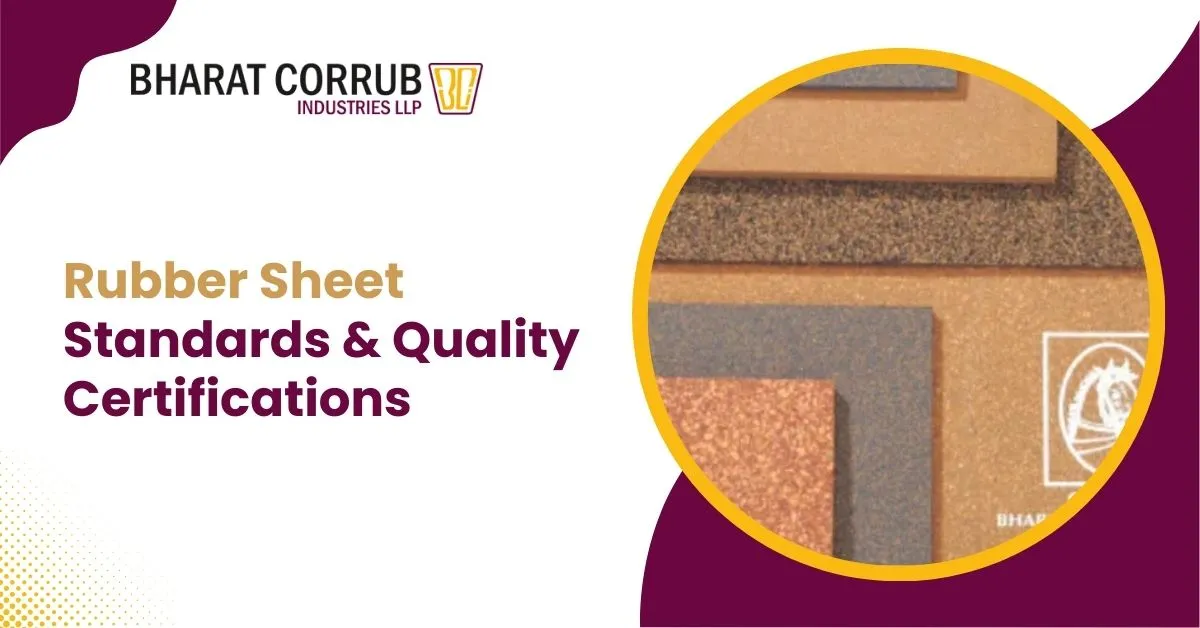
Cork powder is used as a key raw material in producing Rubber Cork Sheet, which is widely used for gasket manufacturing, transformer sealing, and industrial sealing applications.
Sealants and Adhesives
Cork powder is added to sealants and adhesives to improve flexibility, bonding strength, insulation performance, and durability in construction and industrial applications.
Friction Materials
In automotive and industrial systems, Cork powder is used in brake linings and clutch materials due to its friction stability, heat resistance, and vibration control properties.
Paints and Coatings
Cork powder can be used as an additive in paints and coatings to improve insulation properties, surface texture, durability, and thermal protection performance.
Composite Materials
Manufacturers use Cork powder to produce lightweight composite materials for construction panels, insulation boards, automotive parts, and industrial equipment components.
Applications of Cork Granules in Insulation
The Cork granules insulation is widely used because of its natural thermal and acoustic properties.
Cork granules provide effective insulation in:
- Building insulation systems
- HVAC duct insulation
- Industrial equipment insulation
- Soundproofing materials
Their natural cellular structure helps trap air, reducing heat transfer and improving energy efficiency.
Applications of Cork Powder in Manufacturing
Cork powder industrial uses are primarily focused on enhancing manufacturing materials and industrial composites.
Industries use cork powder for:
- Rubber Cork sheet production
- Industrial adhesives and sealants
- Composite manufacturing
- Friction materials
- Lightweight industrial products
Its fine particle structure allows easy mixing with other materials, making it highly versatile in production processes.
Environmental Benefits of Cork Granules and Cork Powder
Cork materials are considered one of the most sustainable natural resources used in industrial manufacturing.
Key environmental advantages include:
- Renewable natural material
- Sustainable harvesting from cork oak trees
- Low environmental impact
- Recyclable and reusable material
- Long product lifespan
Cork harvesting does not harm the tree, allowing it to regenerate naturally and making Cork one of the most environmentally friendly industrial materials available.
Frequently Asked Questions
Cork granules are used for insulation, flooring, construction materials, packaging, and vibration control applications.
Cork powder is used as filler material in rubber cork sheets, adhesives, paints, coatings, and composite materials.
Cork granules are larger particles used mainly for insulation and construction, while cork powder is finely ground cork used in fillers and industrial composites.
Yes, cork granules provide excellent thermal and acoustic insulation due to their natural cellular structure.
Yes, cork powder is eco-friendly because cork is a renewable natural material harvested sustainably.
Conclusion
Cork granules and cork powder are valuable industrial materials with wide applications in insulation, sealing, construction, and manufacturing. Their lightweight structure, thermal insulation properties, compressibility, and environmental sustainability make them ideal for a wide range of industries. While cork granules are mainly used for insulation, flooring, and cushioning, cork powder plays a key role in manufacturing composites, rubber cork sheets, adhesives, and coatings. Understanding their properties and applications helps industries choose the right Cork material for improved efficiency, durability, and Sustainability.
Mehul Tolia
Mehul Tolia is a Partner at Bharat Corrub Industries LLP (BCI), a leading manufacturer and exporter of cork and rubber cork products in India. With nearly a decade of experience, he has been a driving force behind BCI’s business development, product innovation, and process optimization initiatives. His leadership emphasizes quality, sustainability, and customer satisfaction, helping BCI strengthen its global presence. As a member of CII Young Indians (Yi) Vadodara), Mehul is passionate about fostering industrial growth and promoting innovation within the manufacturing sector.