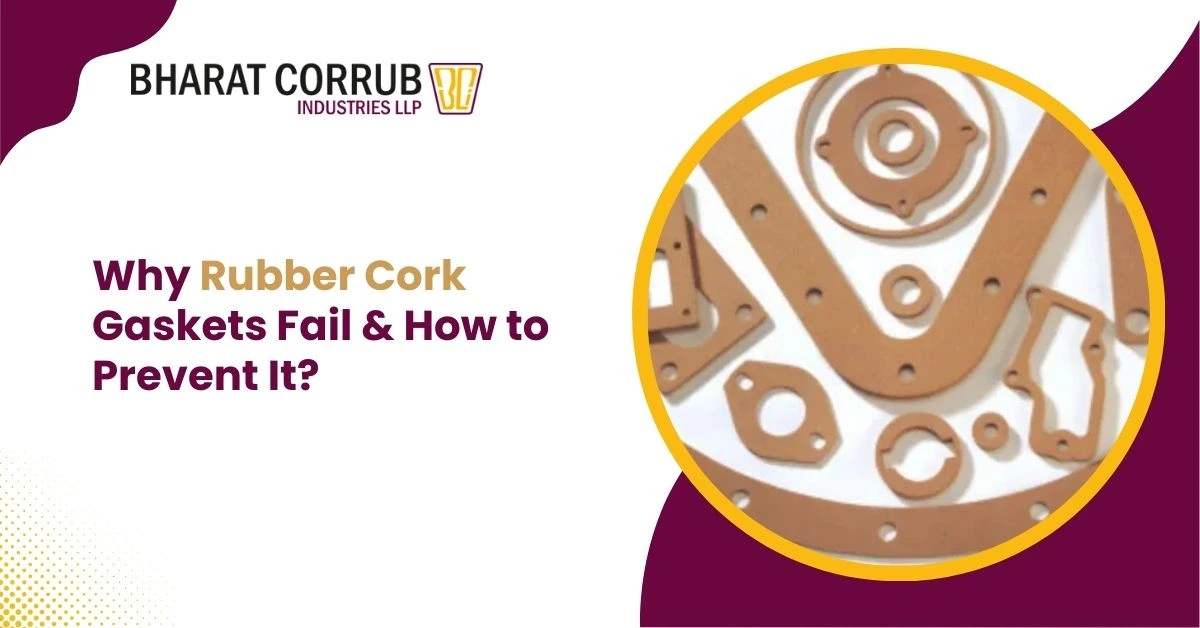
Rubber cork gaskets are widely used in flanges, pumps, compressors, HVAC systems, and industrial enclosures…

Frequently Asked Questions
Rubber cork is used for duct flange gaskets, AHU panel sealing, and vibration control, helping prevent air leaks, reduce noise, and improve system efficiency.
Yes, rubber cork acts as an anti-vibration and shock-absorbing material that reduces machine movement, lowers noise levels, and protects internal components from mechanical stress.
Rubber cork is widely used for pump flange and casing gaskets because it conforms to uneven surfaces and maintains long-lasting, leak-proof sealing under pressure.
Yes, nitrile-bonded rubber cork is specially designed to resist oils, fuels, and lubricants, making it ideal for compressors, pumps, and gearboxes.
Thicker rubber cork is generally preferred for vibration isolation pads, while thinner grades are better for flange gaskets and sealing applications.
Conclusion
Rubber cork is a highly effective and reliable material for HVAC systems, compressors, and pumps because it delivers both leak-proof sealing and excellent vibration control in demanding operating conditions. Its unique combination of cork’s natural compressibility and rubber’s durability allows it to conform to uneven surfaces, absorb mechanical shock, and maintain stable sealing pressure over time. This helps reduce air leaks, oil seepage, noise, and mechanical wear, which directly improves system efficiency and equipment lifespan.
By choosing the right rubber cork grade, thickness, and format, industries can significantly lower maintenance costs, reduce downtime, and ensure smoother and quieter machine operation. Whether used as gaskets, sealing strips, or vibration isolation pads, rubber cork remains one of the most dependable solutions for improving performance and reliability in HVAC, compressor, and pump applications.

17.
Rubber Cork for HVAC, Compressors & Pumps
Related Posts