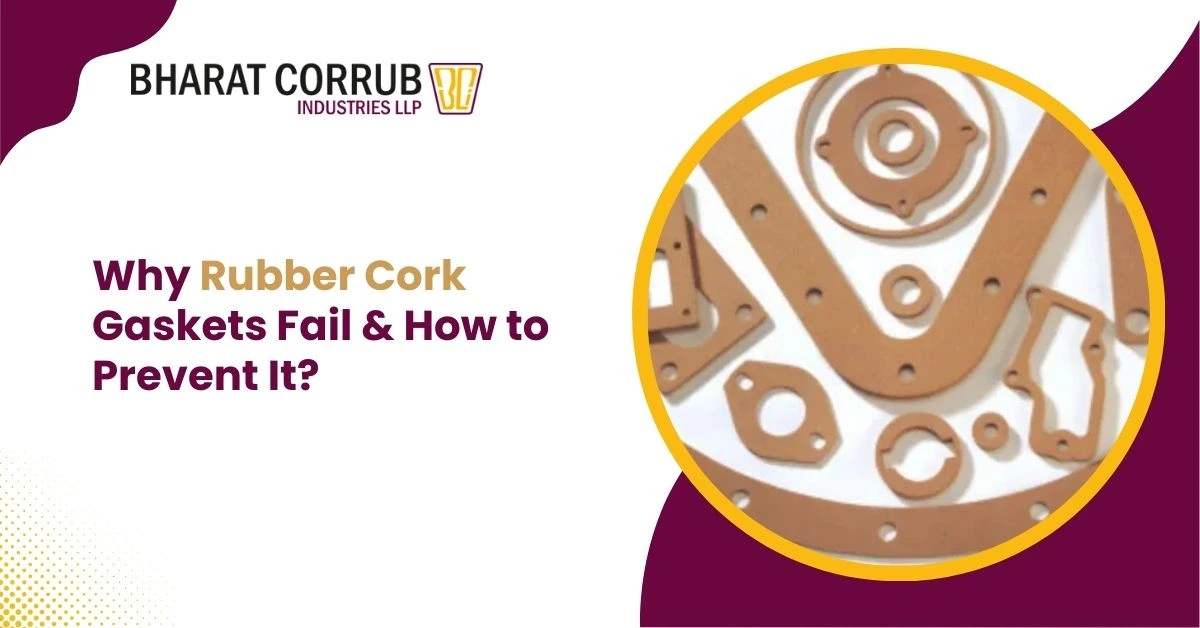
Rubber cork gaskets are widely used in flanges, pumps, compressors, HVAC systems, and industrial enclosures…

Frequently Asked Questions
Rubber cork material is used for gaskets, vibration pads, sealing strips, and insulation in pumps, compressors, HVAC systems, and industrial machinery.
You should consider fluid exposure, temperature, compression load, thickness, and vibration level to select the correct rubber cork grade.
Yes, nitrile-bonded rubber cork is highly resistant to oils, fuels, and lubricants, making it ideal for industrial sealing.
Thicker rubber cork is better for vibration isolation, while thinner grades are used for flange gaskets and sealing.
Yes, EPDM-based rubber cork is suitable for outdoor use because it resists weather, moisture, and ozone.
Conclusion
Choosing the right rubber cork material is essential for achieving reliable sealing, effective vibration control, and long-term equipment performance. By understanding your operating conditions—such as fluid exposure, temperature range, compression load, and vibration level—you can select the rubber cork grade, thickness, and format that best matches your application. Using the correct rubber binder, whether nitrile for oil resistance or EPDM for outdoor durability, further ensures that the material performs as expected. When properly selected, rubber cork provides superior conformity, low squeeze-out, excellent vibration damping, and long service life. This not only reduces leaks and maintenance costs but also helps protect machinery and improve overall system efficiency.

12.
How to Choose the Right Rubber Cork Material?
Related Posts