Skip to content
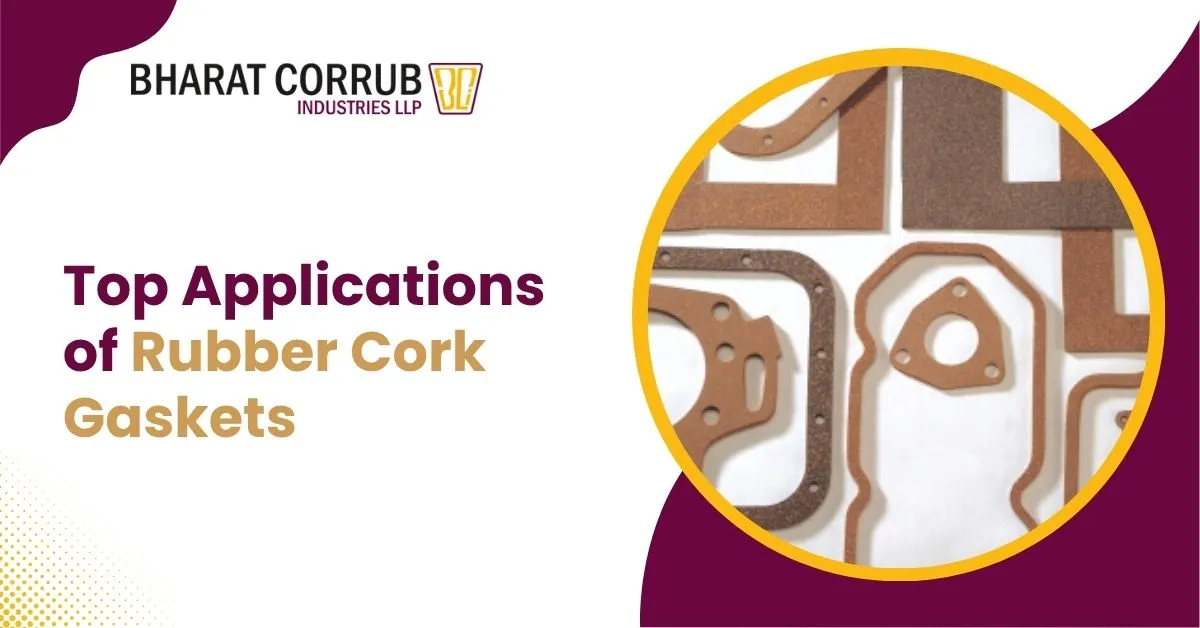
Top Applications of Rubber Cork Gaskets

Rubber cork gaskets have become a trusted sealing solution across multiple industries thanks to their unique blend of flexibility, compressibility, and chemical resistance. Engineered by combining natural cork granules with durable synthetic rubber, these gaskets deliver reliable performance in environments exposed to oil, fuel, heat, and continuous vibration. Their ability to fill surface irregularities, maintain tight seals, and absorb shock makes them an essential component in automotive engines, transformers, industrial machinery, and other critical systems.

What Makes Rubber Cork Gaskets Special?

Rubber cork gaskets are engineered by blending granulated cork with synthetic rubber, such as NBR (nitrile), neoprene, or EPDM. This composite structure creates a material that offers:

  • High compressibility (thanks to cork)
  • Oil and fuel resistance (thanks to rubber)
  • Vibration and noise dampening
  • Good recovery from deformation

Because of these characteristics, they’re particularly useful where tight sealing is needed but surface irregularities or vibration are a concern.

Applications of Rubber Cork Gaskets

Here are some of the major industrial applications where rubber cork gaskets are widely used:

  1. Automotive Sealing
    Engine gaskets, valve covers, transmission housings, oil pan seals — all these components benefit from rubber cork’s compressibility and oil resistance. The gasket can fill uneven surfaces while maintaining a reliable seal against engine oil and fuel.
  2. Electrical & Transformer Components
    In transformers and electrical enclosures, rubber cork gaskets are used to seal flanges and covers, preventing leakage of insulating oil and providing electrical insulation.
  3. Industrial Machinery
    Machines like pumps, compressors, and gearboxes require sealing elements that can handle vibration and dynamic loads. Rubber cork gaskets absorb shock, maintain sealing integrity, and resist lubricant exposure.
  4. Gas and Utility Valves
    Some rubber cork compositions (e.g., cork + specialized rubber) are certified for use in gas valves and LPG systems, thanks to their flexibility, resilience, and chemical stability.
  5. Construction & Infrastructure
    In buildings and bridges, rubber cork gaskets serve as joint seals, vibration pads, or expansion joint fillers. They absorb movement and reduce noise thanks to their elastic properties.
  6. General Sealing & Cushion Applications
    Beyond high-pressure or high-temperature environments, rubber cork gaskets are used for anti-vibration pads, protective liners, and cushioning strips — providing both sealing and impact absorption.

Looking for durable, oil-resistant rubber cork gaskets for your machinery? Get a quote from Bharat Corrub Industries LLP and enhance reliability across your operations.

Application Comparison

Application AreaWhy Rubber Cork Gasket Works WellTypical Binder / Material
Automotive EnginesSeals oil, resists fuel, fills irregular flangesNBR (nitrile)
Electrical / TransformersOil-tight, electrically insulating, vibration dampeningNBR or Neoprene
Industrial MachineryShock absorption, dynamic sealing, lubricant resistanceNBR / SBR
Gas Valves & UtilitiesFlexible seal, certified for gas tightnessSpecial cork-rubber blend
Construction & Expansion JointsAbsorbs vibration, resilient under movementCork + synthetic rubber
Cushion / Insulation PadsDampens sound and vibration, cushioning effectCork + EPDM or NBR

Why These Applications Are Growing

  • Demand for Eco-Friendly Seals: Cork is a renewable material harvested from oak bark, making cork-rubber gaskets a more sustainable sealing option.
  • Oil & Fuel Resistant Materials: As machinery and engines rely more on complex fluids, oil-resistant gasket materials like cork-rubber become essential.
  • Vibration & NVH Control: In automotive and industrial sectors, reducing noise, vibration, and harshness (NVH) is a rising priority — cork-rubber gaskets help in absorbing shocks and dampening sound.
  • Low to Moderate Pressure Sealing: Many flange or panel applications do not require extreme sealing pressure, making cork-rubber gaskets a cost-effective, reliable solution.

Technical Considerations for Choosing the Right Rubber Cork Gasket

  • Binder Type: Choose NBR, neoprene, or EPDM depending on fluid compatibility, temperature, and environmental exposure.
  • Thickness & Density: Higher density provides better recovery; thickness should match flange compression characteristics.
  • Bolt Load: Rubber cork performs well under low to moderate bolt stress, making it suitable for devices where over-tightening can damage components.
  • Operating Temperature: Most cork-rubber gaskets perform well around –30°C to +110°C, though specific formulations can vary; e.g., MR31 material has rated specs accordingly.
  • Fluid Exposure: For oil or fuel environments, select a cork-rubber blend specifically formulated for fluid resistance.

Frequently Asked Questions

Rubber cork gaskets are commonly used for sealing in automotive engines, transformers, compressors, pumps, and industrial machinery because they offer excellent oil resistance, flexibility, and vibration control.

Yes, these gaskets perform well under moderate to high temperatures, making them ideal for engine components, electrical equipment, and machinery exposed to continuous heat cycles.

Rubber-cork composites are highly resistant to oils, fuels, lubricants, and hydraulic fluids, which is why they are widely used in oil pans, valve covers, and transformer tanks.

Absolutely. They can be manufactured in custom sizes, thicknesses, densities, and shapes to match specific industrial sealing requirements.

Rubber cork gaskets offer excellent durability due to their compressible yet strong structure. They maintain sealing integrity even under pressure, vibration, and thermal expansion.

Conclusion

The top applications of rubber cork gaskets clearly span across multiple industries — automotive, electrical, industrial machinery, gas systems, and construction. Their unique combination of flexibility, chemical resistance, and vibration damping makes them a go-to sealing solution. As industries continue to push for reliability, sustainability, and performance, the role of rubber cork gaskets is only going to grow.

If you’re looking for premium rubber cork gaskets tailored to your needs — whether it’s critical engine seals or transformer insulation — reach out to Bharat Corrub Industries LLP. Our decades of experience, commitment to quality, and custom manufacturing capabilities ensure you get the right gasket solution for your application.

Mehul Tolia is a Partner at Bharat Corrub Industries LLP (BCI), a leading manufacturer and exporter of cork and rubber cork products in India. With nearly a decade of experience, he has been a driving force behind BCI’s business development, product innovation, and process optimization initiatives. His leadership emphasizes quality, sustainability, and customer satisfaction, helping BCI strengthen its global presence. As a member of CII Young Indians (Yi) Vadodara), Mehul is passionate about fostering industrial growth and promoting innovation within the manufacturing sector.

Back To Top