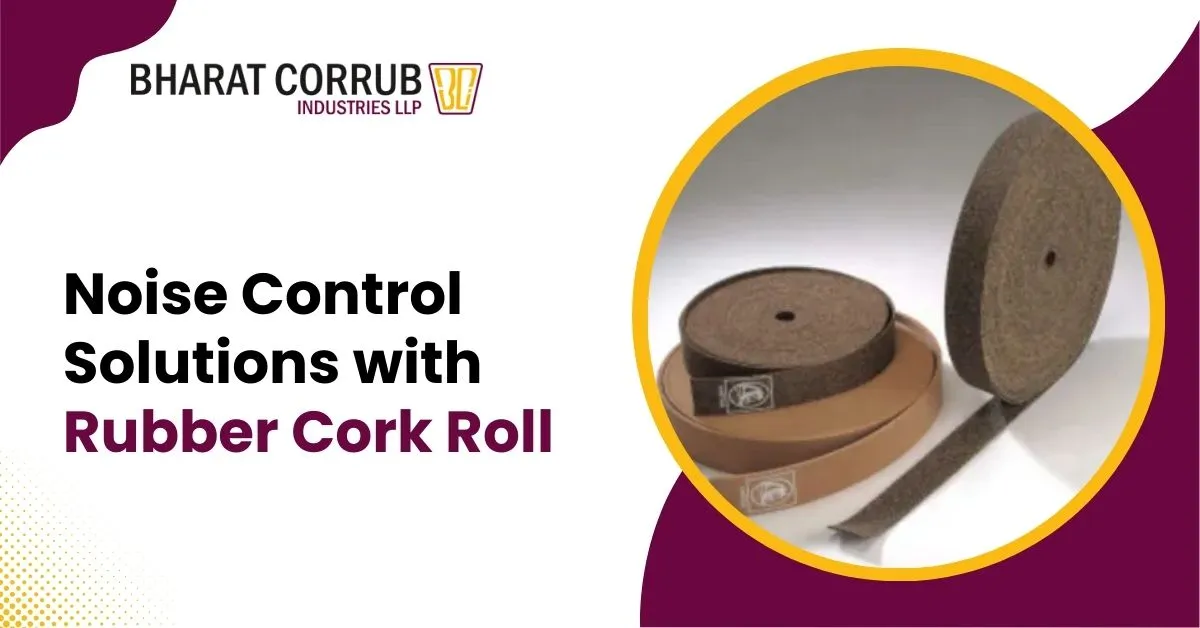
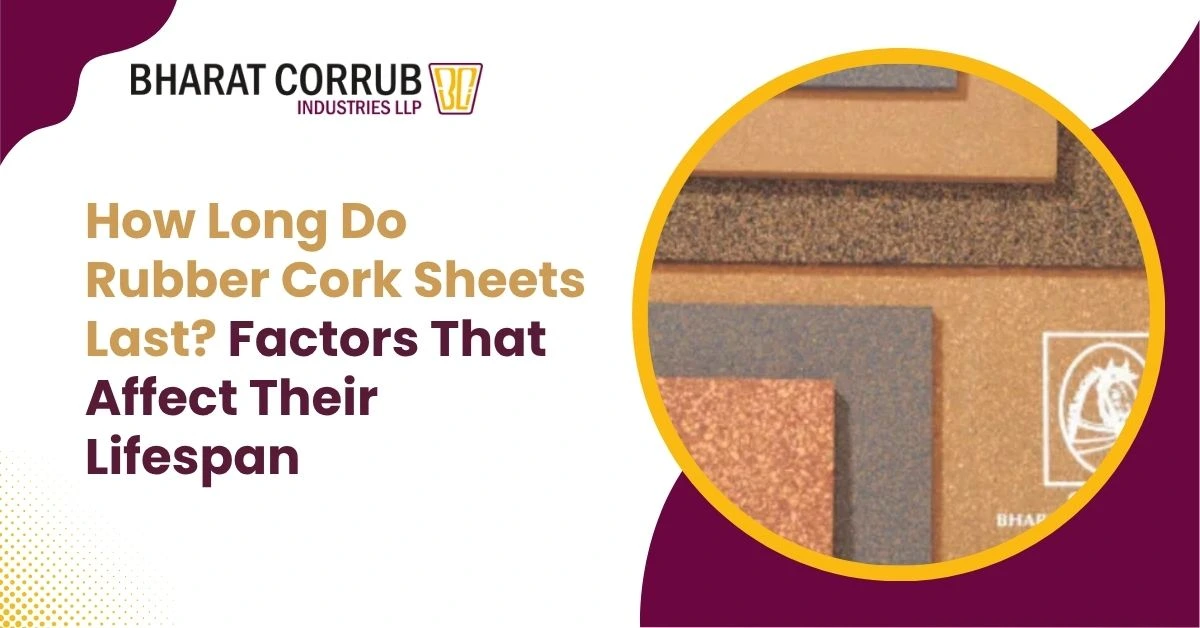
Controlling noise and vibration is essential for maintaining safe operations, protecting machinery, and ensuring compliance with industrial noise regulations. Excessive vibration can accelerate equipment wear, increase maintenance costs, and disrupt productivity. To achieve reliable damping performance and quieter environments, Rubber Cork Rolls serve as a versatile and high-performance solution engineered for effective noise reduction and vibration control.
Why Noise & Vibration Control Matters?
In environments where machines run continuously, the use of a Rubber Cork Roll can significantly reduce mechanical noise and structural vibration that may otherwise damage equipment and surrounding infrastructure. Excessive vibration without a Rubber Cork Roll can accelerate wear, increase breakdowns, require costly maintenance, and create unsafe acoustic conditions for workers and nearby occupants. Choosing a durable vibration-isolation solution like Rubber Cork Roll ensures smoother performance and quieter operations.
What Makes Rubber Cork Roll Ideal for Noise Control
Natural Acoustic & Vibration Damping
The unique cellular structure of cork disperses sound waves internally, and when blended with elastomer, the Rubber Cork Roll becomes a highly effective damping material. This composite absorbs kinetic energy and prevents vibration from transferring into floors or building structures. The elasticity found in a Rubber Cork Roll allows it to rebound after repeated compression without performance loss, ensuring long-term noise control efficiency.
Flexible and Seamless Installation Format
Unlike rigid pads or foam blocks, a Rubber Cork Roll is supplied in long continuous strips and wide roll formats. This gives engineers and installers the flexibility to cover large machinery bases, flooring systems, HVAC platforms, and compressor areas without joints. Seamless installation with a Rubber Cork Roll eliminates vibration bridges, which strengthens isolation and improves acoustic insulation.
Eco-friendly and Sustainable Material Choice
Cork is sourced from renewable bark layers, making a Rubber Cork Roll an environmentally responsible choice compared to synthetic materials. Facilities implementing sustainability initiatives benefit greatly from using a Rubber Cork Roll for noise and vibration control without compromising performance or lifespan.
Common Applications: Where Rubber Cork Roll Excels
| Application | How Rubber Cork Roll Helps |
| Machinery & Pumps | A Rubber Cork Roll absorbs vibration and prevents structural sound transfer |
| HVAC & Compressor Systems | A Rubber Cork Roll reduces operational noise and resonance |
| Industrial Flooring Under Heavy Loads | A Rubber Cork Roll minimizes impact noise and foundation stress |
| Electrical / Transformer Bases | A Rubber Cork Roll stabilizes components and controls vibration |
Across manufacturing plants, workshops, and high-load equipment floors, a Rubber Cork Roll maintains optimal machine performance and reduces fatigue on structural frameworks.
Looking for powerful noise and vibration control solutions? Contact us for premium Rubber Cork Roll products designed for industrial performance and long-term durability.
How to Select the Right Rubber Cork Roll?
Choosing the correct Rubber Cork Roll depends on equipment weight, vibration frequency, and installation environment. Rolls with higher density and thickness withstand heavier loads, while softer grades of Rubber Cork Roll provide improved damping for higher-frequency vibration. Proper surface preparation also ensures maximum performance, as full contact allows the Rubber Cork Roll to distribute vibration effectively.
Why Rubber Cork Roll Outperforms Alternatives?
Compared to foam, rigid insulation, or pure elastomer pads, a Rubber Cork Roll offers better vibration absorption and resistance to compression fatigue. Foam collapses under load, rigid blocks reflect vibration instead of absorbing it, and pure rubber may struggle with resonance. A Rubber Cork Roll balances elasticity, strength, and damping efficiency—making it ideal for demanding industrial conditions.
Best Practices for Using Rubber Cork Roll
To maximize performance, use continuous lengths of Rubber Cork Roll without gaps, pair isolation strips with mounting pads, and schedule periodic inspections. Over time, replacing worn sections of Rubber Cork Roll ensures consistent noise and vibration control. Proper installation methods guarantee long-lasting protection for heavy-duty systems.