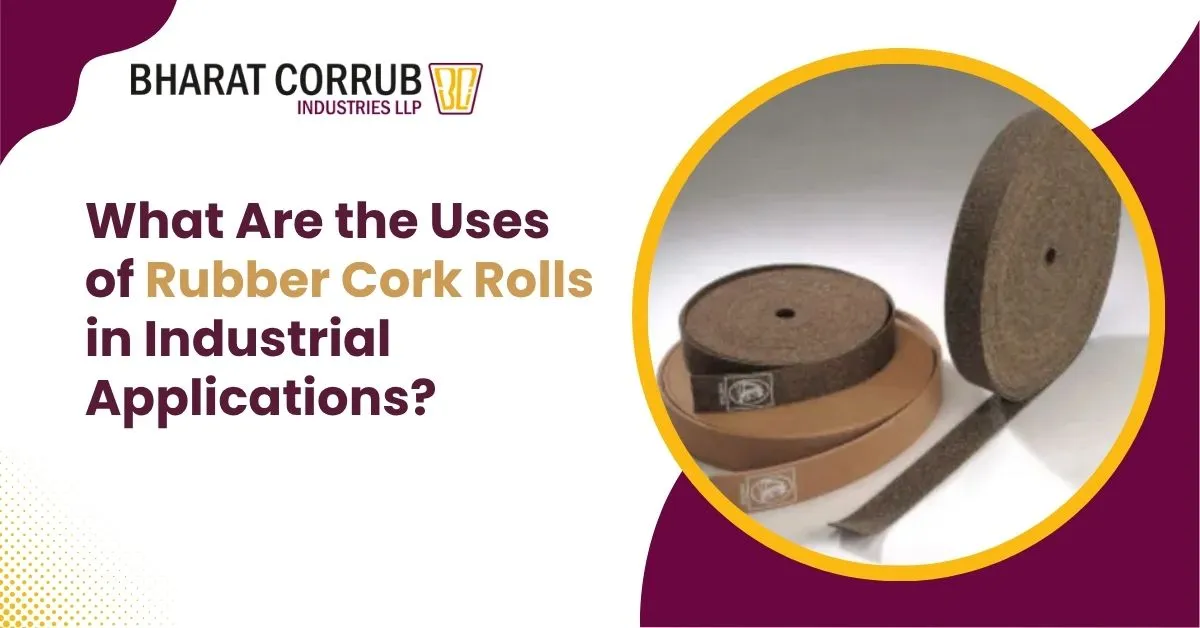
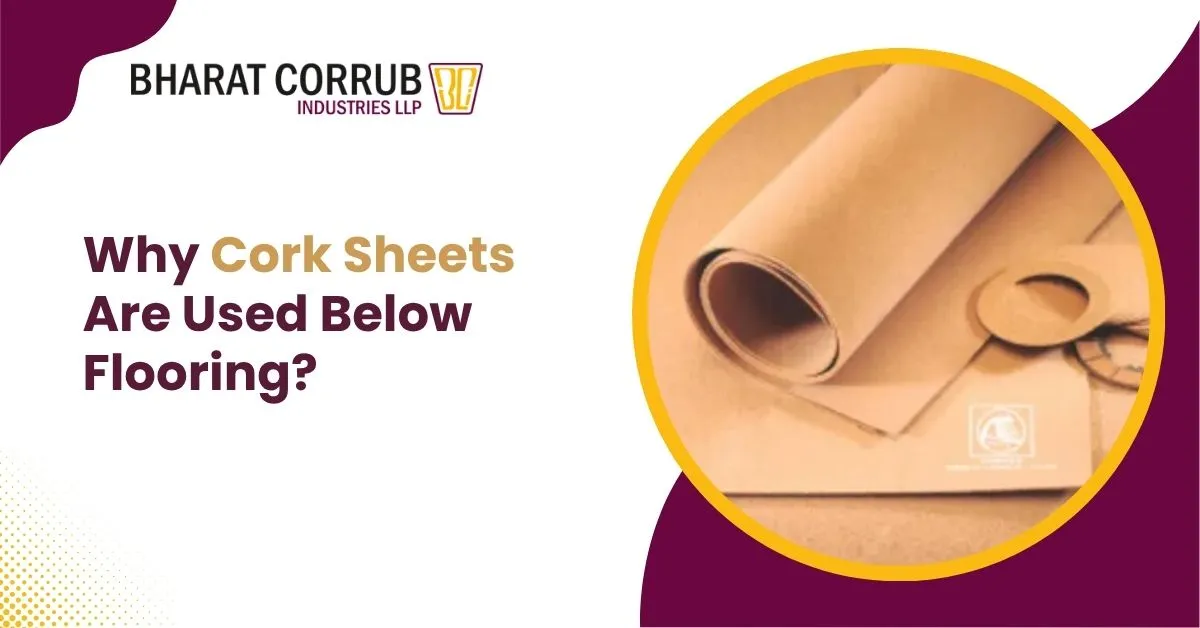
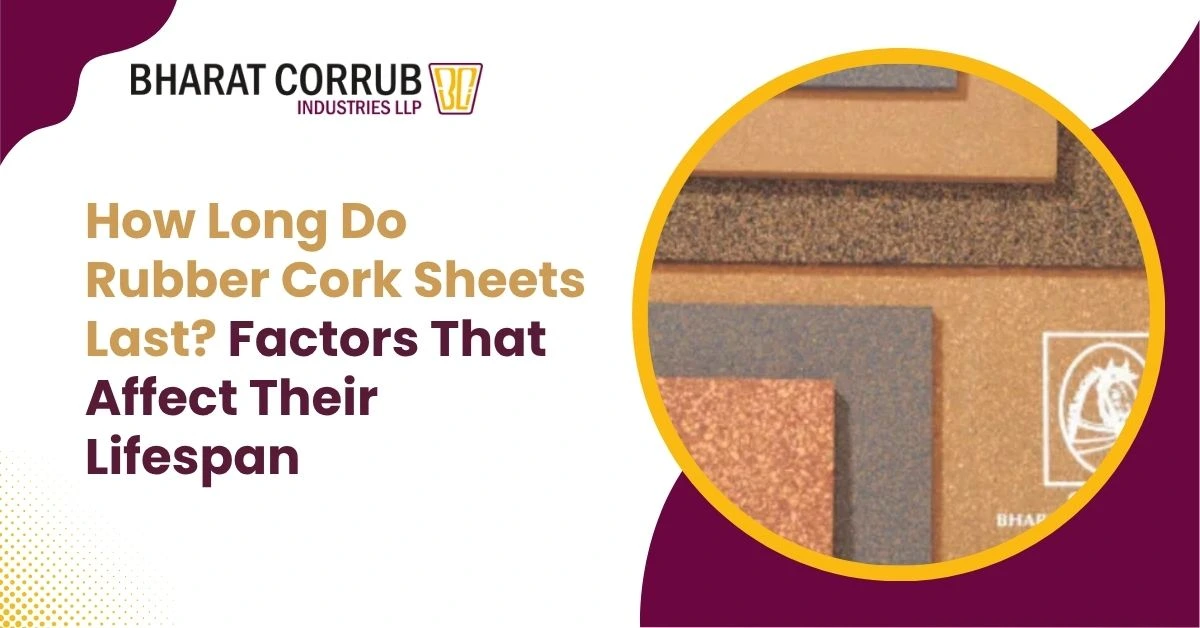
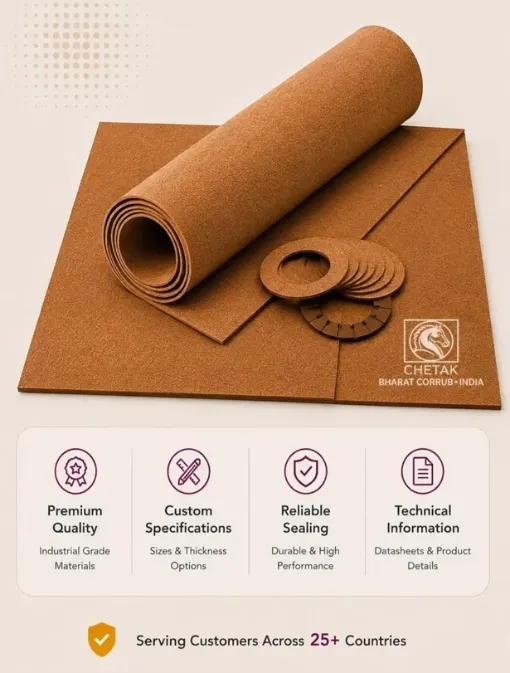
Industrial operations require sealing and insulation materials that can withstand demanding working conditions while delivering consistent performance over long periods. Selecting the appropriate material improves equipment reliability, minimizes maintenance requirements, and supports efficient production processes. Designed for durability and flexibility, Rubber Cork Rolls are widely used across numerous industries because they combine the resilience of cork with the strength of rubber to provide dependable sealing, vibration absorption, and insulation properties.
From heavy industrial machinery to power generation equipment and automotive components, rubber cork materials have become an important part of modern engineering applications. Their excellent compressibility, dimensional stability, and resistance to compressive loads make them suitable for environments where reliable sealing and long-term operational efficiency are essential.
What Are Rubber Cork Rolls?
Manufactured by combining premium cork granules with specially formulated rubber binders, rubber cork rolls are engineered materials designed for sealing, insulation, and vibration control applications. The cork component provides natural compressibility, recovery, and insulation characteristics, while the rubber improves flexibility, mechanical strength, and resistance to industrial operating conditions.
This combination produces a versatile material capable of performing efficiently in applications where conventional sealing materials may not provide the required balance of resilience and durability.
Why Rubber Cork Rolls Are Preferred in Industrial Applications?
Industrial equipment operates under continuous pressure, vibration, and varying environmental conditions. Selecting suitable sealing materials plays an important role in maintaining equipment efficiency and minimizing operational interruptions. Offering excellent flexibility and long-term performance, Rubber Cork Rolls help create reliable seals while accommodating surface irregularities and reducing the effects of vibration.
Their ability to maintain compressibility under sustained loads allows them to perform consistently in demanding industrial environments. In addition, their lightweight structure simplifies fabrication into custom gaskets and sealing components for different equipment configurations.
Uses of Rubber Cork Rolls in Industrial Applications
The versatility of rubber cork materials enables their use across a broad range of industrial sectors where dependable sealing and insulation are required.
Industrial Gasket Manufacturing
One of the primary applications is the production of industrial gaskets. Rubber cork rolls provide excellent sealing capability while maintaining dimensional stability under compression, making them suitable for pumps, compressors, gearboxes, and mechanical assemblies.
Automotive Components
Automotive manufacturers utilize rubber cork materials for oil pan gaskets, valve cover gaskets, transmission systems, and other components that require reliable sealing performance under varying temperatures and operating conditions.
Electrical Equipment
Transformers, electrical enclosures, and switchgear assemblies require dependable sealing materials to protect internal components from contaminants and environmental exposure. Rubber cork products provide effective sealing while supporting equipment reliability.
Industrial Machinery
Manufacturing equipment often experiences continuous vibration and mechanical stress. Rubber cork materials help reduce vibration transmission while maintaining effective sealing performance throughout prolonged operation.
Power Generation Equipment
Power plants and electrical infrastructure rely on durable sealing materials capable of withstanding demanding operating conditions. Rubber cork products are widely used in equipment where long-term sealing reliability is critical.
Oil and Fluid Handling Systems
Fluid handling equipment requires gasket materials that maintain sealing integrity under continuous pressure. Rubber cork materials help reduce leakage risks while contributing to reliable system operation.
Performance Characteristics That Support Industrial Applications
Selecting appropriate sealing materials involves evaluating both functional performance and durability. Engineered for demanding operating environments, Rubber Cork Rolls provide several characteristics that contribute to reliable industrial performance.
- Excellent sealing capability
- High compressibility with minimal lateral flow
- Reliable recovery after compression
- Effective vibration absorption
- Acoustic insulation
- Resistance to compressive loads
- Good abrasion resistance
- Anti-slip characteristics
- Dimensional stability
- Long operational service life
These properties help improve equipment efficiency while supporting reduced maintenance requirements.
Industries That Commonly Use Rubber Cork Rolls
The combination of sealing efficiency and mechanical durability allows rubber cork materials to support numerous industrial sectors.
| Industry | Typical Applications |
| Automotive | Engine and transmission gaskets |
| Power Generation | Transformers and electrical equipment |
| Manufacturing | Industrial machinery sealing |
| Oil & Gas | Pumps and fluid handling systems |
| Railways | Mechanical equipment sealing |
| Engineering | Industrial gasket fabrication |
Factors to Consider When Selecting Rubber Cork Rolls
Choosing the right sealing material requires evaluating the operating environment and performance expectations of the application. Before finalizing a material, Rubber Cork Rolls should be assessed according to their thickness, compressibility, rubber composition, and compatibility with the equipment in which they will be used.
Important factors include:
- Material thickness
- Cork and rubber composition
- Operating temperature
- Pressure conditions
- Chemical and oil exposure
- Compressibility requirements
- Equipment specifications
- Manufacturing quality
Selecting the appropriate material helps improve sealing performance while extending equipment service life.