Selecting the right flooring or wall material requires more than comparing prices. Buyers today evaluate…

Frequently Asked Questions
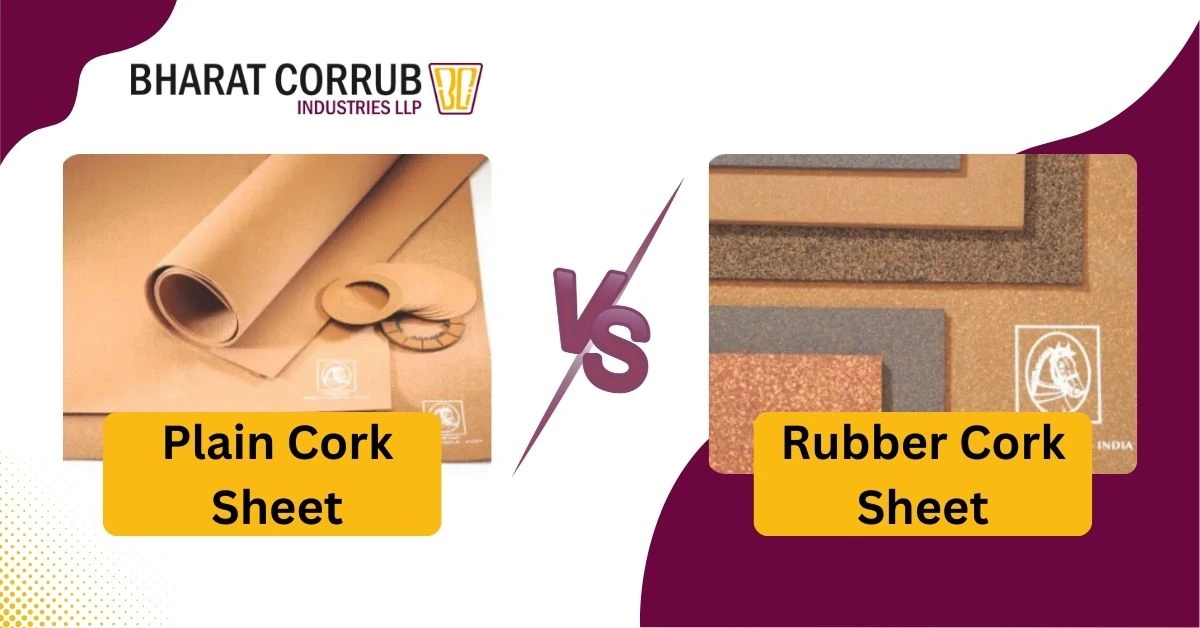
A Rubber Cork Roll is made by blending cork granules with rubber binders for added flexibility, durability, and vibration damping, while a Plain Cork Roll contains only natural cork and is suitable for light-duty insulation or decorative use.
For industrial sealing applications, a Rubber Cork Roll is the better choice because it provides strong compression resistance, elasticity, and oil resistance. A Plain Cork Roll is generally not recommended for high-pressure or harsh environments.
A Plain Cork Roll offers minimal vibration control, making it suitable only for low-stress environments. For effective vibration damping under machinery or HVAC units, a Rubber Cork Roll is significantly more reliable.
Yes, a Rubber Cork Roll is more durable due to its rubber content, which improves its rebound strength and resistance to wear. A Plain Cork Roll may compress permanently under heavy loads.
A Plain Cork Roll is generally more affordable upfront. However, a Rubber Cork Roll offers better long-term value in industrial applications because it lasts longer and performs better under stress.
Conclusion
Both Rubber Cork Roll and Plain Cork Roll serve valuable but different purposes in industrial and commercial environments. While Plain Cork Roll excels in lightweight insulation and decorative applications, Rubber Cork Roll remains the superior choice for heavy-duty tasks including vibration control, machinery sealing, and long-term structural performance.
Understanding your environment, load conditions, and performance requirements will help you choose the right material for your project — ensuring durability, efficiency, and cost-effectiveness.

Related Posts