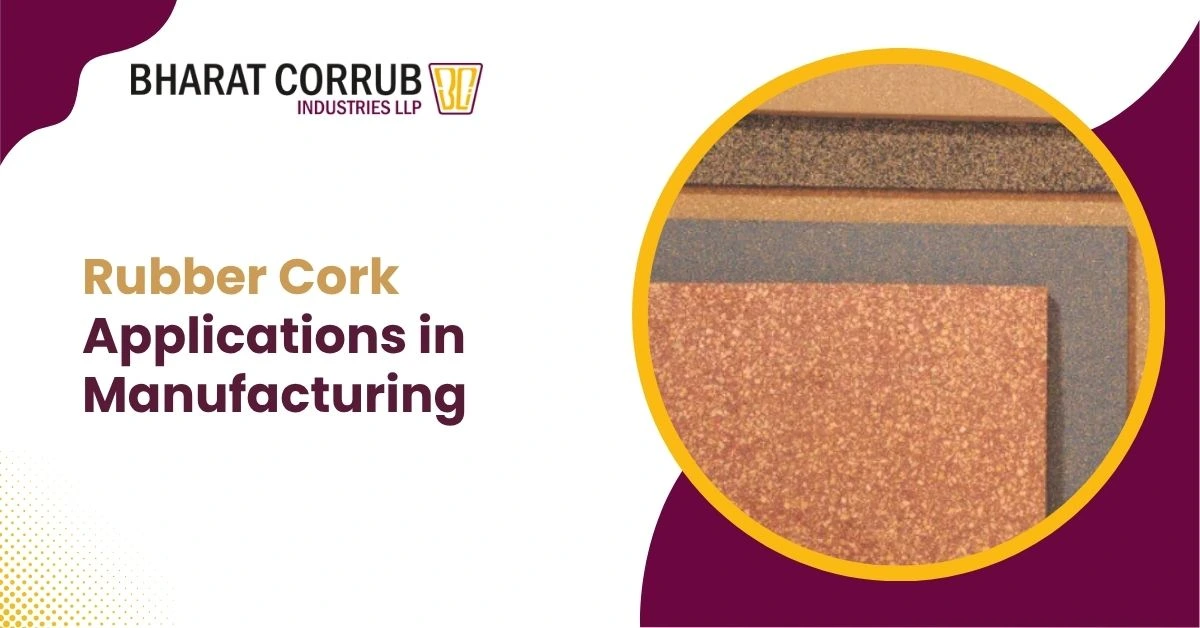
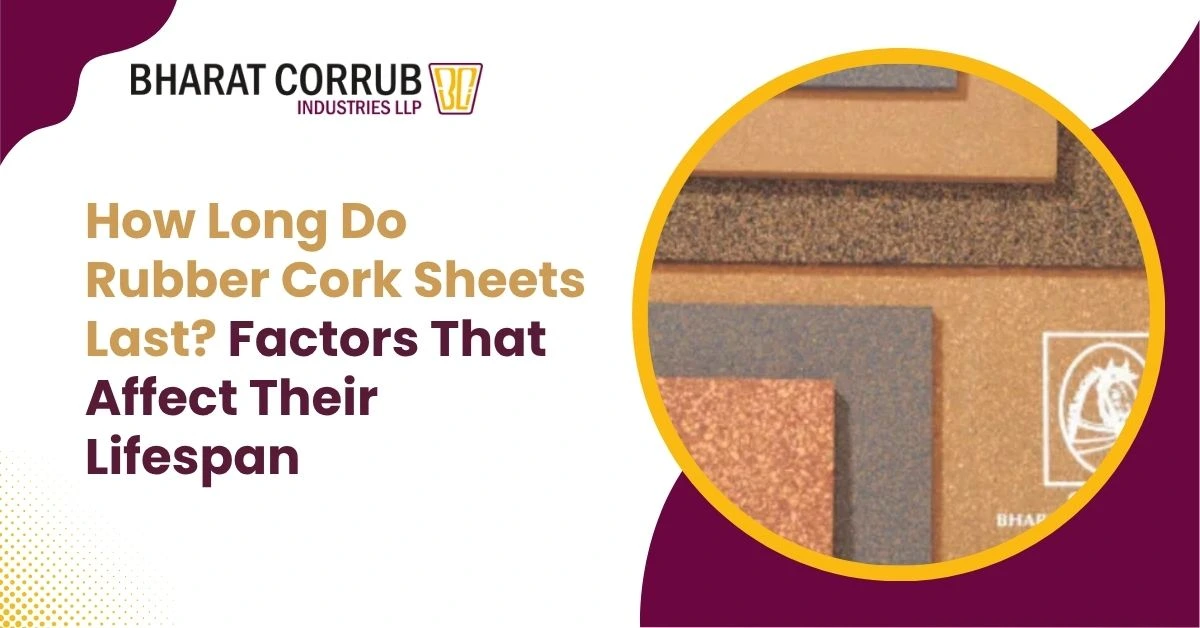
Modern manufacturing industries depend on materials that can provide reliable sealing, vibration control, insulation, and long-term durability. The choice of material directly affects equipment performance, operational efficiency, and maintenance requirements. Manufacturers often seek versatile solutions that can withstand demanding industrial conditions while maintaining consistent performance.
Across various industries, Rubber Cork has become a preferred material because of its unique combination of flexibility, compressibility, resilience, and resistance to oils and fuels. These properties make it suitable for a wide range of manufacturing applications, from industrial sealing systems to vibration isolation and flooring solutions.
Its versatility continues to make it a valuable material in modern industrial operations.
Why Rubber Cork is Widely Used in Manufacturing?
Industrial environments require materials capable of handling mechanical stress, vibration, temperature variations, and exposure to different fluids. A reliable material must perform consistently while minimizing maintenance concerns.
Manufacturers prefer Rubber Cork because it offers:
- Excellent sealing properties
- High compressibility and recovery
- Resistance to oils and fuels
- Vibration and noise reduction
- Long service life
- Dimensional stability
These characteristics allow manufacturers to improve equipment reliability while reducing operational risks.
Sealing Applications in Industrial Equipment
Effective sealing is critical for preventing leakage and maintaining operational efficiency in industrial systems. Poor sealing performance can result in equipment failures, product loss, and increased maintenance costs.
In many manufacturing applications, Rubber Cork is used to produce:
- Industrial gaskets
- Transformer gaskets
- Equipment seals
- Flange gaskets
- Custom sealing components
Its ability to conform to uneven surfaces helps create reliable seals under varying operating conditions. Many industries also utilize products supplied by a trusted Rubber Cork Sheet Manufacturer to meet specific sealing requirements.
Role in Transformer Manufacturing
Electrical equipment manufacturers require dependable sealing materials to protect transformers from moisture ingress and oil leakage. Proper sealing contributes to operational safety and equipment longevity.
For transformer applications, Rubber Cork is commonly used in:
- Power transformers
- Distribution transformers
- Current transformers
- Potential transformers
The material provides excellent compressibility and recovery, helping maintain effective sealing performance over extended service periods. Its reliability has made it a preferred choice within the electrical manufacturing sector.
Common Rubber Cork Applications in Manufacturing
| Application Area | Purpose |
| Industrial Gaskets | Leak prevention and sealing |
| Transformer Components | Oil and moisture sealing |
| Automotive Systems | Fuel and oil resistance |
| Machinery Isolation | Vibration control |
| Flooring Systems | Noise and impact reduction |