Rubber cork sheet is one of the most versatile and high-performance industrial materials used across manufacturing, automotive, construction, and machinery applications. In this blog, we will explore the properties, uses, benefits, and why rubber cork sheet is a superior choice for sealing, vibration control, and insulation solutions.
Whether you are searching for industrial rubber cork sheet, cork gasket sheet, or best compressible sealing material, this guide covers everything you need to know.
What Is Rubber Cork Sheet?
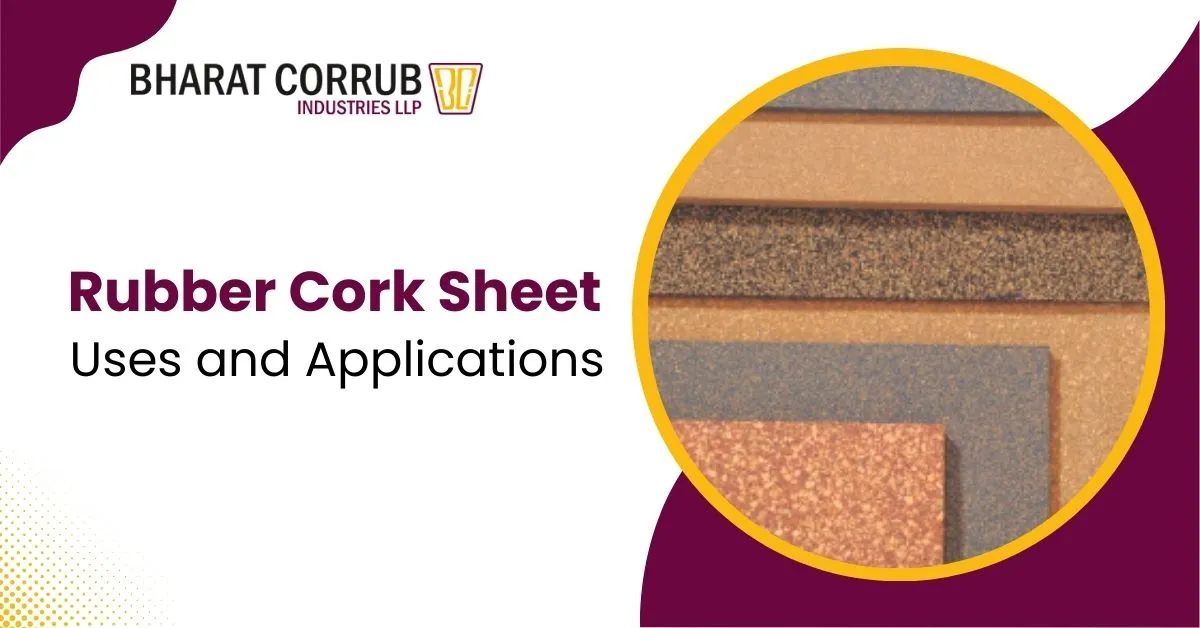
Rubber cork sheet is a composite material made by combining natural cork granules with high-quality rubber polymers such as nitrile (NBR), neoprene (CR), or SBR. This engineered combination results in a durable, flexible, and compressible sheet material ideal for gaskets, seals, pads, and industrial insulation.
The unique cellular structure of cork gives rubber cork sheet its excellent compressibility and recovery properties, while the rubber enhances chemical resistance, durability, and flexibility.
Top Properties of Rubber Cork Sheet
Rubber cork sheet offers an impressive range of physical, mechanical, and thermal properties essential for industrial sealing and gasket applications.
| Property | Description | Benefits |
| High Compressibility | Cork cells allow significant deformation with minimal lateral flow | Ideal for created tight seals under compression |
| Excellent Recovery | Returns to original shape after compression | Long-lasting performance and reduced leakage |
| Chemical Resistance | Resistant to oils, fuels, solvents (especially NBR rubber cork) | Perfect for automotive & industrial environments |
| Temperature Stability | Performs well across wide temperature ranges | Suitable for heat-exposed systems |
| Low Thermal Conductivity | Provides insulation in thermal applications | Energy saving & temperature control |
| Vibration Dampening | Absorbs mechanical vibration and noise | Improves equipment life & user comfort |
| Durability & Tear Resistance | Reinforced with rubber for strength | Longer life and fewer replacements |
Uses & Applications of Rubber Cork Sheet
Rubber cork sheet is widely used in industries that demand reliable sealing, insulation, or shock absorption. Below are the most common applications:
1. Gaskets and Seals
Rubber cork sheet is widely used to produce:
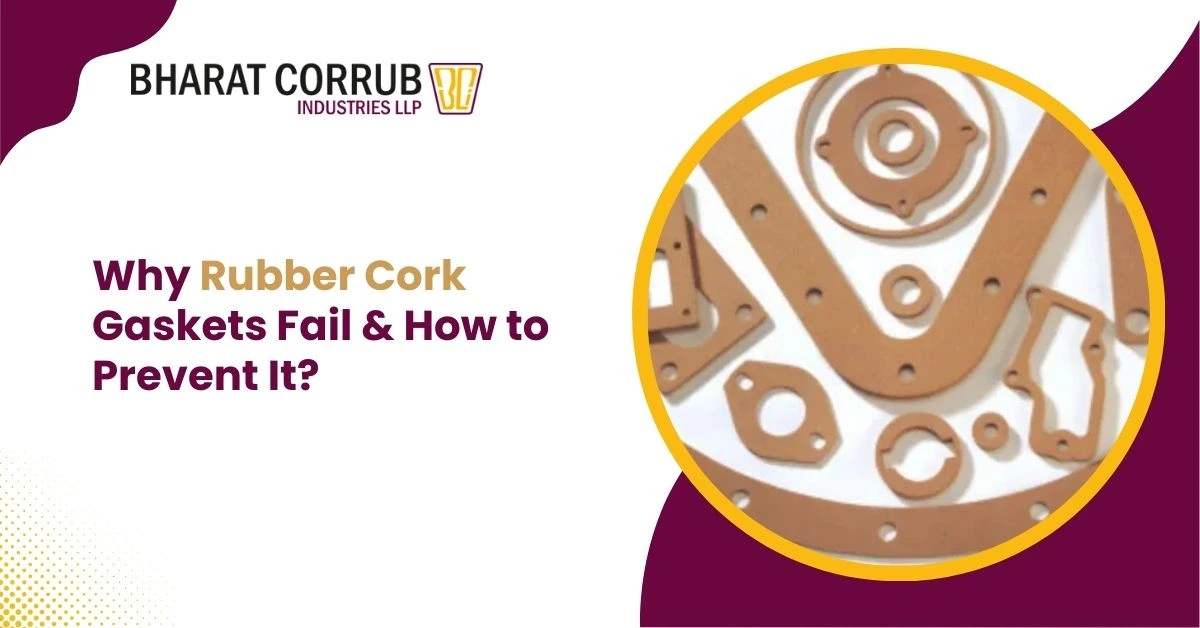
- Industrial gaskets
- Flange seals
- Pipe seals
It provides excellent sealing against liquids, gases, and pressure, making it ideal for hydraulic and pneumatic systems.
2. Automotive Components
Used in vehicles for:
- Oil pan gaskets
- Valve cover gaskets
- Transmission seals
The combination of compressibility and resistance to automotive fluids makes it ideal for engines and machinery.
3. Vibration Control & Shock Absorption
Rubber cork sheet effectively reduces vibration and noise in:
- Heavy machinery
- Conveyor systems
- HVAC equipment
This improves equipment lifespan and operational safety.
4. Insulation & Thermal Barriers
With low thermal conductivity, rubber cork sheets are used in:
- Heat insulation panels
- Expansion joints
- Industrial furnaces
This helps in energy conservation and stable temperature control.
5. Marine & Offshore Applications
Due to its resistance to oils and flexibility, it is used for:
- Marine seals
- Pump gaskets
- Marine machinery parts
Benefits of Using Rubber Cork Sheet
Rubber cork sheet stands out from other gasket and sealing materials thanks to its rare combination of properties:
Superior Sealing & Leak Prevention
High compressibility and low Poisson’s ratio ensure an effective seal even under heavy loads.
Long-Term Performance
Excellent recovery and durability reduce maintenance costs and equipment downtime.
Wide Chemical Compatibility
Especially with nitrile rubber cork, it resists petroleum oils, fuels, and industrial chemicals.
Environmentally Responsible
Cork is a renewable natural resource, making rubber cork sheet more sustainable than fully synthetic materials.
Cost-Effective Solution
Reliable performance with long life lowers replacement frequency and saves costs over time.