Mechanical engineering relies on materials that can provide durability, vibration control, insulation, and long-term performance under demanding operating conditions. Engineers continuously evaluate materials based on their physical properties, reliability, and suitability for specific applications. Selecting the right material can significantly improve equipment efficiency, reduce maintenance requirements, and enhance operational safety.
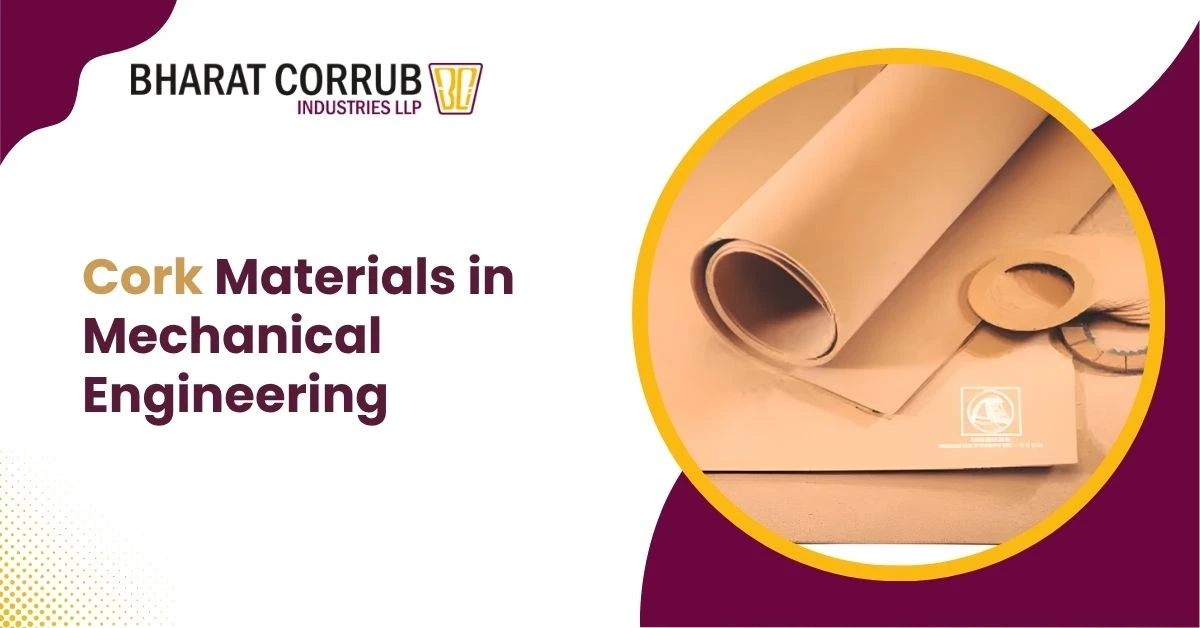
Among various industrial materials, Cork has gained recognition for its unique combination of elasticity, compressibility, thermal insulation, and vibration-damping capabilities. These characteristics make it suitable for a wide range of mechanical engineering applications, including sealing systems, machinery isolation, and industrial components.
Its versatility continues to support innovative engineering solutions across multiple industries.
Why Cork is Used in Mechanical Engineering?
Engineering materials must often perform under pressure, vibration, temperature variations, and continuous operational stress. Material selection directly affects equipment reliability and overall system performance.
In many industrial applications, Cork is valued because it offers:
- Excellent compressibility
- High resilience
- Vibration absorption
- Thermal insulation
- Sound dampening properties
- Long service life
These advantages help engineers improve component performance while reducing operational challenges.
Important Material Properties for Engineering Applications
Mechanical engineering projects require materials with predictable and consistent performance characteristics. Understanding material behavior helps engineers determine suitability for specific operating conditions.
Several Cork Characteristics make it attractive for industrial use:
- Lightweight structure
- Elastic recovery
- Low thermal conductivity
- Resistance to compression
- Noise reduction capability
- Dimensional stability
These properties contribute to improved equipment efficiency and operational reliability.
Applications in Sealing and Gasket Systems
Industrial machinery and equipment require effective sealing solutions to prevent leakage and maintain operational efficiency. Poor sealing performance can lead to downtime, maintenance issues, and equipment failure.
Within sealing applications, Cork is commonly used in:
- Industrial gaskets
- Transformer sealing systems
- Automotive gaskets
- Flange seals
- Machinery components
Its ability to conform to irregular surfaces helps create reliable sealing performance under varying operating conditions.
Common Mechanical Engineering Applications of Cork
| Application | Purpose |
| Industrial Gaskets | Leak prevention and sealing |
| Transformer Components | Oil and moisture sealing |
| Vibration Pads | Shock and vibration absorption |
| Acoustic Insulation | Noise reduction |
| Thermal Insulation | Temperature control |
| Flooring Underlays | Impact and sound control |