Skip to content
Common Industrial Uses of Rubber Cork

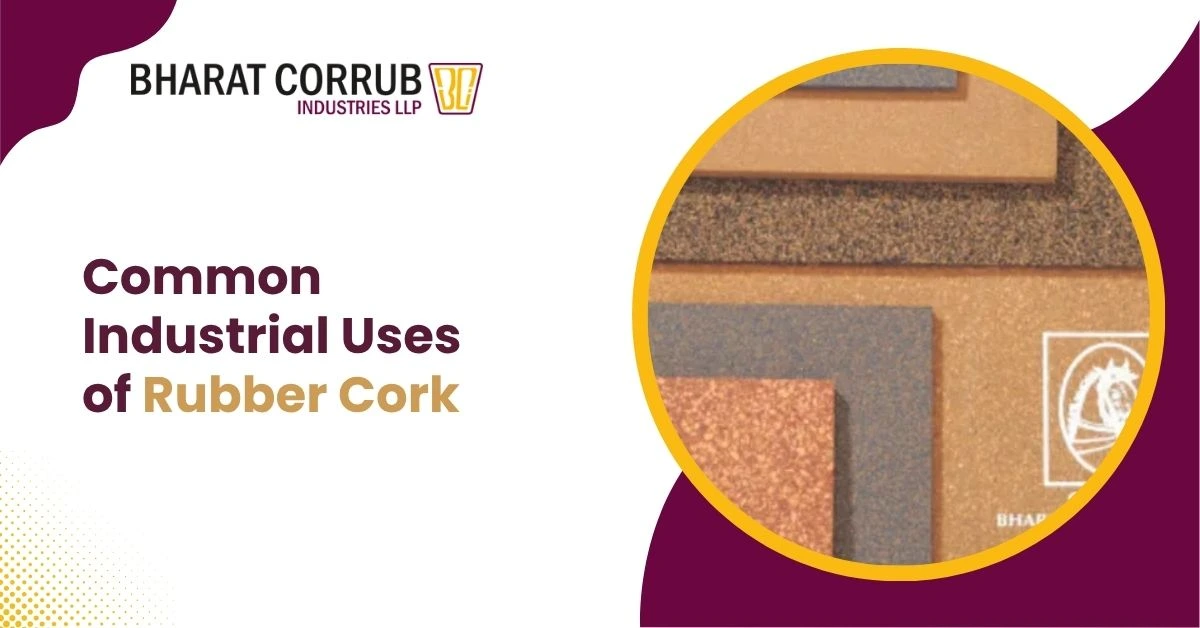
Industrial materials are selected based on durability, performance, and their ability to withstand demanding operational environments. Among various sealing and insulation materials used today, Rubber Cork has gained strong recognition for its unique combination of flexibility, compressibility, sealing efficiency, and vibration control properties. Manufactured by bonding cork granules with synthetic rubber, Rubber Cork offers excellent mechanical and physical characteristics suitable for multiple industrial applications.

Because of its engineered composition, Rubber Cork performs effectively in environments exposed to oils, fuels, vibration, pressure, and fluctuating temperatures. Its low lateral flow, strong recovery properties, and resistance to compressive loads make it highly valuable across automotive, power, manufacturing, and engineering sectors.

Modern industries continue adopting Rubber Cork because it combines the natural advantages of cork with the durability and resilience of rubber.

Understanding Rubber Cork Material

Rubber Cork is an engineered composite material manufactured by bonding cork granules with synthetic rubber compounds. This combination creates a material that provides both elasticity and structural stability.

Rubber Cork offers:

  • High compressibility
  • Minimal lateral flow
  • Excellent sealing performance
  • Vibration damping
  • Oil and fuel resistance
  • Long-term dimensional stability
  • Surface conformity

Unlike conventional rubber materials that may deform under prolonged compression, it helps the Rubber Cork maintains reliable recovery and sealing capability over extended periods.

These performance characteristics make it suitable for demanding industrial conditions.

Why Industries Prefer Rubber Cork

Industrial buyers often select Rubber Cork because of its balanced performance and broad application range.

Major advantages include:

  • Superior Sealing Ability: Rubber Cork conforms effectively to uneven surfaces, helping prevent leakage and improving sealing reliability.
  • Resistance to Compressive Load: Its cellular structure maintains performance under long-term compression.
  • Vibration Isolation: Rubber Cork absorbs mechanical vibration and reduces equipment noise.
  • Chemical Compatibility: It performs effectively with oils, fuels, and several industrial fluids.
  • Abrasion Resistance: The material withstands wear and repeated operational stress.

These properties support its widespread industrial use.

Common Industrial Uses of Rubber Cork

Industrial ApplicationRubber Cork Function
Automotive GasketsOil and fuel sealing
Power EquipmentInsulation and sealing
CompressorsVibration isolation
Diesel Generator SetsShock absorption
Refrigeration SystemsNoise and vibration reduction
Industrial MachinerySurface sealing and load resistance

This versatility makes Rubber Cork an important engineered material for industrial environments.

Rubber Cork in Gasket Manufacturing

One of the most common applications of Rubber Cork is gasket manufacturing. Rubber cork gaskets are widely used because they provide dependable sealing under mechanical pressure and fluctuating operating conditions.

Typical gasket applications include:

  • Engine systems
  • Fuel systems
  • Oil sealing assemblies
  • Industrial machinery
  • Pump systems
  • Compressor units

Rubber Cork helps prevent fluid leakage while maintaining gasket integrity over long service periods.

Its ability to resist oils and fuels makes it especially valuable for automotive and engineering industries.

Anti-Vibration Applications of Rubber Cork

Industrial machines generate vibration that may reduce operational efficiency and damage surrounding equipment. Rubber Cork plays an important role in vibration isolation and machine protection.

Common anti-vibration applications include:

  • Air conditioners
  • Refrigerators
  • Compressors
  • Diesel generator sets
  • Impact presses
  • Small vibrating machinery

Rubber Cork absorbs mechanical shock and minimizes vibration transmission.

This helps:

  • Improve machine stability
  • Reduce operational noise
  • Protect structural components
  • Increase equipment lifespan

Its vibration damping capability supports smoother industrial operation.

Rubber Cork in Electrical and Power Industries

Power and electrical industries often require materials capable of insulation and environmental sealing.

Rubber Cork is used in:

  • Electrical panels
  • Transformer systems
  • Power equipment assemblies
  • Industrial insulation applications

The material offers:

  • Low thermal conductivity
  • Environmental sealing
  • Moisture resistance
  • Dimensional stability

These characteristics support reliable operation in electrical and power-related applications.

Looking for high-performance sealing and insulation materials? Contact us to bring durable, high-quality cork solutions into your operations.

Insulation and Surface Protection Applications

Apart from sealing and vibration control, Rubber Cork also serves as an effective insulation and protective material.

Industrial environments use Rubber Cork where cushioning and surface protection are important.

Applications include:

  • Machine base protection
  • Surface insulation
  • Equipment cushioning
  • Protective lining systems
  • Mechanical assemblies

Its lightweight structure and compressibility allow easier handling and installation while supporting long-term protection against wear and mechanical stress.

Industrial Material Selection and Performance Considerations

When selecting sealing and insulation materials, industries evaluate more than initial cost. Long-term performance and operational reliability play a major role in material selection.

Important considerations include:

  • Compression resistance
  • Fluid compatibility
  • Temperature conditions
  • Durability
  • Maintenance requirements
  • Operational lifespan

The balance of flexibility, resilience, and sealing efficiency supports long-term industrial productivity, making Rubber Cork a preferred material with multiple engineering advantages.

Material performance ultimately determines operating reliability and equipment protection.

Rubber Cork Sheet Manufacturer and Product Customization

A Rubber Cork Sheet Manufacturer plays an important role in supplying customized industrial materials designed for varied operational requirements.

Rubber Cork sheets are commonly available in:

  • Multiple thicknesses
  • Standard and custom sizes
  • Industry specifications
  • Application-specific formulations

Customization allows industries to select material properties suitable for:

  • Sealing systems
  • Gasket fabrication
  • Machinery insulation
  • Anti-vibration applications

This flexibility increases Rubber Cork’s industrial value across sectors.

Future Industrial Demand for Rubber Cork

Modern industries increasingly prefer engineered materials that provide long-term performance while supporting efficient operations.

Future Rubber Cork demand is expected to grow because of:

  • Expanding industrial manufacturing
  • Increased machinery protection needs
  • Demand for vibration control materials
  • Advanced sealing applications
  • Sustainable material interest

Modern engineering environments require versatile industrial materials to support performance and durability, with Rubber Cork evolving to meet diverse application needs.

Frequently Asked Questions

Rubber Cork is commonly used for gaskets, sealing systems, vibration isolation, insulation, and industrial machinery applications.

Rubber Cork provides strong sealing ability, oil resistance, and long-term compression recovery.

Rubber Cork Board is used for insulation, vibration damping, cushioning, and industrial sealing applications.

Not always. Material performance, durability, and application suitability are equally important factors.

Yes, Rubber Cork is widely used in compressors, DG sets, refrigeration systems, and machinery for vibration isolation.

Conclusion

Modern industries require materials capable of sealing, insulating, and protecting equipment under demanding operating conditions. Rubber Cork continues proving its value through excellent compressibility, vibration damping, oil resistance, and sealing performance.

From gasket manufacturing and anti-vibration systems to insulation and machinery protection, Rubber Cork supports diverse industrial applications. Whether industries evaluate Rubber Sheet Price, require Rubber Cork Board solutions, or work with a Rubber Cork Sheet Manufacturer, performance and long-term reliability remain the most important considerations.

Its combination of natural cork properties and engineered rubber performance makes Rubber Cork a trusted material for modern industrial environments.

Mehul Tolia is a Partner at Bharat Corrub Industries LLP (BCI), a leading manufacturer and exporter of cork and rubber cork products in India. With nearly a decade of experience, he has been a driving force behind BCI’s business development, product innovation, and process optimization initiatives. His leadership emphasizes quality, sustainability, and customer satisfaction, helping BCI strengthen its global presence. As a member of CII Young Indians (Yi) Vadodara, Mehul is passionate about fostering industrial growth and promoting innovation within the manufacturing sector.

Back To Top
WhatsApp chat