Skip to content
Rubber Cork Roll: Applications in Sealing & Vibration Control

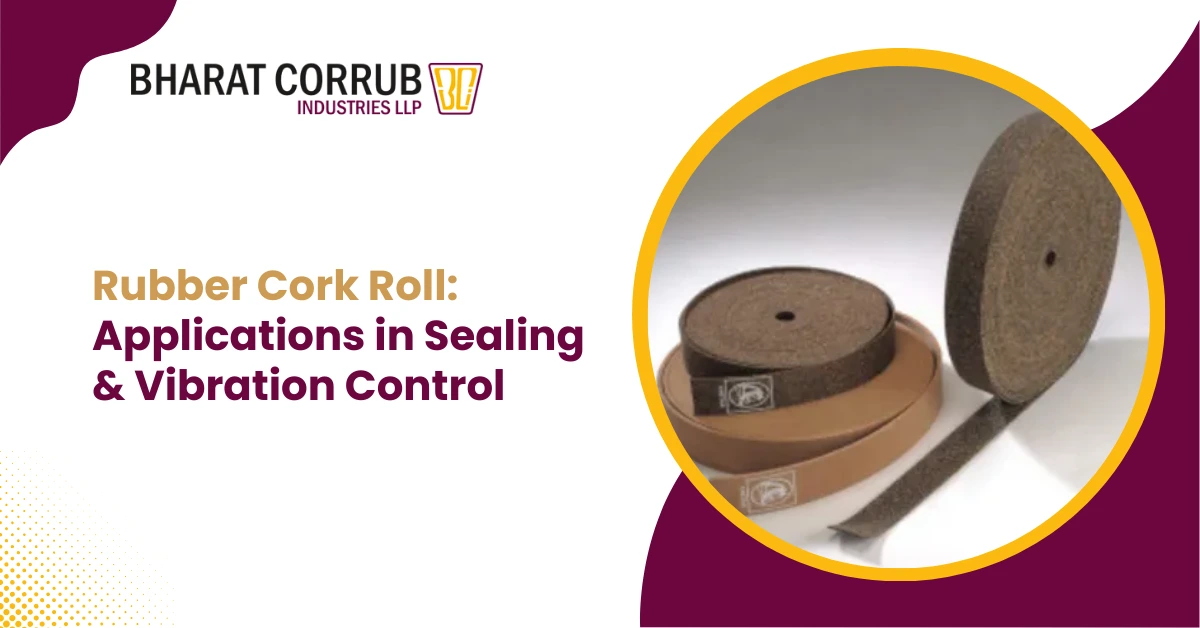
If you’re searching for a reliable gasket material that seals tight, absorbs vibration, and lasts under compression, rubber cork roll is one of the most practical industrial solutions. Also called rubberized cork roll, cork rubber roll, or anti-vibration cork roll, this material is widely used for sealing, vibration damping, noise reduction, and insulation across automotive, HVAC, transformers, pumps, compressors, and general engineering.

In this guide, you’ll learn the top applications, key properties, and benefits of rubber cork rolls—plus how to select the right grade for your operating conditions.

What is a Rubber Cork Roll?

Rubber cork rolls are popular because they solve two tough industrial problems at once:

1) Sealing under compression

Cork’s cellular structure compresses and recovers well, which helps maintain a stable seal over time—especially where surfaces aren’t perfectly flat.

2) Vibration & noise control

Cork naturally absorbs vibration; rubber enhances durability and flexibility, making rubber cork ideal for anti-vibration pads, isolation strips, and acoustic damping in equipment and assemblies.

Rubber Cork Roll Applications in Sealing

Here are the most common high-intent use cases people search for:

Industrial gaskets & flange sealing

  • Flange gaskets for pumps, valves, and pipelines
  • Inspection covers, gearboxes, compressor covers
  • General-purpose sealing where a compressible gasket is needed

Rubber cork materials are widely used for industrial gasketing and sealing in machinery and equipment.

Transformer & switchgear sealing (oil-filled equipment)

Rubberized cork is frequently used for transformer sealing and other oil-filled electrical equipment because it combines compression sealing with fluid resistance (grade-dependent).

HVAC ducting & equipment sealing

Rubber cork gaskets are commonly used in HVAC systems to seal joints and reduce vibration transmission.

Rubber Cork Roll Applications in Vibration Control

Anti-vibration pads for machinery

Rubber cork rolls can be die-cut into anti-vibration pads for:

  • Motors, compressors, generators
  • CNC machines, presses, conveyors
  • Pump bases and mount systems

Acoustic insulation & noise reduction

In many setups, rubber cork works as sound absorbing and vibration damping material, helping reduce operational noise and structure-borne vibration.

Shock absorption and impact protection

Used as protective layers or liners to reduce impact loads on assemblies, panels, and enclosures.

Properties & Benefits of Rubber Cork Roll

  • High compressibility + recovery → helps prevent leaks over time
  • Low lateral flow → maintains gasket shape under bolting pressure
  • Vibration damping → improves equipment life and comfort
  • Chemical & oil resistance (grade-specific) → ideal for industrial fluids
  • Thermal insulation → useful around temperature variations
  • Roll format efficiency → faster fabrication and less scrap

Bonding cork with synthetic rubber improves flexibility and can increase resistance to oils, acids, and higher temperatures (depending on rubber type).

Need a rubber cork roll that seals better and reduces vibration in your equipment? Contact us now!

Rubber Cork Roll Uses by Industry

Industry / EquipmentCommon UseRecommended Rubber Type (Typical)Why Rubber Cork Roll Works
AutomotiveEngine/cover gaskets, sealing stripsNBR / NeopreneOil & fuel exposure + compression sealing
Transformers & SwitchgearOil sealing, flange sealingNBRLeak prevention in oil-filled systems
HVACDuct flange seals, vibration isolationNeoprene / EPDMSealing + vibration reduction
Pumps & CompressorsFlange gaskets, inspection coversNBR / NeopreneHandles pressure + dampens vibration
General MachineryAnti-vibration pads, linersNeoprene / SBRNoise reduction + shock absorption
Industrial InsulationInsulating strips/panelsEPDM / NeopreneThermal + acoustic insulation

How to Choose the Right Rubber Cork Roll?

When customers search “rubber cork roll for gasket” or “anti-vibration cork roll”, they usually need help picking the correct grade. Use this checklist:

Fluid exposure

  • Oil/fuel/grease → choose NBR rubber cork roll (common choice for petroleum fluids).
  • Weather/ozone → EPDM is often preferred for environmental resistance (application-dependent).

Temperature range

Confirm your operating temperature and choose a grade designed for it.

Compression load & sealing pressure

Higher bolt loads and long-term compression need a grade with strong recovery and low creep.

Thickness & density

  • Thin rolls for flange sealing and tight tolerance
  • Thicker rolls for vibration pads and uneven surfaces

Format needs

Rolls are ideal for continuous cutting and large-area use—especially when you’re producing gaskets at scale. Rubber cork rolls are commonly used for gasket cutting, insulation, anti-vibration pads, and sealing applications.

Rubber Cork Roll vs Rubber Sheet: What’s the Difference?

Rubber cork roll is better when you need compressible sealing + vibration damping together.

Rubber sheet is better when you need high elasticity, high tensile, or special chemical resistance without cork’s compressible structure.

If your priority is leak-proof sealing + anti-vibration performance, rubber cork roll is usually the smarter option.

Frequently Asked Questions

A rubber cork roll is a flexible sheet material made by bonding natural cork granules with rubber. It is supplied in roll form and is used for gaskets, sealing, vibration control, and insulation in industrial and automotive applications.

Rubber cork rolls are used for gasket cutting, flange sealing, anti-vibration pads, noise reduction, and thermal insulation in machinery, pumps, compressors, HVAC systems, and electrical equipment.

Rubber cork roll is better than plain rubber because it offers higher compressibility, better recovery, less lateral flow, improved sealing, and vibration absorption, making it more reliable for long-term gasket and sealing applications.

Yes. Rubber cork roll has excellent vibration damping and shock absorption properties, making it ideal for isolating machinery, reducing noise, and protecting equipment from mechanical stress.

Yes. Rubber cork rolls are widely used to make industrial gaskets, flange seals, and washers because they provide a tight seal even under high compression and uneven surfaces.

Conclusion

Rubber cork rolls are one of the most reliable and versatile materials for sealing, vibration control, and insulation in modern industries. Their unique combination of cork’s compressibility and rubber’s durability allows them to create tight, long-lasting seals while also reducing noise and mechanical vibration. Whether used for gaskets, flange sealing, machinery mounts, or HVAC systems, rubber cork rolls deliver consistent performance even under pressure, temperature changes, and exposure to industrial fluids.

For businesses that demand leak-proof sealing, improved equipment life, and cost-effective maintenance, rubber cork rolls are the smart choice. With the right grade and thickness, they provide superior reliability and efficiency across a wide range of industrial applications.

Mehul Tolia is a Partner at Bharat Corrub Industries LLP (BCI), a leading manufacturer and exporter of cork and rubber cork products in India. With nearly a decade of experience, he has been a driving force behind BCI’s business development, product innovation, and process optimization initiatives. His leadership emphasizes quality, sustainability, and customer satisfaction, helping BCI strengthen its global presence. As a member of CII Young Indians (Yi) Vadodara), Mehul is passionate about fostering industrial growth and promoting innovation within the manufacturing sector.

Rubber Cork Insights and Trends
1. Rubber Sheet Standards and Quality Certifications
2. Rubber Cork Sheet Tax Details
3. Sustainable and Eco-Friendly Benefits of Rubber Cork
4. Latest Trends in Rubber Cork Applications
5. How to Store & Maintain Rubber Cork Products?
6. Why Rubber Cork Gaskets Fail & How to Prevent It?
7. Rubber Cork Quality Standards & Certifications
8. Rubber Cork HSN Code & GST Rate
9. Rubber Cork Price in India: Factors & Guide
10. Rubber Cork Manufacturing Process Explained
11. Rubber Cork Thickness, Density & Specifications Guide
12. How to Choose the Right Rubber Cork Material?
13. Rubber Cork vs Neoprene Gaskets
14. Rubber Cork vs Rubber Sheet: Which Is Better?
15. Rubber Cork vs Plain Cork: Key Differences Explained
16. Rubber Cork for Noise & Vibration Control
17. Rubber Cork for HVAC, Compressors & Pumps
18. Rubber Cork in Transformers & Electrical Equipment
19. Rubber Cork for Automotive Industry Applications
20. Rubber Cork Strip & Angles for Leak-Proof Gaskets
21. Rubber Cork Gasket: Why It’s Ideal for Industrial Sealing
22. Rubber Cork Roll: Applications in Sealing & Vibration Control
23. Rubber Cork Sheet: Properties, Uses & Benefits
Back To Top