



Selecting the right sealing and insulation material is essential for ensuring long-term performance in industrial…
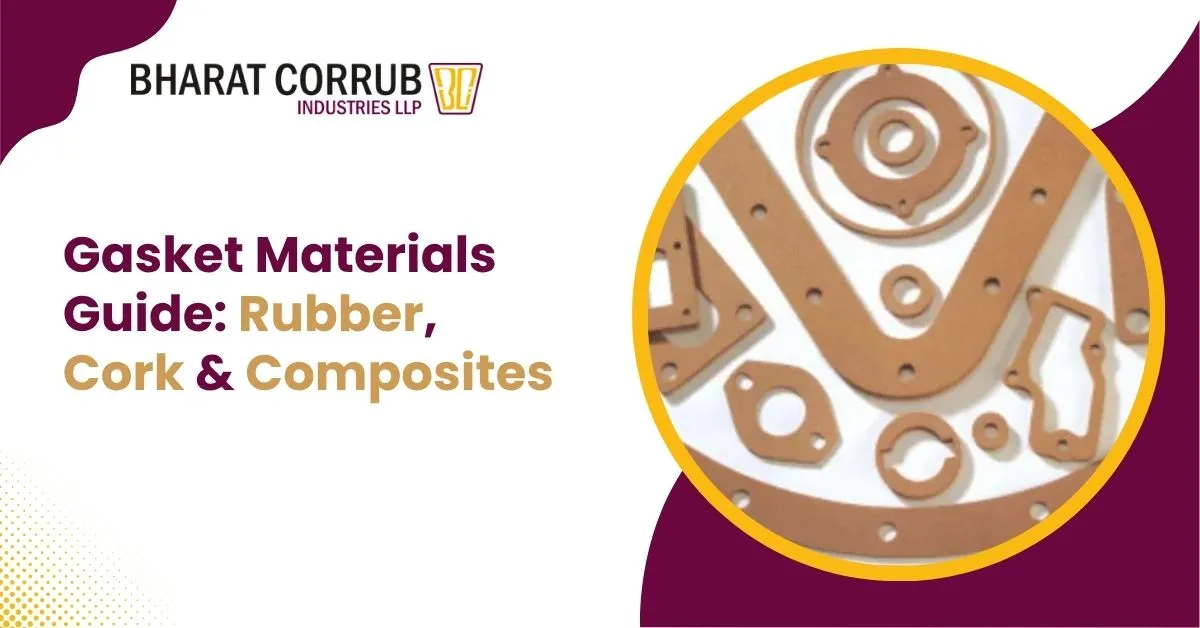
- 8 minute read
- Mehul Tolia
- Product Guide
Industrial equipment relies heavily on effective sealing systems to prevent leakage, maintain pressure, reduce vibration, and improve operational efficiency. Choosing the right gasket material is critical because the wrong selection can lead to equipment failure, fluid leakage, increased maintenance costs, and reduced machine life.
Among the most widely used sealing materials are rubber gaskets, cork gaskets, and composite gasket materials. Each material offers unique advantages depending on the application, operating conditions, temperature, pressure, and exposure to oils or chemicals.
This guide explains the properties, applications, advantages, and differences between rubber, cork, and composite gasket materials to help industries select the right sealing solution.
What Are Gasket Materials?
Gasket materials are compressible sealing materials placed between two mating surfaces to prevent leakage of liquids, gases, or contaminants. A gasket must maintain sealing pressure while adapting to uneven flange surfaces, vibration, and thermal expansion.
A high-quality gasket material should provide:
- Excellent compressibility
- Long-term recovery and resilience
- Chemical and oil resistance
- Temperature resistance
- Vibration absorption
- Leak-proof sealing performance
The most common industrial gasket materials include:
- Rubber gasket materials
- Cork gasket materials
- Rubber cork composite gaskets
- Fibre and non-metallic composites
Rubber Gasket Materials
Rubber gasket materials are widely used in industrial sealing applications because of their flexibility, durability, and resistance to pressure, moisture, and chemicals. Manufactured from elastomers such as nitrile, neoprene, EPDM, and silicone, rubber gaskets provide reliable sealing between mating surfaces while preventing leakage of liquids, gases, and contaminants. These materials also offer excellent vibration absorption and compression recovery, making them suitable for pumps, compressors, HVAC systems, automotive components, electrical enclosures, and industrial machinery where long-term sealing performance is essential.
What Is a Rubber Gasket?
A rubber gasket is manufactured using elastomeric materials such as nitrile, neoprene, EPDM, silicone, or natural rubber. Rubber gaskets are widely used because of their flexibility, durability, and sealing capability.
Rubber materials can adapt easily to surface irregularities and provide effective sealing under compression.
Key Properties of Rubber Gasket Materials
Rubber gasket materials offer several important advantages:
- High flexibility and elasticity
- Excellent water and air sealing
- Good chemical resistance
- Resistance to weather and ozone
- Easy fabrication and installation
- Strong vibration absorption capability
Different rubber types provide different performance characteristics depending on industrial requirements.
Common Types of Rubber Gaskets
Different types of rubber gaskets are designed to handle specific operating conditions such as oil exposure, temperature variations, moisture, and chemical contact. Common rubber gasket materials include nitrile, neoprene, EPDM, silicone, and natural rubber, each offering unique sealing and durability properties for industrial applications.
Nitrile Rubber Gaskets
Nitrile rubber provides excellent resistance to oils, fuels, and lubricants.
Common applications:
- Pumps
- Compressors
- Automotive engines
- Oil systems
EPDM Rubber Gaskets
EPDM offers strong weather and UV resistance.
Used in:
- HVAC systems
- Outdoor sealing applications
- Water systems
Neoprene Rubber Gaskets
Neoprene provides balanced resistance to water, weather, and moderate chemicals.
Applications include:
- Electrical panels
- Industrial enclosures
- HVAC sealing systems
Cork Gasket Materials
Cork gasket materials are widely used in industrial sealing applications due to their excellent compressibility, vibration damping, and insulation properties. Made from natural cork granules bonded with binders or rubber compounds, cork gaskets provide reliable sealing performance while adapting to uneven surfaces under pressure. These materials are commonly used in transformers, compressors, HVAC systems, gearboxes, and industrial machinery where leak prevention, noise reduction, and long-term dimensional stability are important.
What Is a Cork Gasket?
A cork gasket material is made from natural cork granules bonded together with binders or rubber compounds. Cork is known for its compressibility, lightweight structure, and vibration damping capability.
Cork-based gasket materials are commonly used where vibration control, sealing, and insulation are important.
Key Properties of Cork Gasket Materials
Cork gasket materials provide:
- Excellent compressibility and recovery
- Lightweight structure
- Good thermal insulation
- Effective vibration damping
- Acoustic insulation properties
- Long-term dimensional stability
Because of these properties, cork is widely used in industrial sealing and insulation applications.
Applications of Cork Gaskets
Cork gaskets are commonly used in:
- Electrical transformers
- HVAC systems
- Industrial machinery
- Compressor housings
- Gearbox covers
- Acoustic insulation systems
Need reliable gasket materials for sealing and vibration control? Contact us today for high-quality rubber, cork, and composite gasket solutions.
Composite Gasket Materials
Composite gasket materials are engineered by combining two or more materials to achieve improved sealing performance, durability, and resistance to pressure, vibration, and chemicals. These gaskets often combine the flexibility of rubber with the compressibility and insulation properties of cork or fibre materials. Composite gasket materials are widely used in industrial machinery, automotive systems, HVAC equipment, and electrical applications where reliable sealing, vibration control, and long service life are essential.
What Are Composite Gaskets?
Composite gasket materials combine two or more materials to improve performance. One of the most common examples is rubber cork composite gasket material, which combines the flexibility of rubber with the compressibility of cork.
Composite gaskets are engineered for demanding industrial applications where standard rubber or cork alone may not perform effectively.
Advantages of Composite Gasket Materials
Composite gasket materials provide:
- Improved sealing performance
- Better vibration and noise reduction
- Enhanced oil and chemical resistance
- Reduced compression set
- Greater durability under pressure
- Better dimensional stability
These properties make composite gasket materials ideal for industrial sealing systems exposed to continuous vibration and thermal stress.
Rubber Cork Composite Gaskets
Rubber cork composite gaskets are high-performance sealing materials made by combining cork granules with rubber binders such as nitrile or neoprene. This combination provides excellent compressibility, oil resistance, vibration damping, and long-term sealing performance. Rubber cork composite gaskets are widely used in pumps, compressors, transformers, automotive engines, and industrial machinery where reliable sealing, noise reduction, and resistance to pressure and fluids are critical.
Why Rubber Cork Is Popular?
Rubber cork gasket materials are among the most widely used industrial composite sealing materials. They combine:
- Cork’s compressibility and vibration absorption
- Rubber’s flexibility and oil resistance
This combination creates a gasket that maintains sealing pressure while reducing vibration transfer and preventing leakage.
Applications of Rubber Cork Gaskets
Rubber cork gaskets are widely used in:
- Pumps and compressors
- Automotive engines
- Electrical transformers
- Industrial machinery
- HVAC systems
- Oil and fuel systems
Their ability to resist oil while maintaining compressibility makes them highly reliable in industrial environments.
Rubber, Cork & Composite Gasket Materials
| Feature | Rubber Gasket | Cork Gasket | Rubber Cork Composite |
| Flexibility | High | Moderate | High |
| Compressibility | Moderate | High | Excellent |
| Vibration Damping | Good | Excellent | Excellent |
| Oil Resistance | High | Moderate | High |
| Thermal Insulation | Moderate | High | High |
| Durability | High | Moderate | Excellent |
| Noise Reduction | Moderate | High | Excellent |
This comparison shows why rubber cork composite gasket materials are increasingly preferred for industrial sealing applications.
How to Choose the Right Gasket Material?
Selecting the right gasket material depends on several operating conditions.
Important factors include:
Operating Temperature
Choose materials capable of handling the required temperature range.
Chemical Exposure
Consider exposure to oils, fuels, acids, moisture, or solvents.
Pressure Conditions
High-pressure systems require stronger and more durable gasket materials.
Vibration Levels
Applications involving heavy machinery benefit from cork and rubber cork materials due to their vibration damping capability.
Surface Conditions
Uneven flange surfaces require highly compressible gasket materials.
Proper material selection improves equipment reliability and reduces maintenance costs.
Industrial Uses of Gasket Materials
Rubber, cork, and composite gasket materials are widely used in:
- Automotive systems
- Industrial machinery
- Oil and gas equipment
- Electrical transformers
- HVAC systems
- Pumps and compressors
- Construction and infrastructure projects
These industries rely on gasket materials to ensure leak-proof sealing, vibration control, and long-term operational efficiency.
Frequently Asked Questions
Rubber cork composite gasket materials provide excellent vibration damping and noise reduction due to the combined properties of rubber and cork.
Yes, cork gasket materials are widely used for industrial sealing, insulation, and vibration damping applications.
Rubber cork gaskets combine flexibility, compressibility, oil resistance, and vibration control, making them ideal for demanding industrial environments.
Nitrile rubber and nitrile-bonded rubber cork materials offer strong resistance to oils and fuels.
Conclusion
Choosing the right gasket material is essential for maintaining sealing performance, reducing vibration, and improving equipment reliability. While rubber gaskets provide flexibility and chemical resistance, cork gasket materials excel in insulation and vibration damping. Composite gasket materials, especially rubber cork gaskets, combine the strengths of both materials to deliver superior industrial sealing performance.
As industries continue to demand durable, efficient, and high-performance sealing solutions, rubber cork composite materials are becoming an increasingly preferred choice across automotive, electrical, HVAC, and industrial applications.

Mehul Tolia
Mehul Tolia is a Partner at Bharat Corrub Industries LLP (BCI), a leading manufacturer and exporter of cork and rubber cork products in India. With nearly a decade of experience, he has been a driving force behind BCI’s business development, product innovation, and process optimization initiatives. His leadership emphasizes quality, sustainability, and customer satisfaction, helping BCI strengthen its global presence. As a member of CII Young Indians (Yi) Vadodara, Mehul is passionate about fostering industrial growth and promoting innovation within the manufacturing sector.
Related Posts

Cork Sheets are increasingly being used in flooring applications due to their excellent acoustic insulation,…
Mechanical engineering relies on materials that can provide durability, vibration control, insulation, and long-term performance…

